Crafting Persuasive Digital Content That Drives Impact
Golden Hook & Introduction
SECTION
Nova: You know, it's easy to think that in the vast, noisy ocean of digital content, the only way to be heard is to shout louder, post more often, or chase every fleeting trend.
Atlas: Oh, I know that feeling. It's like a constant battle just to get an eyeball on anything you put out there. You spend hours on something you genuinely believe is valuable, and then... crickets.
Nova: Exactly! But what if I told you that the secret to genuine digital impact isn't about volume, it's about precision? It's about a strategic, almost surgical approach to crafting content that not only cuts through the noise but actually moves people to act.
Atlas: That sounds a bit out there, but I'm listening. Because for anyone trying to make a difference online—whether you're teaching, researching, or just trying to grow their message—that's the holy grail. How do you go from 'seen' to 'significant'?
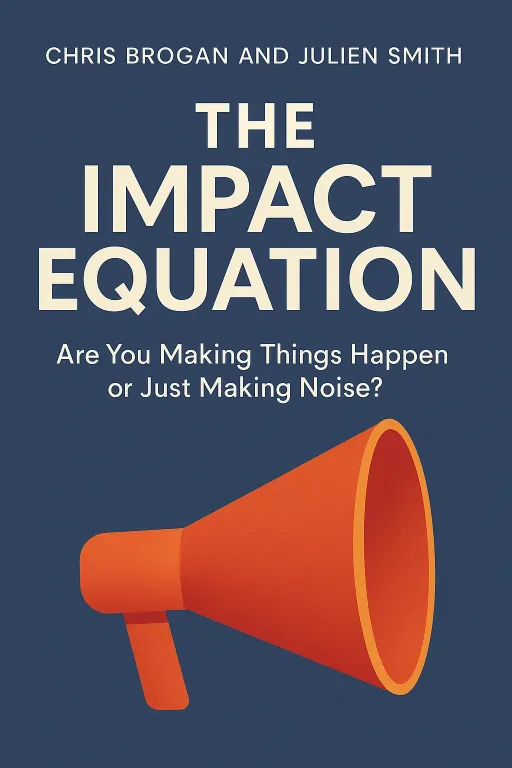
Nova: Well, today, we're diving into exactly that with two incredibly insightful books. We'll explore the foundational framework from "The Impact Equation" by Chris Brogan and Julien Smith, and then we'll unlock the psychological and linguistic secrets to making that content irresistible, drawing from Andy Maslen's "Persuasive Copywriting."
Atlas: That's a powerful combination. Tell me a bit about these authors.
Nova: Absolutely. Chris Brogan and Julien Smith are digital strategists and community builders who, after years of observing what made some messages soar and others flounder, distilled their findings into this actionable formula. They're known for really pushing people to think beyond just vanity metrics. And Andy Maslen? He's a veteran copywriter, with decades of experience crafting words that sell, convince, and move. His methods are battle-tested techniques for making language work for you.
Atlas: So, we're talking about a blueprint for to do, and then the master craftsperson's guide for to do it. I'm already intrigued. Where do we begin?
The Impact Equation: Pillars of Digital Significance
SECTION
Nova: We begin with "The Impact Equation." Brogan and Smith propose that true digital significance isn't accidental; it's the result of carefully balancing four critical components: Clarity, Reach, Action, and Depth. Think of it like a perfectly balanced recipe. If any ingredient is off, the whole dish suffers.
Atlas: Okay, so Clarity, Reach, Action, Depth. Let's break those down. What does 'Clarity' really mean in this context? Because I think a lot of people they're clear, but then their message still falls flat.
Nova: That’s a brilliant point, Atlas. Clarity isn't just about using simple words. It's about ensuring your audience immediately grasps what you're offering, why it matters to, and what problem it solves. Imagine a brilliant scientist trying to explain their groundbreaking research to a general audience. They might use technically correct terms, but if the audience can't follow the thread, if they can't connect it to their own lives, then the message, however brilliant, lacks clarity for.
Atlas: So it's about audience-centric communication, not just content-centric. That makes sense. For educators, that means translating complex theories into relatable concepts. For researchers, it’s about making the 'so what' of their findings immediately obvious.
Nova: Exactly. Now, 'Reach' is often misunderstood. It's not just about getting the most eyeballs. It's about getting your message to the eyeballs. A thousand engaged, relevant people are infinitely more valuable than a million uninterested ones. It's about strategic distribution, understanding where your target audience congregates, and how they consume information.
Atlas: I can see that. I imagine a lot of our listeners, especially those in niche fields, might struggle with that. They have a profound message, but it feels like it's stuck in a small echo chamber. How do you balance that desire for broad reach with the need to connect with specific, relevant groups?
Nova: It's about understanding that reach is a, not the goal itself. You use the right tools to put your clear message in front of the people most likely to be affected by it. Think of a local community organizer with an important message about a neighborhood initiative. They don't need a Super Bowl ad. They need flyers in local cafes, posts in community Facebook groups, and conversations at the farmers market. That's targeted, effective reach.
Nova: Then we have 'Action.' This is where many digital communications fail. People consume content, maybe they like it, but then what? Brogan and Smith emphasize that every piece of content should have a clear, unmistakable call to action. What do you want them to next? Sign up? Share? Buy? Reflect?
Atlas: What does that mean for someone trying to influence, say, policy makers with research? The 'action' isn't always a simple click.
Nova: True. It could be 'download this white paper,' 'attend this webinar,' 'contact your representative,' or even 'reconsider your current assumptions.' The key is that the desired action, no matter how subtle or grand, must be explicit. It's the bridge between passive consumption and active engagement.
Nova: And finally, 'Depth.' This is about emotional resonance, lasting impact, and building a genuine connection. It's the difference between a fleeting piece of information and a message that truly changes someone's perspective or behavior. It's about vulnerability, authenticity, and tapping into universal human experiences.
Atlas: That’s actually really inspiring. So, it's not just about the mechanics of content, but the heart of it. How do you achieve that depth? It sounds almost intangible.
Nova: It often comes through storytelling. Consider a non-profit advocating for clean water. They could present statistics on millions lacking access. That’s clear, maybe has reach. But when they share the story of one child, one family, whose life was transformed by a single well—the struggle, the hope, the daily impact—that’s depth. That's what moves people to donate, to share, to truly care. It transforms data into a human experience.
The Art of Persuasion: Psychological Triggers and Linguistic Craft
SECTION
Atlas: Okay, so we have this powerful equation for impact: Clarity, Reach, Action, Depth. It gives us the framework. But how do we actually those variables? How do we make our content not just clear and deep, but truly irresistible? Because as an educator, I'm constantly trying to make complex ideas compelling, and as a researcher, I want my findings to be genuinely influential.
Nova: This is where Andy Maslen's "Persuasive Copywriting" becomes an indispensable guide. He dissects the psychological triggers and linguistic techniques that make writing powerful. It’s about understanding how the human mind works and then using language to guide it.
Atlas: So, it's not just about being smart with words, but smart about?
Nova: Precisely. Maslen emphasizes that persuasion isn't manipulation; it's about connecting with people's existing desires, fears, and aspirations. One of his core insights is the power of emotional appeals. We often think people make decisions logically, but emotion is a far stronger driver.
Atlas: That makes me wonder, how does that play out in, say, an academic paper or a policy brief, where you're supposed to be strictly factual?
Nova: It's not about fabricating emotions, but about framing the facts in a way that evokes the emotion. Instead of just stating "climate change will raise sea levels," you might describe the impact on coastal communities, the loss of homes, the disruption of lives. The facts remain, but the emotional resonance intensifies, making the call to action—whether it's funding research or changing policy—more compelling.
Atlas: So, you're tapping into empathy and concern, not just raw data processing. I can see how that would make a message stick.
Nova: Another crucial aspect Maslen highlights is structuring your arguments. It’s not just you say, but the sequence in which you say it. He talks about the power of narrative, the problem-solution framework, or even the classic "before-and-after" structure. These aren't just literary devices; they're psychological tools that guide the reader through a persuasive journey.
Atlas: Can you give an example of a linguistic technique that just... transforms a message? Something an educator could use in a lesson or a researcher in their abstract?
Nova: Absolutely. Consider the power of vivid, sensory language. Instead of saying, "The product is good," Maslen would push for "Experience the silky smooth texture of the fabric against your skin." Or, for a researcher, instead of "Our data shows significant correlation," you might say, "Our findings vividly illuminate a direct link, painting a clear picture of cause and effect." It uses evocative verbs and appeals to the senses, even in abstract contexts, making the message more memorable and engaging.
Atlas: That’s a great way to put it. It makes the abstract tangible. So, we're talking about choosing every word with intention, like a sculptor chooses every chisel stroke.
Nova: Exactly. And then, there's the call to action, which ties directly back to Brogan and Smith's 'Action' pillar. Maslen stresses that a call to action needs to be specific, urgent, and benefit-oriented. Don't just say "Learn more." Say "Download your free guide today and unlock these three strategies to boost your digital impact by next week." It tells them to do, to do it, and.
Atlas: That makes perfect sense. It's about removing all friction and ambiguity, guiding the audience directly to the next step.
Synthesis & Takeaways
SECTION
Nova: When you bring these two ideas together, it's incredibly powerful. "The Impact Equation" gives you the strategic framework – ensuring your message has Clarity, the right Reach, a clear call to Action, and genuine Depth. Then, "Persuasive Copywriting" provides the tactical toolkit, showing you to infuse each of those elements with psychological triggers and linguistic craftsmanship to make them irresistible.
Atlas: So, it's not enough to have a great idea. You need to understand the architecture of impact the psychology of persuasion to truly make that idea resonate and drive change. For our listeners who are constantly seeking to grow their influence, whether in a classroom, a lab, or online, this is really about mastering the art of meaningful communication.
Nova: It truly is. It's about moving beyond simply transmitting information to actually inspiring and influencing. It's about understanding that every digital interaction is an opportunity to connect, to persuade, and to make a lasting difference.
Atlas: That’s actually really inspiring. So, if someone wanted to start applying these principles today, what's one concrete step they could take?
Nova: I would say, pick one piece of digital content you're creating this week—a social media post, an email, a lesson plan, a research summary. And before you hit send or publish, consciously ask yourself: Is the 'Action' I want people to take crystal clear? And how can I add 'Depth' to this message, perhaps through a personal story or a vivid analogy, to make it truly resonate?
Atlas: I love that. It's about being intentional, not just prolific. It's about quality over quantity, and truly understanding your audience.
Nova: Absolutely. It’s about respecting your audience enough to craft a message that genuinely serves them and moves them forward.
Atlas: What is one message you've always wanted to share, but felt it got lost in the noise? How might you reframe it now, with clarity and depth?
Nova: This is Aibrary. Congratulations on your growth!