Nature's Blueprint for Resilience: Biomimicry's Lessons for Infrastructure
Golden Hook & Introduction
SECTION
Nova: What if I told you that our greatest innovations in engineering, those towering structures and sprawling systems we pride ourselves on, are often our biggest failures? And that the secret to true resilience, the kind that lasts, has been quietly thriving right outside our windows for billions of years?
Atlas: Whoa, that's a bold claim, Nova. I mean, we've built some pretty incredible things, haven't we? From Roman aqueducts to modern skyscrapers, human ingenuity seems pretty darn resilient. But you're suggesting there's a fundamental flaw in our approach?
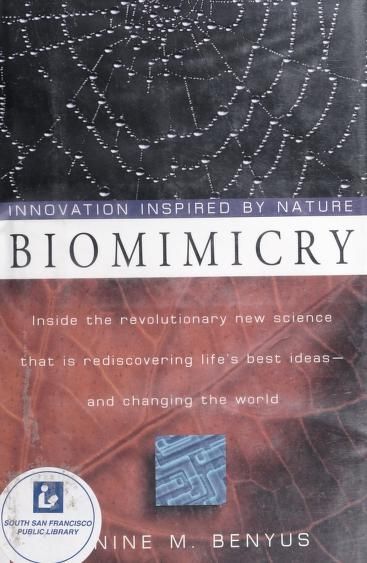
Nova: Absolutely, Atlas. We're talking about a profound blind spot in how we design our world. And today, we're cracking open a couple of paradigm-shifting books that not only expose this flaw but offer an ancient, yet radically new, way forward. We're diving into Janine M. Benyus's "Biomimicry: Innovation Inspired by Nature," a book widely credited with coining and popularizing the term, moving it from a niche scientific observation to a global design philosophy. And we’ll also touch on Peter Wohlleben's "The Hidden Life of Trees," a book that radically changed how many, even scientists, view forest ecosystems, showing us the power of interconnectedness.
Atlas: Okay, so Benyus gave us the term, and Wohlleben showed us the incredible, almost social, intelligence of nature. I'm intrigued. What is this "blind spot" you mentioned, and how do these books help us see past it?
Nova: It's all about how we interact with the natural world in our designs.
The Blind Spot: Why Our Engineered Solutions Fail Nature's Test
SECTION
Nova: Our blind spot, Atlas, is our tendency to fight against natural processes. We engineer solutions that are often rigid, energy-intensive, and fundamentally fragile because they ignore the profound efficiency and resilience embedded in natural systems. We're constantly battling entropy, rather than embracing natural flows.
Atlas: That sounds rough. So, we're essentially designing against the current? Give me an example, because I imagine a lot of our listeners, especially those managing complex infrastructure projects, might be thinking, "But we build strong, solid things. How is that fighting nature?"
Nova: Exactly. Let's take something as fundamental as coastal protection. For centuries, our go-to solution has been the concrete seawall. Massive, imposing, designed to physically block the ocean. They are expensive to build, require constant maintenance, and often destroy precious coastal habitats in the process. And when a truly powerful storm hits, what happens? They fail. Catastrophically. They can be undermined, breached, or simply overtopped, leading to immense damage and loss.
Atlas: So, the very thing designed to protect us ends up being a point of failure, and a huge drain on resources. That's a stark illustration of fighting nature. What's the natural alternative?
Nova: Compare that to a mangrove forest. These incredible ecosystems, with their intricate, sprawling root systems, are nature's architects for coastal defense. They dissipate wave energy, grow stronger and denser over time, provide vital habitats for marine life, filter water, and even sequester carbon. They adapt to changing sea levels, and during a storm, they bend, they sway, they absorb, and they recover. They don't fight the waves; they work with them. The cause of failure for seawalls is their rigidity and singular function; the process the mangroves use is flexibility, multi-functionality, and self-organization. The outcome is inherent resilience and ecological health.
Atlas: That's incredible. It's like one is a static, brute-force answer, and the other is a dynamic, living system. But wait, looking at this from a financial perspective, isn't it just cheaper and faster to pour concrete? The upfront cost of planting and waiting for a mangrove forest to grow might seem prohibitive to a city planner with immediate deadlines.
Nova: That's the core of the blind spot, isn't it? We often only look at the immediate, direct financial cost, ignoring the long-term ecological, social, and maintenance costs. A concrete wall needs repair, eventually replacement, and doesn't provide any additional benefits. Mangroves, however, offer a multitude of "ecosystem services" that pay dividends over decades – fisheries support, water quality improvement, carbon sequestration, and, of course, superior long-term coastal protection. It’s a systemic view of cost versus value.
Atlas: That gives me chills. So, our current infrastructure often creates more problems than it solves in the long run. We're essentially building fragility into our systems because we're not asking how nature would solve the same problem using only available resources and regenerative processes.
Nature's Blueprint: Biomimicry and the Wisdom of Interconnected Systems
SECTION
Nova: Exactly. If that's our blind spot, then nature's blueprint, through biomimicry and the wisdom of interconnected systems, is the cure. Janine Benyus's work isn't just about copying the of nature, but understanding its and. It’s about learning from nature’s 3.8 billion years of R&D.
Atlas: So you're saying it's not just about making a building look like a leaf, but understanding a leaf is shaped that way and what it achieves?
Nova: Precisely. Let's look at another amazing example: the termite mound. These structures, built by tiny insects, maintain a stable internal temperature day and night, despite extreme external fluctuations in the African savanna, all without any external energy input. They essentially "breathe."
Atlas: How is that even possible? I mean, I struggle to keep my house cool in summer without blasting the AC.
Nova: Their secret lies in a complex network of tunnels and vents that leverage convection and passive air movement. Hot air rises and escapes through a central chimney, drawing cooler air in from underground tunnels. This natural ventilation system has inspired architects to design buildings like the Eastgate Centre in Harare, Zimbabwe. It uses no air conditioning, yet maintains comfortable internal temperatures year-round, saving massive amounts of energy and money by mimicking the termite's genius.
Atlas: Wow, that’s incredible. So, how can an architect or urban planner actually the wisdom of a termite mound to a city grid or a building? That sounds beautiful in theory, but what about the practicalities for someone managing a real-world infrastructure project?
Nova: That's where the "learning from nature" really kicks in. It's about shifting the design brief. Instead of asking 'How can I cool this building?' you ask 'How does nature cool things in a hot, arid environment?' Then you observe, analyze, and translate those principles. It's not a direct copy, but an emulation of strategy. And this leads us beautifully to Peter Wohlleben's insights in "The Hidden Life of Trees," which illuminates another crucial aspect of nature's blueprint: interconnectedness.
Atlas: Ah, the "social networks" of the forest. I love that book. It really changed how I thought about solitary trees.
Nova: Absolutely. Wohlleben reveals that trees in a forest aren't isolated individuals competing for resources; they're an interconnected community. They communicate through chemical signals in the air and, even more astonishingly, through vast underground fungal networks – what he calls the "wood wide web." Older, stronger trees will share nutrients with stressed or younger trees through these networks. They even send chemical warnings of insect attacks.
Atlas: That’s such a hopeful way to look at it. It completely reframes our understanding of resilience. It's not about the strongest individual surviving; it's about the strength of the collective, the network. So, what does a forest's "wood wide web" tell us about designing human infrastructure?
Nova: It tells us that true resilience comes from redundancy, distributed intelligence, and mutual support. In our infrastructure, we often build single points of failure – a centralized power grid, a single water pipeline. When one part fails, the whole system can collapse. A forest, however, is a distributed network. If one tree is sick, others support it. If one part of the network is damaged, the whole doesn't die. It adapts. This encourages us to design decentralized systems, modular components, and infrastructure that can share resources and adapt to localized stresses, much like the DAOs you're exploring.
Atlas: Exactly! That’s a perfect example of how these natural principles can inform new structures for distributed governance and resilience in our human systems. It's about designing for collaboration and systemic well-being, rather than just individual strength.
Synthesis & Takeaways
SECTION
Nova: So, what we're really talking about today, drawing from Benyus and Wohlleben, is a profound shift in mindset. It's moving from a human-centric, often adversarial approach to design, to a bio-centric, collaborative one. Nature's solutions are inherently sustainable, adaptable, and regenerative because they've been refined over millions of years to optimize for life.
Atlas: It makes you wonder about the deep question from our content: "How would a natural system solve a current infrastructure challenge using only available resources and regenerative processes?" It’s not just about mimicking a leaf; it’s about understanding the deep principles of how life works.
Nova: Precisely. It’s about asking: How would nature manage water in a city? How would it transport goods? How would it build structures that clean their own air, or generate their own energy, or even self-repair? The answers are all around us, in the intricate web of life. We just need to learn how to listen and translate.
Atlas: And that translation requires not just scientific understanding, but a deep ethical commitment to harmonious coexistence. It’s about ensuring integrity and sustained well-being for all, not just efficiency for a few.
Nova: Absolutely. It's a powerful bridge between ancient wisdom and modern structure. And for anyone grappling with complex infrastructure challenges, or simply seeking a more sustainable way to build and live, the lessons from biomimicry and the hidden life of trees offer an incredibly rich blueprint. The challenge, and the opportunity, is to trust that synthesis and let these frameworks evolve.
Atlas: That’s a truly inspiring thought. For our listeners, I’d encourage you to look at a problem you're currently facing, big or small, and just for a moment, ask yourself: How would nature solve this? What would a forest do? What would a termite do? The answers might surprise you.
Nova: What an excellent point, Atlas. It's a simple question with profoundly complex and beautiful answers waiting to be discovered.
Nova: This is Aibrary. Congratulations on your growth!