The Mythic Mirror: How Ancient Stories Reflect Modern Minds
Golden Hook & Introduction
SECTION
Nova: What if I told you the most profound map to your modern mind isn't found in a self-help bestseller, but in stories thousands of years old, often dismissed as mere fantasy?
Atlas: Hold on, Nova. Are we talking about dusty scrolls and campfire legends here? Because frankly, for someone who spends their days dissecting complex systems, the idea of ancient myths holding the key to, say, managing a chaotic project deadline, feels a bit... out there. Aren't those just fairy tales we outgrew?
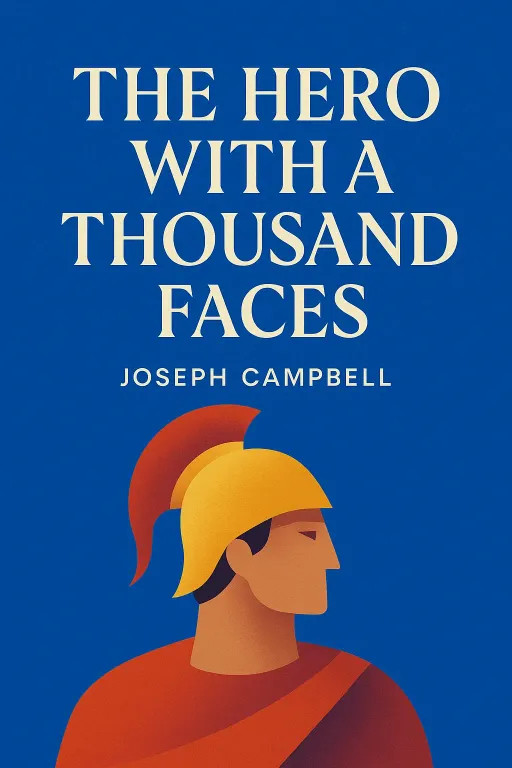
Nova: That's the blind spot, Atlas, and it's precisely what we're challenging today as we dive into the idea of "The Mythic Mirror." We're exploring how these narratives are far more than quaint tales; they're psychological blueprints, maps of the soul. We’re drawing heavily from thinkers like Joseph Campbell, whose seminal work, The Hero with a Thousand Faces, became a foundational text for understanding narrative structures across diverse human cultures, influencing countless storytellers and thinkers far beyond academia. And then Jordan B. Peterson, who further unpacks their psychological significance.
Atlas: So we're talking about more than just stories; we're talking about fundamental operating systems for the human experience? That’s a compelling reframing. It makes me wonder how these ancient narratives could actually encode something universally true, something that even a forensic linguist could deconstruct for patterns.
The Monomyth: Universal Patterns of the Human Psyche
SECTION
Nova: Exactly. And that brings us directly to our first core idea: Campbell's monomyth, or "The Hero's Journey." He argued that beneath the surface diversity of myths from every corner of the globe, there's a single, recurring narrative pattern. A universal blueprint for human transformation.
Atlas: You’re saying that whether it's an ancient Sumerian epic or a tribal initiation rite, they essentially tell the same story? That sounds like a bold claim.
Nova: It is, but the evidence is compelling. Think about it: The Call to Adventure, the Refusal of the Call, Meeting the Mentor, Crossing the Threshold into the unknown, facing Trials and Ordeals, experiencing a profound Transformation, and finally, the Return with the Elixir. These aren't just plot points; they reflect stages of human psychological development.
Atlas: Can you give us an example? Something concrete that makes this universal pattern jump out?
Nova: Absolutely. Let's take a story almost everyone knows: Luke Skywalker in Star Wars. His journey is a textbook example of the monomyth. His "Call to Adventure" comes with R2-D2's message from Princess Leia. Initially, he "Refuses the Call," worried about his aunt and uncle. Then he "Meets the Mentor," Obi-Wan Kenobi, who reveals his destiny and gives him his father's lightsaber. He "Crosses the Threshold" by leaving Tatooine, entering the vast, dangerous galaxy.
Atlas: Right, so the Death Star is his "Ordeal," where he faces immense danger and loss.
Nova: Precisely. And in that ordeal, he transforms from a naive farm boy into a nascent Jedi. His "Return with the Elixir" is bringing hope back to the Rebellion. The cause was the call of destiny, the process was facing impossible odds, and the outcome was his personal transformation and the hope he brought to others. It’s a beautifully told story, but its power comes from tapping into this ancient, hardwired template.
Atlas: I can see the narrative pattern clearly. But is this just a narrative pattern, or does it tap into something deeper, something hardwired in our consciousness? And what about cultures that don't have a clear 'hero' figure like Luke? For a forensic linguist, the universality of these narrative structures is fascinating, but I need to understand if it's merely a cultural construct or something more fundamental about human psychology.
Nova: That’s the crucial distinction. Campbell, drawing on Jungian psychology, argued it's deeper than just culture. These archetypal patterns resonate because they mirror the internal struggles and growth we all experience. The journey isn't just external; it's a metaphor for individuation, for confronting the unknown within ourselves, integrating our shadows, and discovering our true potential. Every human faces a "call," experiences "trials," and undergoes some form of "transformation." The specific cultural clothing might differ, but the underlying psychological nakedness is the same. Even in cultures without a singular "hero," the community might undergo a collective journey, or the individual's life stages are framed in mythic terms.
Myth as a Map: Navigating Modern Chaos and Finding Meaning
SECTION
Nova: And if Campbell gave us the blueprint, then thinkers like Jordan Peterson show us how to use that map to navigate the bewildering landscape of modern life. He argues that these ancient narratives encode profound wisdom about how to confront chaos and find meaning in existence.
Atlas: That sounds incredibly relevant for today. We're living in what often feels like an increasingly chaotic world, with information overload and shifting cultural landscapes. But how does a story thousands of years old actually help someone navigating, say, a chaotic career transition or a complex personal relationship today? Are we just projecting our anxieties onto old stories?
Nova: Not at all. Peterson suggests these stories are not prescriptive rules, but rather symbolic representations of universal human predicaments and the optimal ways to respond to them. Take the myth of Cain and Abel. It's a story of sibling rivalry, envy, and ultimately, murder.
Atlas: A classic tale of human fallibility.
Nova: But Peterson interprets it as a profound psychological drama. Cain’s offerings are rejected, while Abel’s are accepted. Cain becomes resentful, feeling unjustly treated by God and the world. Instead of examining his own actions or seeking to improve, he allows that resentment to fester, blaming external forces. The cause is Cain’s perceived injustice and his internal response of resentment. The process is his brooding and destructive envy. The outcome is the murder of his brother and his subsequent exile, carrying the mark of guilt.
Atlas: So this isn't just about a historical murder, but about the dangers of unaddressed resentment and the choice between constructive action and destructive envy.
Nova: Exactly. For Peterson, Cain represents the failure to take personal responsibility, the destructive potential of resentment, and the choice to lash out at the world rather than confronting one's own internal "dragon." The wisdom encoded here is about the profound importance of honest self-assessment, taking responsibility, and striving for good, even when life feels unfair. It’s a map for navigating the chaos of internal psychological states and external adversity.
Atlas: From a purely analytical standpoint, that’s a powerful deconstruction. It suggests these myths offer a kind of ancient behavioral psychology, encoding consequences for certain psychological postures. So, for someone in a chaotic career transition, the "Cain and Abel" myth might suggest that resenting the changing market or blaming others for their situation is a path to further destruction, while taking responsibility and adapting is the path to meaning.
Nova: Precisely. It’s a call to confront your own internal chaos, to act with integrity, and to voluntarily take on responsibility, which Peterson argues is the true source of meaning in a world that often feels arbitrary. These stories provide a framework for understanding why certain actions lead to suffering and others lead to flourishing. They help us understand the "dragon" we might be facing, whether it's internal doubt, external adversity, or a complex interpersonal conflict.
Synthesis & Takeaways
SECTION
Nova: So, what we're really talking about is seeing myths not as relics, but as living, breathing psychological maps. They don't just tell us about ancient heroes; they tell us about ourselves, our struggles, and our potential.
Atlas: That’s actually really inspiring. It makes me think about the deep question we posed earlier: What "mythic journey" are you currently undertaking in your own life, and what challenges or mentors fit into that narrative? For our listeners who are constantly seeking to understand and deconstruct, this framework allows you to apply that analytical rigor to your own personal story.
Nova: It’s about recognizing the universal patterns in your unique experience. Perhaps you've received a "Call to Adventure" in a new career opportunity, and you're wrestling with the "Refusal" due to fear of the unknown. Or maybe you're facing a significant "Ordeal" in a personal challenge, and you need to identify your "Mentor" or draw on your inner strength.
Atlas: And it aligns perfectly with the idea of synthesizing diverse interests. You're taking these ancient, seemingly disparate stories, and connecting them directly to the complex, modern landscape of your own mind. It’s about leveraging those deep insights to actively shape your personal narrative.
Nova: Exactly. These myths help us understand the archetypal forces at play, giving us a vocabulary and a framework for making sense of our own struggles and transformations. They remind us that we are all heroes on our own journeys, whether we realize it or not.
Atlas: That's a profound thought to leave us with. Recognizing the mythic patterns in our lives can be incredibly empowering.
Nova: It truly is. This is Aibrary. Congratulations on your growth!