The Hidden Power of Story: Why Narratives Shape Your World
Golden Hook & Introduction
SECTION
Nova: What if the stories we dismiss as mere entertainment – the blockbuster films, the novels we devour, even the gossip we share – are actually the most profound lessons we'll ever receive, shaping our beliefs and actions in ways we rarely acknowledge?
Atlas: Oh, I like that. It's almost unsettling to think that something we often see as pure escapism might be wielding such subtle power over us. I mean, we're constantly surrounded by narratives, aren't we?
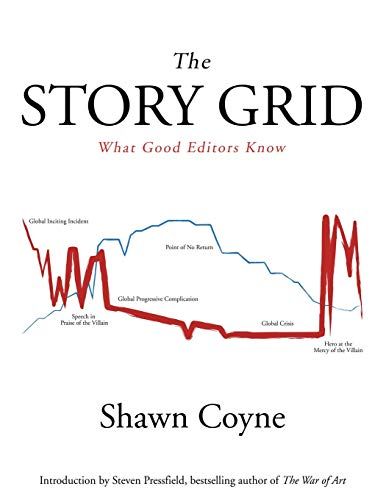
Nova: Absolutely. And that's precisely our guiding theme today. We're diving into "The Hidden Power of Story," exploring why narratives shape your world. Our foundational texts for this journey are two incredible books: "Story Grid" by Shawn Coyne, and the seminal "The Hero with a Thousand Faces" by Joseph Campbell.
Atlas: Joseph Campbell! That name rings a bell, but I confess, the details are a little fuzzy beyond "hero's journey."
Nova: Well, Campbell was a scholar of comparative mythology and religion, and he spent decades researching and teaching, meticulously uncovering these universal patterns across human cultures. His work isn't just literary theory; it's a deep dive into the collective human psyche, giving his insights immense historical and cultural weight.
Atlas: That's a huge undertaking. It gives a whole new gravitas to the idea that stories aren't just made up on the fly, but emerge from something much deeper within us.
The Hidden Blueprint: Unpacking Universal Story Structures
SECTION
Nova: Exactly. And that naturally leads us into our first deep dive: "The Hidden Blueprint: Unpacking Universal Story Structures." We consume stories constantly, from the news to our social media feeds, but we rarely see the underlying "grid" that makes them work. Shawn Coyne, with his "Story Grid" philosophy, argues that stories are not just entertainment; they're a fundamental human need.
Atlas: A fundamental human need? That sounds a bit out there. Like, I need food, water, shelter… stories? I appreciate a good binge-watch, but "need" feels strong.
Nova: Think of it this way: stories are how we make sense of chaos. They provide order, meaning, and a moral compass. Coyne's framework is like a blueprint for a building, or a musical score. It shows how every compelling story, regardless of its genre, adheres to universal elements. It has to have an inciting incident, a rising action, a crisis, a climax, and a resolution. And crucially, it has to explore a specific global human value.
Atlas: So you're saying every story, from a blockbuster movie to even a simple fairy tale, has this invisible skeleton? Even if the author doesn't consciously think, "Okay, now for the inciting incident"?
Nova: Precisely. It's often intuitive for a great storyteller, but the structure is there. Let's take a classic fairy tale like "Little Red Riding Hood" as a quick example. The global human value at its core is often "good versus evil" or "innocence versus predation." The inciting incident is Red Riding Hood setting off to her grandmother's. The rising action involves her encounter with the wolf. The climax is the confrontation, and the resolution is the wolf's defeat and the rescue. That structure elicits very specific emotional responses in us – fear, hope, relief.
Atlas: Huh, I never really thought about it that way. It's like the story is designed to deliver a specific emotional and moral punch, and the grid is the wiring diagram. But where's the art in a grid? Doesn't focusing on structure kill the magic?
Nova: Not at all! The grid isn't about stifling creativity; it's about understanding the deep-seated expectations of an audience. Think of it like a musician understanding scales and chords. Knowing the rules allows you to break them effectively, or to compose something truly transcendent. The magic comes from you fill out that blueprint, the unique characters, the surprising twists. The structure simply ensures that the story resonates on a fundamental level, because it’s tapping into those universal human values. For instance, a thriller story often revolves around the global value of 'life-death.' The structure ensures that every beat moves the protagonist closer to or further from survival.
Atlas: That makes sense. It's like knowing the rules of grammar to write a beautiful poem. You need the foundation before you can truly soar.
Your Life, Your Epic: Navigating the Hero's Journey
SECTION
Nova: Exactly. And if Coyne gives us the blueprint for story, Campbell shows us the ultimate blueprint for story. That brings us to our second topic: "Your Life, Your Epic: Navigating the Hero's Journey." Campbell uncovers the 'monomyth,' the common pattern of the hero's journey found in myths and stories across all cultures.
Atlas: So, the 'monomyth' isn't just a literary device, it’s also a psychological map?
Nova: Absolutely. It's a cyclical journey that begins with the "Call to Adventure," where the hero is summoned from their ordinary world. Then often comes the "Refusal of the Call," where they hesitate, followed by "Meeting the Mentor," who provides guidance or a magical gift. The "Ordeal" is the central challenge, the "Return with the Elixir" is bringing back a boon for their community, and eventually, a return to the ordinary world, but transformed. This isn't just an external adventure; it's an internal, psychological journey reflecting universal human transformation.
Atlas: Wow, that's kind of heartbreaking, but also incredibly hopeful. So, for someone who feels like they're just 'living life,' going through the motions, this framework offers a way to see their own experiences as part of something grander? To find meaning in their struggles?
Nova: Yes! Consider Luke Skywalker in Star Wars. His "Call to Adventure" is the message from Leia and the death of his aunt and uncle. His "Refusal" is wanting to stay on the farm. His "Mentor" is Obi-Wan Kenobi. The "Ordeal" is destroying the Death Star. He returns, transformed, a hero. But this isn't just for fictional characters. Think of a student who leaves home for college, faces academic challenges, forms new friendships, struggles with identity, and eventually graduates with a new sense of self. That's an everyday hero's journey.
Atlas: That's a perfect example. I can definitely relate to that feeling of leaving a familiar world and stepping into the unknown. But how do we avoid just passively observing our own journey? How do we it if the 'monomyth' is already laid out for us? Is it just destiny?
Nova: That’s the critical insight! Recognizing these patterns isn't about fatalism; it's about gaining agency. It's about consciously interpreting your own "call to adventure," understanding your "ordeals" not as random suffering, but as necessary steps in your growth. It empowers you to seek out mentors, to embrace the "elixir" of your experiences, and to bring that wisdom back to your own community. It shifts you from being a passive character in someone else's story to being the conscious author of your own.
Atlas: I love that. It turns life's challenges into meaningful chapters, giving them purpose within a larger narrative arc. It’s like, instead of just reacting, you're actively participating in the unfolding of your own epic.
Synthesis & Takeaways
SECTION
Nova: Precisely. Between Coyne's structural grid revealing the universal mechanics of compelling narratives and Campbell's archetypal journey showing us how our lives echo ancient patterns, we realize stories aren't just things we consume; they're the lenses through which we perceive reality the very fabric of our growth. These insights fundamentally shift your perception from passive spectator to active participant.
Atlas: So, recognizing these patterns isn't just about literary analysis, it's about gaining agency in our own lives, actively interpreting the 'plot twists' and writing our own 'next chapters.' It allows us to step back and see the bigger picture of our personal development, transforming seemingly random events into a coherent, purposeful narrative.
Nova: It's about living with intention, understanding that every challenge can be part of your "ordeal," every success a step towards bringing your "elixir" back to the world. It’s a powerful framework for reflective seekers who want to cultivate continuous growth.
Atlas: That's actually really inspiring. It makes me wonder, how might recognizing the underlying structures of stories empower to better interpret the narratives around you, and even shape your own life's story?
Nova: A fantastic question to ponder, Atlas. Because ultimately, your life is the greatest story you'll ever tell.
Nova: This is Aibrary. Congratulations on your growth!