

Designing a Bulletproof System for Personal Momentum
Golden Hook & Introduction
SECTION
Nova: Statistics show that ninety-two percent of people who set New Year's resolutions fail by the second week of February. That is not a failure of willpower. That is a failure of architecture.
Atlas: That is a brutal number. But it makes sense when you look at how most people approach goals. They treat them like a wish list, not a mechanical system. You just throw a desire into the universe and hope it sticks.
Nova: Exactly. And that is why today we are tearing down the flimsy scaffolding most people use to build their lives and replacing it with something bulletproof. We are synthesizing the structural brilliance of Zig Ziglar’s classic approach to goal setting with the modern neurobiological hacks from Mel Robbins’ High 5 Habit.
Atlas: I have heard of both. Ziglar is the grandfather of the goal-setting movement, right? And Robbins is the one talking about how our brains are essentially wired to sabotage us if we don't intervene.
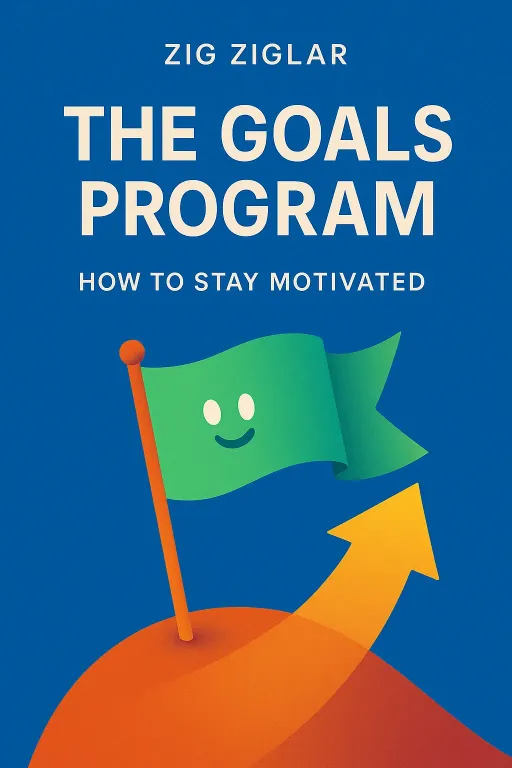
Nova: You nailed it. Zig Ziglar, particularly in his work in The Goals Program, treated success like an engineering project. He believed that if you don't balance your mental, physical, and spiritual targets, the whole structure collapses. And Mel Robbins, in The High 5 Habit, takes that structural view and adds the biological override. She uses research on the reticular activating system—that part of your brain that filters reality—to show how we can physically rewire our internal narrative.
Atlas: So, we are talking about combining the blueprint with the maintenance crew.
Nova: That is the perfect way to put it. Let’s dive into the blueprint first.
The Architecture of Intention
SECTION
Atlas: Okay, let’s start with the blueprint. If I am an analytical person, I love the idea of a seven-step formula. It sounds clean. It sounds scalable. But what actually happens in that process? Because most people write down a goal, look at it for three days, and then bury it in a drawer.
Nova: The reason that happens, according to the Ziglar framework, is that most goals are just destinations without a map or a support system. Ziglar’s seven-step formula isn't just about the what; it’s about the how and the why. It forces you to define your goal with extreme specificity, but then—and this is the part people skip—it forces you to identify the obstacles and the benefits of achieving it.
Atlas: Wait, most people focus entirely on the benefits. They visualize the trophy, the paycheck, the title. You are saying the formula forces you to look at the obstacles too?
Nova: It demands it. Ziglar argued that you cannot build a bulletproof system if you are blind to the friction. You have to list the obstacles, but then you have to identify the knowledge or the skills you need to overcome them. It turns a vague desire into a series of micro-problems to be solved.
Atlas: That changes the psychology of it entirely. Instead of staring at a mountain and feeling overwhelmed, you are looking at the rock face and asking, what climbing gear do I need?
Nova: Precisely. And the third pillar of his framework is the most critical for our listeners who are building a life of substance. He insists that your goals must be balanced across your mental, physical, and spiritual life. If you achieve your career transition goal but you have neglected your health or your internal values, the system isn't bulletproof. It is brittle. It will break the moment you hit a high-stress period.
Atlas: I can see why that’s a hard sell for the high-achiever. They want to crush the career goal, and they view physical health as a secondary variable. But you are saying that if the foundation—the physical and spiritual health—is ignored, the career goal is essentially built on sand.
Nova: Exactly. It is a systems-thinking approach. If your physical energy is low, your decision-making quality drops. If your spiritual—or call it your value-alignment—is off, your motivation will evaporate the moment things get difficult. Ziglar’s genius was in recognizing that a human being is not just a productivity machine. We are a holistic system.
Atlas: So, if I am a listener sitting at my desk right now, feeling like my career is stagnating, I shouldn't just write down, I want a new job. I need to write down, I want this transition, here are the three specific skills I need to acquire to fix the obstacles, and here is how I will maintain my health and my values while I do it.
Nova: Yes. And you need to be brutal about the specificity. Ziglar would say, don't just say you want to be more productive. Say you will carve out thirty minutes of deep reading every morning to master the specific domain you are transitioning into. It moves from a wish to an engineering requirement.
The Neurobiological Override
SECTION
Atlas: Okay, I buy the engineering side. It makes sense to have a plan. But let’s talk about the human element. Even if I have the perfect seven-step plan, I still have that voice in my head. The one that says, you are not qualified for this, or, you are going to fail. That is where the system usually breaks for me. It is not the plan; it is the person running the plan.
Nova: That is the perfect segue. This is where Mel Robbins comes in. She would argue that your rational brain—the one that loves the seven-step plan—is not the one making the decisions. Your reticular activating system, or the RAS, is the filter your brain uses to decide what information to let in and what to ignore.
Atlas: I have heard of the RAS. It’s like when you buy a new car and suddenly you see that car everywhere, right?
Nova: That is it exactly. It is a filter that confirms your existing beliefs. If you believe you are an imposter, your RAS will actively scan your environment for evidence that you are not good enough. It will highlight the one typo in your presentation while ignoring the ten brilliant insights you just delivered.
Atlas: So, if I am trying to make a career transition, and I have a subconscious belief that I am not ready, my brain is actively scanning for reasons to fail. That is terrifying.
Nova: It is. And the reason Robbins’ High 5 Habit is so powerful is that it is a physical override for this biological filter. She suggests that every morning, you look in the mirror and give yourself a physical high-five.
Atlas: I have to be honest, Nova. That sounds a bit ridiculous. I am supposed to stand in my bathroom and high-five a reflection? How is that going to change my career trajectory?
Nova: It sounds ridiculous because our culture has trained us to be self-critical. We are conditioned to look in the mirror and critique our appearance or our fatigue. When you give yourself a high-five, you are physically doing something that your brain associates with celebration, encouragement, and support. Because the gesture is physical, it bypasses the analytical, critical brain.
Atlas: So, it’s not about the high-five itself. It’s about interrupting the pattern.
Nova: You nailed it. It is a pattern interrupt. When you raise your hand to the mirror, you are forcing your brain to stop the negative loop. You are essentially telling your RAS: I am on my own team. And because the brain is wired to respond to physical cues, it begins to shift the filter. You start to see opportunities instead of obstacles. You start to see evidence of your own resilience instead of evidence of your flaws.
Atlas: I can see how that would change the daily operating system. If I start my day by acknowledging that I am the one responsible for my own validation, I am not looking to my boss or my peers to tell me I am doing a good job. I am priming myself for the day.
Nova: And that is the key to personal momentum. Ziglar gives you the map—the seven-step plan. Robbins gives you the fuel—the internal state to actually follow the map. Without the map, you are just running in circles. Without the fuel, you are just a stationary object.
Integrating the System
SECTION
Atlas: Let’s ground this for our listeners. Let’s say I am an analytical architect. I have my career transition goal. I have my seven-step plan written down in a notebook. And then I have this high-five ritual in the morning. How do these two things talk to each other? How do I make them a unified system?
Nova: Think of it as the difference between the hardware and the software. The seven-step plan is your hardware. It is the structure, the logic, the cold, hard reality of what needs to happen. The high-five habit is the software. It is the operating system that runs on that hardware. If you have great hardware but a buggy operating system, you crash.
Atlas: Okay, so every morning, the ritual is the check-in. I look at my seven-step plan, I see the milestone I need to hit, and then I give myself the high-five to say, I have the capacity to handle this.
Nova: Exactly. And you do it before you check your email. You do it before you look at the news. You do it before you let the world tell you what your worth is for the day. You set the baseline.
Atlas: This addresses something that really plagues high-performers. It’s the fear of the gap. You have the goal, you have the reality of where you are today, and the gap between them feels massive. The anxiety that comes from staring at that gap is what causes the paralysis.
Nova: That is the most profound insight here. That anxiety is just a feedback loop. By using the seven-step plan, you break the gap into manageable, solvable problems. You are no longer looking at the whole mountain; you are looking at the next step. And by using the high-five habit, you are managing the emotional reaction to that gap. You are calming the nervous system so you can think clearly.
Atlas: It’s basically removing the friction. We spend so much energy fighting ourselves that we don’t have any left to do the actual work. If I can stop fighting myself, I can double my output without actually working longer hours.
Nova: That is the definition of leverage. Most people think more effort equals more momentum. But in a bulletproof system, more clarity and less internal friction equals more momentum.
Synthesis & Takeaways
SECTION
Atlas: I have to admit, I was skeptical about the mirror high-five, but when you frame it as a pattern interrupt for the RAS, it makes logical sense. It’s a low-cost, high-leverage intervention.
Nova: And that is the beauty of it. It doesn't require a master’s degree or a life coach. It requires five seconds in front of a mirror and a notebook. But the consistency of it is where the power lies. The system only works if you do the work.
Atlas: So, for everyone listening, here is the challenge. Don't just listen to this and nod along. Tonight, sit down and draft that seven-step goal using the Ziglar method. Be specific. List the obstacles. And tomorrow morning, do the thing that feels slightly silly but scientifically sound. Look in the mirror and give yourself a high-five.
Nova: And watch what happens to your day. Watch how your RAS starts to highlight opportunities you would have missed yesterday. Watch how your brain stops looking for failure and starts looking for evidence that you are building the life you want.
Atlas: It’s about taking ownership. It’s about acknowledging that you are the architect of your own momentum. You don’t need permission to succeed. You just need a better system.
Nova: And once you have that system, you become unstoppable. Because you are not just working harder; you are working with the grain of your own psychology. You are aligning your actions with your biology.
Atlas: This has been a masterclass in self-engineering. I’m going to go draft my seven-step plan right now.
Nova: I can’t wait to hear how it goes. Remember, the goal is not to be perfect; the goal is to be consistent. And that starts with the very first step you take today.
Atlas: Absolutely. Thanks for breaking this down, Nova. This is exactly what I needed to hear.
Nova: It was a pleasure, Atlas. And to our listeners, thank you for joining us in the library of your own potential. Keep building, keep refining, and keep showing up for yourself. This is Aibrary. Congratulations on your growth!









