

Your Inner Dialogue is a Lie: Cultivating Self-Compassion for Sustainable Innovation.
Golden Hook & Introduction
SECTION
Nova: Many of us believe our harshest critic is our greatest motivator. That relentless inner voice, pushing us, driving us to be better. But what if that internal dialogue isn't actually propelling you forward, but silently—and effectively—burning you out?
Atlas: Oh man, that's going to resonate with a lot of our listeners. Especially those who pride themselves on pushing boundaries, on constantly optimizing. The idea that my internal drill sergeant isn't my best friend… that feels almost heretical.
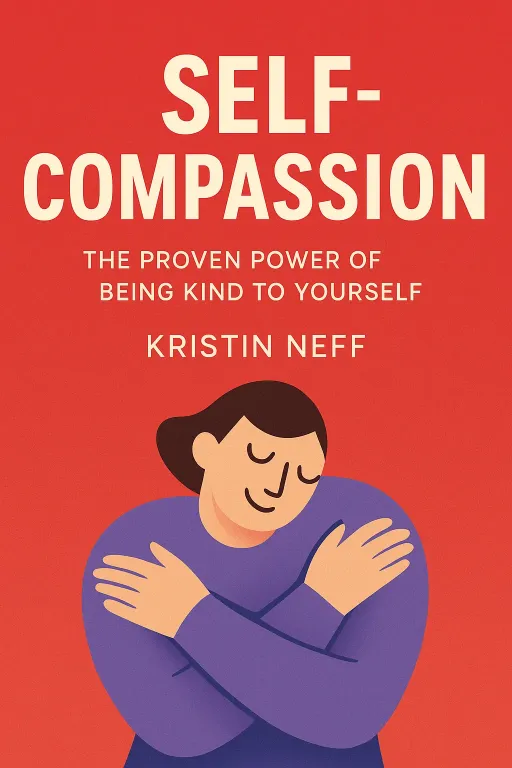
Nova: Exactly! It flies in the face of what so many high-achievers have been taught. Today, we're dissecting this powerful, often destructive, internal dynamic through the groundbreaking work of Kristin Neff's "Self-Compassion" and Brené Brown's "The Gifts of Imperfection." What's fascinating is Neff, a pioneering researcher, actually began her work after realizing the existing psychological literature largely ignored self-compassion, often mistaking it for self-pity. She then conducted some of the first empirical studies on its profound benefits.
Atlas: So, we’re talking about scientifically validating something that sounds, to many, a bit… soft? Like, 'let's all hold hands and feel good about our mistakes'? For someone building a cutting-edge Agent system or designing a complex architectural marvel, 'feeling good' isn't usually the metric for success.
Nova: I hear you, Atlas. And that's precisely the misconception we need to dismantle. These insights fundamentally connect your emotional well-being to your capacity for innovation. We're going to explore how a different internal dialogue isn't about letting yourself off the hook, but about fueling sustainable performance and breakthrough thinking.
The Myth of Harsh Self-Criticism as a Driver
SECTION
Nova: Let's start with the common misconception: we often equate self-criticism with accountability. We think being hard on ourselves means we're striving for excellence, that it prevents sloppiness. But Neff's research, and a wealth of other studies, tell us a different story. Relentless self-criticism is actually incredibly demotivating and fosters anxiety. It's like trying to get a high-performance engine to run on sludge.
Atlas: But wait, for someone who’s a full-stack engineer, or an architect whose designs literally shape skylines, isn't that meticulous self-scrutiny what catastrophic failures? Isn't that how you ensure stability, security, and excellence in a system that can't afford to break?
Nova: That's a critical point, and it’s where the nuance lies. Think about an architect, let's call her Sarah, who’s just spent months on a complex design for a new smart city infrastructure. She discovers a minor flaw in the energy distribution model during a final review – something easily fixable, but still a mistake.
Atlas: Happens all the time. The devil's in the details.
Nova: Exactly. Now, if Sarah's internal critic kicks in, it might sound something like, "You're an idiot, how could you miss this? This proves you're not good enough. Your entire career is a sham." This isn't just about the mistake; it's about her being attacked. What happens next? She might spiral into self-doubt, second-guessing every decision. She could become paralyzed by perfectionism on the next project, afraid to innovate because the fear of failure is so overwhelming. This leads to burnout, stifled creativity, and ultimately, a less innovative output.
Atlas: That sounds rough, but what's the alternative? If you don't acknowledge the mistake, doesn't it just get swept under the rug? We're not talking about minor typos here; we're talking about systems that need to be robust.
Nova: It's not about ignoring the mistake, Atlas. It's about you acknowledge it. Self-criticism is often rooted in fear and shame. It creates a threat response in your brain, activating your fight-or-flight system. When you're in that state, your prefrontal cortex—the part responsible for creative problem-solving, rational thought, and learning—actually shuts down. So, instead of learning effectively from the error, you're just experiencing distress.
Atlas: So you’re saying that harsh self-talk physically impedes our ability to learn and innovate? That feels counter-intuitive to the "push harder" mentality.
Nova: Oh, absolutely. It's a vicious cycle. The more you beat yourself up, the more stressed you become, the less effectively you can think, and the more likely you are to make further mistakes or avoid challenging new problems. It's like trying to drive a car with one foot on the gas and the other on the brake. You burn through fuel, create a lot of noise, but don't go anywhere efficiently.
Self-Compassion: The Unsung Hero of Sustainable Innovation and Resilience
SECTION
Nova: If self-criticism is a faulty engine, what's the sustainable fuel for innovation? The answer, surprisingly for many, is self-compassion. It's not about being soft; it's about being strategically smart.
Atlas: I’m listening. For someone striving to integrate Agent engineering with business value, where stability and scalability are paramount, how does 'embracing imperfection' not translate to accepting 'good enough' when 'excellence' is the goal? That sounds like a recipe for a less robust system.
Nova: That's a common and understandable concern. Let's take another architect, David. He encounters a similar design flaw. Instead of self-flagellation, David thinks, "Okay, this is a tough one, and I'm feeling disappointed, but everyone makes mistakes, and this is part of the learning process. What can I learn from this now?" He addresses the issue with a clear mind, without the emotional baggage. He approaches the next design challenge with renewed energy, not dread. This allows him to engage in creative problem-solving, leading to a breakthrough in a new modular design that's both innovative and scalable.
Atlas: So, it's about acknowledging the difficulty and then pivoting to a constructive mindset? That sounds like a more efficient debug cycle, actually. Less time spent on internal error messages, more on the actual fix.
Nova: Precisely. Brené Brown's "The Gifts of Imperfection" perfectly complements this. She argues that embracing vulnerability and imperfection, far from being a liability, is the bedrock for courage, compassion, and true connection. And these qualities are absolutely essential for collaborative innovation. Think about it: how can you truly innovate if you're terrified of showing an imperfect first draft, or if you can't connect authentically with your team to brainstorm radical ideas?
Atlas: That's a great way to put it. So, instead of thinking of imperfection as a flaw in my code, it's more about recognizing that the first iteration is never the final product, and that's okay. It allows for the courage to put something out there that isn't 100% optimized, knowing you can iterate on it.
Nova: Exactly! It's the difference between a fixed mindset that says "I failed, I am a failure" and a growth mindset that says "I failed, what can I learn to do better next time?" Self-compassion allows for that honest assessment and learning without the emotional baggage that stifles creativity. It opens the door to new solutions.
Atlas: So, if I've just had a project go sideways, or a complex system I'm building is hitting a wall, what's step one to applying this? How do I actually self-compassion in that high-pressure moment?
Nova: Neff provides a brilliant "healing moment" exercise for this. Think of a recent mistake in your work – that system bug, that architectural oversight, that deadline you missed. Now, imagine a close friend came to you with that mistake. How would you offer them comfort, understanding, and encouragement? What words would you use? What tone?
Atlas: I'd probably say something like, "Hey, it happens. You're smart, you'll figure it out. What's the next step?" I wouldn't call them an idiot.
Nova: And there you have it. Now, offer that same kindness, that same understanding, that same pragmatic encouragement to yourself. It's about treating yourself as you would a valued friend or colleague in a tough spot. Not excusing, but understanding.
Synthesis & Takeaways
SECTION
Nova: So, what we're really saying is that self-compassion isn't a soft skill; it's a strategic performance enhancer for sustained innovation. It’s the difference between a sprint that ends in exhaustion and a marathon that allows for consistent, groundbreaking progress.
Atlas: That makes so much sense. So, when that inner architect critic starts tearing down your latest design, or the Agent system you’re building throws a critical error, instead of letting it spiral, you pause, acknowledge the difficulty, and then – crucially – you treat yourself with the same understanding and problem-solving focus you'd offer a colleague. That's the real strategic play for long-term value creation.
Nova: It is. It’s about building a more resilient internal architecture for your own mind, which then allows you to build stronger, more resilient external systems. It’s about accepting imperfection as part of the creative process, not a sign of failure.
Atlas: I think that’s a powerful challenge for our listeners. Next time you hit a wall, or make a mistake, try that exercise. Just for a moment, be your own best friend. See what happens to your capacity for innovation.
Nova: It’s a profound shift in mindset, and one that promises not just greater personal well-being, but also a deeper, more sustainable capacity for innovation and value creation.
Atlas: Absolutely. A truly excellent system isn't just about its output; it's about the resilience of its underlying framework.
Nova: This is Aibrary. Congratulations on your growth!









