

The Vulnerable Diplomat: Navigating Global Teams with Authenticity
Golden Hook & Introduction
SECTION
Nova: Most global teams aren't failing because they lack talent, expertise, or ambition. They are failing because they are speaking two different languages while using the same words. It is the silent, invisible friction of cultural collision, and it is costing companies billions in lost productivity and innovation.
Atlas: That is a bold way to start, Nova. I have worked in environments where we had people from four different continents on a single Zoom call, and you are right—it feels like a collision. But usually, people just chalk that up to personality differences or someone having a bad day. You are suggesting there is a structural reason for that friction?
Nova: Exactly. We tend to internalize team conflict as a personal failing or a lack of chemistry. But today, we are going to dismantle that idea. We are looking at how to bridge those gaps using two distinct, powerful frameworks: Erin Meyer’s work on cultural mapping and Brené Brown’s research on vulnerability.
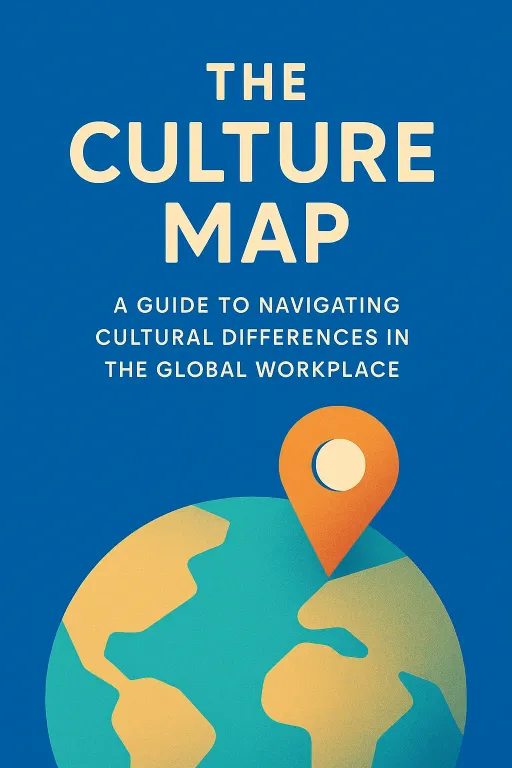
Atlas: I know both of those names. Erin Meyer is the INSEAD professor who wrote The Culture Map, right? And Brené Brown is the one who made vulnerability a household term. But help me connect the dots here. One sounds like corporate strategy and the other sounds like psychology. How do they fit together in a high-stakes business environment?
Nova: Think of it this way. Meyer gives you the map—the cognitive framework to understand why your colleague from Japan is silent while your colleague from the Netherlands is blunt. That is the structural side. But the map is useless if you do not have the courage to actually navigate the territory. That is where Brené Brown comes in. Wholehearted living and vulnerability are the fuel that allows you to use the map without fear. It is about moving from "us versus them" to "us, together."
Atlas: That actually makes sense. You need the intellectual framework to understand the difference, but you need the emotional intelligence to bridge it. So, where do we start? Do we dive into the map or the vulnerability first?
Nova: We start with the map. Because before you can connect, you have to decode the confusion.
The Architecture of Culture
SECTION
Atlas: Okay, I am game. But before we get into the weeds, tell me about Erin Meyer. I know she has been a heavy hitter in the business world for years, but what makes her perspective on this so different from the standard "diversity training" we see in corporate slides?
Nova: Meyer is fascinating because she did not just write a book based on theories. She spent years researching at INSEAD, one of the world’s leading graduate business schools, and her work is based on thousands of interviews with executives working across borders. She found that most global failures happen because we assume everyone communicates, evaluates, and decides the way we do. She mapped these differences across eight behavioral scales.
Atlas: Eight scales. That sounds like a lot to memorize. Are we going to go through all of them?
Nova: We do not need to memorize them. We just need to understand the concept of the spectrum. For instance, look at the "Communicating" scale. On one end, you have "Low Context" cultures like the United States, Germany, or the Netherlands. In these cultures, communication is precise, simple, and explicit. If you say something, you mean exactly that. It is all about the words.
Atlas: Right. If I am in an American boardroom, and I say "This project is behind schedule," everyone knows exactly what that means. It is binary. You are either on time or you are not.
Nova: Exactly. But then you slide over to "High Context" cultures, like Japan, China, or even parts of France and Indonesia. In these cultures, communication is sophisticated, nuanced, and layered. The meaning is often hidden between the lines. It is not just about what you say; it is about how you say it, who is around, and what is not said.
Atlas: This is where the friction happens, right? I can see it now. The American manager is sitting there thinking, "Why is my Japanese counterpart not telling me the project is failing?" And the Japanese counterpart is thinking, "Why is this American being so aggressive and blunt?"
Nova: You hit the nail on the head. The American thinks they are being clear and helpful by pointing out a flaw. The Japanese colleague feels that the American is being disrespectful or aggressive by calling it out so directly in front of others. They are both trying to be "good professionals," but their cultural programming is working against them.
Atlas: That is such a common trap. I have seen this play out in real time. We call it a "misunderstanding," but really, it is a "mismatch of expectations." But here is my pushback, Nova. If I am a leader of a diverse team, I cannot possibly learn the cultural etiquette of fifteen different countries. Does Meyer expect us to become anthropologists?
Nova: That is the beauty of her approach. You do not need to become an expert on every culture. You just need to plot your team on the scale. When you start a project, you have an explicit conversation about preferences. You say, "In my culture, we value direct feedback. In yours, how do you prefer to handle disagreement?" You make the invisible visible.
Atlas: So, you are saying we stop guessing and start asking?
Nova: Precisely. You transform the "guessing game" into a "design process." You are not judging the culture; you are mapping the communication style. Once you have that map, you have a shared language. You can say, "Hey, I know I am being very low-context right now, so if this comes across as too blunt, please know it is just my cultural default."
Atlas: That is a massive shift. It takes the personal sting out of the interaction. It is no longer "You are rude," it is "You are operating on a different part of the scale." But even with that map, people still hold back. They are afraid to admit they don't understand, or they are afraid to speak up if they feel they are the minority in the room. This is where the "map" isn't enough, right?
The Vulnerable Bridge
SECTION
Nova: You are spot on. A map tells you where you are, but it does not give you the courage to move. That is where Brené Brown’s work on vulnerability becomes the missing piece. She argues that vulnerability is the absolute prerequisite for connection. In a cross-cultural team, vulnerability is the act of saying, "I am not sure I understand what you meant," or "I am worried my style is making this difficult for you."
Atlas: I have to play devil's advocate here, Nova. In a high-stakes corporate environment, vulnerability is often viewed as a weakness. If I am a lead on a project and I tell my team, "I am not sure how to handle this cultural conflict," my team might lose confidence in me. They want a leader who knows the answers, not one who is figuring it out.
Nova: That is the "armor" we wear. And Brené Brown’s research is so powerful because it dismantles that specific myth. She argues that what we perceive as "weakness" is actually the highest form of professional courage. When you, as a leader, admit, "I am struggling with this," you create psychological safety. You are essentially giving everyone else permission to be human, too.
Atlas: So, it is about shifting the power dynamic?
Nova: It is about leveling the playing field. When the leader admits they don't have all the answers, it stops being a performance. It becomes a collaboration. Think about the "10-minute vulnerability check-in" we mentioned earlier. It is not about spilling your deepest secrets or talking about your childhood trauma.
Atlas: Thank goodness for that. I was worried you were going to suggest we all sit in a circle and cry.
Nova: Not at all. It is a pragmatic, time-boxed intervention. You take ten minutes at the start of a project or a weekly sync to ask, "What is one thing that is challenging you right now?" or "What is one thing we could do to make our communication clearer this week?"
Atlas: Okay, so it is structured vulnerability.
Nova: Exactly. It is a tactical move. By sharing a small, low-stakes struggle, you signal to the team that it is safe to be imperfect. And when people feel safe, they stop spending energy protecting their ego and start spending energy solving the problem. That is when the "Culture Map" from Meyer actually works. If you are not vulnerable, the map is just a set of rules. If you are vulnerable, the map is a tool for connection.
Atlas: I am starting to see the synthesis here. You use Meyer to understand the "What" and "How"—the mechanics of the team. You use Brown to enable the "Who"—the human element that makes the mechanics actually turn.
Nova: That is the perfect way to put it. Think about the "High Context" vs. "Low Context" example again. If I am an American leader and I am vulnerable enough to ask, "I realize I might be coming across as too direct. How can I frame this feedback so it is actually useful for you?"—I am using the map to guide my question, but I am using vulnerability to build the trust.
Atlas: And the other person, who might be from a "High Context" culture, now feels respected. They see that I am trying to bridge the gap, not just impose my way of doing things. That changes everything. It turns a potential conflict into a shared project.
Nova: It does. And here is the kicker: this builds resilience. When you have a team that can openly discuss their cultural differences, they become antifragile. They don't break under the stress of miscommunication; they adapt.
Synthesis & Takeaways
SECTION
Atlas: This feels like a shift from "managing" a team to "cultivating" one. It is not just about logistics; it is about the internal state of the people doing the work. But let’s bring this home for the listener. If someone is listening to this and they are currently managing a team that feels a bit disconnected—maybe they are working across time zones, or they have a mix of remote and hybrid folks—what is the first thing they should do tomorrow?
Nova: Start with the "Mapping" conversation. Don't make it a lecture. Just bring it up. Say, "I have been thinking about how different we all are in terms of how we communicate and make decisions. I want to try an experiment." Then, introduce the concept of the scales. Ask them, "On a scale of one to ten, do you prefer direct feedback or subtle feedback?" It is a simple, non-threatening way to start the dialogue.
Atlas: And then follow it up with the vulnerability piece.
Nova: Right. The next step is the check-in. Don't wait for a crisis. Just dedicate ten minutes next week. Ask, "What is one thing that has been confusing or challenging in our communication lately?" And the key is that have to go first. You have to be the one to admit a mistake or a gap in your own understanding. That is the "vulnerability prerequisite."
Atlas: I love that. It is actionable, it is low-risk, and it addresses the core issue. It is not about changing people; it is about changing the so people can work together better.
Nova: That is the ultimate goal. We are not trying to homogenize our teams. We don't want everyone to be the same. The strength of a global team is the diversity of perspective. The challenge is just the friction. If you can map the differences and cultivate the vulnerability to navigate them, you aren't just a manager anymore. You are a diplomat.
Atlas: A "Vulnerable Diplomat." I like that title. It sounds much better than "Project Manager."
Nova: It is a massive upgrade. Because at the end of the day, the most successful leaders aren't the ones who know everything. They are the ones who create a space where everyone else can be their best, most authentic selves.
Atlas: This has been a great breakdown, Nova. We covered the structural, the psychological, and the practical. It feels like a complete blueprint for anyone trying to navigate the modern, complex work landscape.
Nova: I am glad it resonated. Remember, the goal isn't perfection. It is connection. If you can get that right, the rest of the work becomes so much easier.
Atlas: Well said. And for everyone listening, try that mapping exercise this week. It might just change the way your next meeting goes.
Nova: Absolutely. It is the small steps that lead to the biggest shifts.
Atlas: We will be back next time with another deep dive into the ideas that actually move the needle. Until then, keep questioning, keep mapping, and keep being vulnerable.
Nova: This is Aibrary. Congratulations on your growth!









