

The Impostor Syndrome Trap: Why Authentic Presence is Your True Power.
Golden Hook & Introduction
SECTION
Nova: Atlas, quick game for you. I want you to review the feeling of "faking it" in five words. Go!
Atlas: Oh, I like that! Hmm… "Existential dread, surprisingly common, annoying."
Nova: Ha! "Annoying" is a strong choice. But you've nailed something crucial. That "existential dread" and the feeling of being a fraud is exactly what we're tackling today on Aibrary. We're diving into what we call "The Impostor Syndrome Trap: Why Authentic Presence is Your True Power."
Atlas: And I imagine a lot of our listeners, especially those chasing big ambitions, are nodding along right now, maybe even clenching their fists a little.
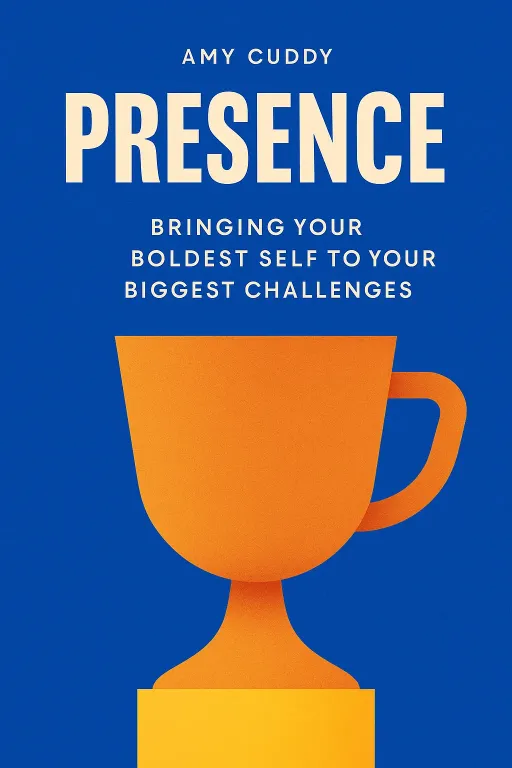
Nova: Absolutely. And our insights today are deeply connected to the groundbreaking work of researchers like Amy Cuddy and Brené Brown. Cuddy, for instance, became a household name when her TED Talk on body language and power went globally viral, showing millions how our physical presence can profoundly shift our internal state. It completely reframed how we think about confidence.
Atlas: That makes sense. It’s not just about what’s in your head, it’s about what’s in your whole being. So, let’s peel back the layers of this so-called "Impostor Syndrome Trap."
The 'Impostor Syndrome' Illusion
SECTION
Nova: Let's start with the feeling itself. It's this insidious sense that you're constantly faking it, that at any moment, someone's going to pull back the curtain and expose you as a fraud. It's particularly common when you're stepping into new roles, pushing your boundaries, or trying to express your true, unique self.
Atlas: But wait, isn't feeling like you're faking it sometimes just... being unprepared? Or maybe a sign you actually out of your depth? I mean, for someone who's constantly building and strategizing, how do you distinguish between genuine growth edges and actual inadequacy?
Nova: That's a great question, and it's a critical distinction. The paradox of impostor syndrome is that it often strikes the most capable, the most ambitious, and the most self-aware individuals. It's not about actual inadequacy; it's a persistent, nagging self-doubt that keeps your unique voice hidden, often when it's most needed.
Atlas: Oh, I know that feeling. I imagine a lot of our listeners, especially those juggling ambitions and trying to build something significant, feel that constantly. It’s like, the more you achieve, the louder that little voice gets, whispering, "You don't belong here."
Nova: Exactly. Let me give you a vivid picture. Imagine a talented artist, who's poured years into their craft, finally getting their big gallery show. They've earned it, the critics are buzzing, but instead of celebrating, they're paralyzed by the thought that any moment, someone will discover they're not a 'real' artist, just a lucky fluke. They might even sabotage themselves or shrink from the spotlight.
Atlas: That’s heartbreaking. So, it's not a lack of skill, but a problem of perception, almost an internal battle against one's own success.
Nova: Precisely. And that internal paralysis is the trap. It keeps them from fully inhabiting their success, from truly owning their authentic presence. Acknowledging this feeling, understanding that it's a common psychological phenomenon rather than a personal failing, is the crucial first step. It's saying, "Okay, you're here, little voice, but you don't call the shots."
Embodying Authentic Presence: Power Poses & Vulnerability as Strength
SECTION
Nova: And that naturally leads us to the second key idea, which offers a powerful counter-punch to that internal critic. It's about embodying what we call 'authentic presence,' and it draws heavily from the insights of Amy Cuddy and Brené Brown. Cuddy, for instance, explores how our body language and mindset profoundly impact how we feel and how others perceive us.
Atlas: Hold on, 'power poses'? You mean like standing like Superman before a big audition or a crucial meeting? That sounds a bit performative, or maybe even a little silly, for someone trying to fund an artistic leap or navigate a high-stakes business deal. How can something so external really change what’s going on inside?
Nova: It’s a fantastic question, and it speaks to the core of Cuddy's research. She shows that small physical shifts can create significant internal changes. It’s not about "faking it" in a deceptive way; it's about priming your mind and body for confidence. Think of it like a feedback loop. When you adopt an expansive, open posture – a "power pose" – your body actually signals to your brain, "I'm powerful, I'm capable."
Atlas: So, it's a physiological hack? Like a shortcut to feeling more present and powerful, even if you don't quite believe it yet?
Nova: Exactly. Your body tells your brain, 'I'm confident,' and your brain starts to believe it, altering your neurochemistry, even if just for a few minutes. Think of a musician backstage, taking a deep breath, standing tall, shoulders back, before stepping out onto a huge stage – it’s not about pretending to be something they’re not, it’s about actively preparing their entire being to deliver their best. It's about embodying the confidence they need to access.
Atlas: That makes sense. It’s like getting into character, but for your own self. But what about the deeper, emotional side of this? Because if you're still feeling like a fraud on the inside, a pose can only do so much, right? You can stand tall, but if your heart is pounding with self-doubt, it feels like an uphill battle.
Nova: Absolutely. And that’s where Brené Brown's work beautifully complements Cuddy’s. Brown argues that true belonging and worthiness come from embracing our imperfections and vulnerability, not from striving for an impossible ideal. This perspective is vital, especially for creatives who often face intense judgment.
Atlas: So you're saying that instead of trying to hide our flaws, we should actually lean into them? That sounds counterintuitive, especially if you're trying to project a strong, capable image in a competitive environment.
Nova: It is counterintuitive, but profoundly powerful. Brown shows us that when we try to be perfect, we actually push people away and create a barrier to connection. But when we allow ourselves to be seen, imperfections and all, that's where true connection and strength lie. It's like an artist sharing a raw, unfinished piece – that vulnerability, that willingness to be seen in all its unpolished glory, can be far more powerful and resonate more deeply than a perfectly polished, sterile one. It creates authenticity.
Atlas: Wow, that’s actually really inspiring. I imagine a lot of our aspiring artists listening, who are constantly putting their work out there, feel that. It's like, the more authentic you are, the more freedom you unlock. So for someone who needs to 'practice articulation daily' and 'speak their truth,' this isn't just about showing up, it's about showing up, flaws and all?
Nova: Precisely. It reframes vulnerability as strength, allowing your true self to shine because you're no longer expending energy trying to maintain a facade. You're channeling that energy into your actual presence and your message.
Synthesis & Takeaways
SECTION
Nova: So, what we've discovered today is that we're not just "faking it 'til we make it." We're using our bodies to prime our minds for confidence, and then we're grounding that confidence in the radical acceptance of our own imperfections. It’s a powerful one-two punch against that impostor trap.
Atlas: In other words, it’s about acknowledging the internal chatter, then giving your body and your heart permission to step forward authentically. It allows you to trust your intelligence and focus on progress, not perfection.
Nova: Exactly. And to put this into immediate action, here’s a healing moment for you: Before your next important interaction – whether it's a big meeting, a creative session, an audition, or even just a difficult conversation – spend two minutes in a 'power pose.'
Atlas: It’s a small shift that can create a significant internal change, helping you embody that confidence. And remember, that vulnerability isn't a weakness; it's the raw material for your most authentic and powerful self-expression. It’s the path to true freedom, especially for those of us building toward big artistic and strategic goals.
Nova: This is Aibrary. Congratulations on your growth!









