The Gentle Art of Letting Go: Finding Peace in Imperfection
Golden Hook & Introduction
SECTION
Nova: You know, Atlas, we’re often told that true strength comes from being unbreakable, from never showing a crack in the façade, from striving for nothing less than absolute perfection.
Atlas: Oh, I know that feeling. It's like the world expects us to be these perfectly polished, unflappable statues, especially when you're driven by a desire for growth and understanding. Any hint of imperfection feels like a personal failure.
Nova: Exactly! And what if I told you that notion of strength is fundamentally flawed? That the very act of embracing your imperfections, of showing your vulnerability, is actually where your deepest power lies?
Atlas: Huh. That's a bold claim, but it definitely makes me curious. For anyone who's ever felt the weight of expectation, that idea of finding power in imperfection sounds incredibly liberating.
Nova: It is. And that’s precisely what we're diving into today on Aibrary, exploring what we're calling "The Gentle Art of Letting Go: Finding Peace in Imperfection." We're pulling insights from two phenomenal thinkers whose work, while distinct, converges on this profound truth.
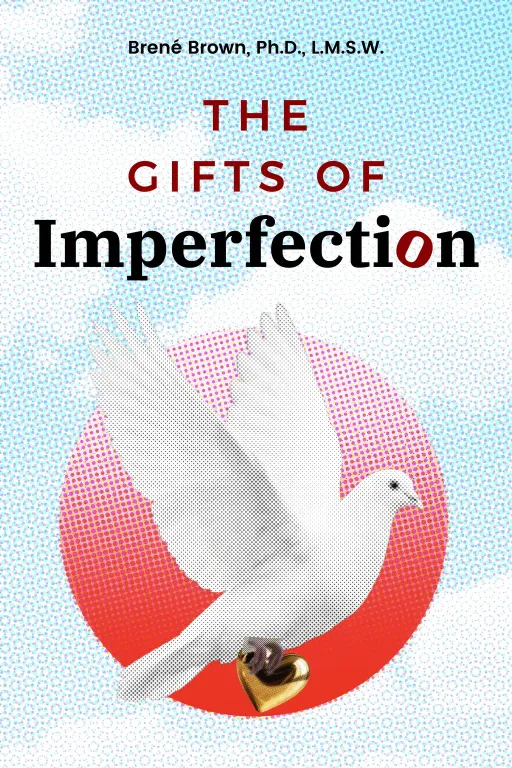
Atlas: You’re talking about Brené Brown and Tara Brach, right? It’s fascinating how Brown, a research professor known for her work on shame and vulnerability, and Brach, a renowned meditation teacher and Buddhist psychologist, arrive at such complementary conclusions. It’s like science and spirituality shaking hands on the same powerful message.
Nova: Absolutely. Brown’s rigorous, data-driven approach to understanding the human experience of shame and courage, combined with Brach’s compassionate, mindfulness-based path to emotional freedom, offers us a truly holistic guide. They both illuminate how our pursuit of an unattainable ideal of perfection often creates more anxiety and disconnects us from ourselves and each other.
Atlas: And for those of us who value growth and understanding, that struggle with self-worth and the search for acceptance is incredibly relatable. So, where do we begin this journey of dismantling the perfection myth?
The Power of Vulnerable Imperfection
SECTION
Nova: We start with Brené Brown’s groundbreaking work, particularly her insights in "The Gifts of Imperfection." She fundamentally reframes how we think about vulnerability. For so long, we’ve been conditioned to view vulnerability as a weakness, a chink in our armor. But Brown argues it’s the exact opposite.
Atlas: Wait, hold on. For someone who's always pushing themselves to learn and achieve, isn't admitting imperfection just opening yourself up to criticism, or worse, confirming your own deepest fears of not being good enough? I imagine a lot of our listeners, especially those who are deep thinkers and strive for excellence, might feel that way.
Nova: That’s a powerful and common concern, Atlas. Brown’s research directly addresses that. She found that the very act of our imperfections, of constantly striving for an impossible ideal of perfection, is what fuels shame. This shame then disconnects us, making us feel isolated and unworthy. Think about it: when you try to present a flawless image, you’re not allowing anyone to truly see or connect with the real you.
Atlas: So, the very thing we do to protect ourselves, to feel safe, actually pushes people away and makes us feel even worse? That’s incredibly counter-intuitive.
Nova: It is. Brown defines wholehearted living as engaging with the world from a place of worthiness. And that worthiness doesn't come from being perfect; it comes from cultivating courage, compassion, and connection. And all three of those require vulnerability. Imagine a team leader who always presents a perfect, unshakeable front. Their team might respect them, but they’ll never truly connect. Now imagine a leader who, after a project setback, openly shares their own learning from the experience and asks for collaborative solutions.
Atlas: That’s a totally different dynamic. The second leader creates a space for genuine connection and shared growth, not just performance. It shows courage, not weakness.
Nova: Exactly. Brown tells a story in her work about how, after years of researching shame, she had her own "vulnerability breakdown," realizing she was trying to apply her research to everyone else but herself. It was in that moment of raw honesty, admitting her own struggles with perfectionism and worthiness, that she truly understood the core of her work. It was a profound personal experience that validated her academic findings.
Atlas: That’s actually really inspiring. It grounds the theory in a very human experience. It also makes me wonder, if vulnerability is the path to connection, how do we begin to cultivate that when it feels so uncomfortable, so… exposed?
Radical Acceptance for Inner Peace
SECTION
Nova: That's a perfect segue, because it naturally leads us to our second key idea, which often acts as a compassionate counterpoint to the discomfort of vulnerability: Tara Brach’s "Radical Acceptance." Brach, drawing from Buddhist psychology, teaches us to accept our emotional pain and difficult experiences with compassion, rather than resisting them.
Atlas: Okay, so if Brown is about embracing imperfection to connect with others, Brach sounds like she's about embracing our internal struggles to connect with ourselves. But isn't 'radical acceptance' just giving up? For someone who's driven by a desire for continued growth and improvement, doesn't it stop us from striving for better if we just accept everything as it is?
Nova: That’s a common misconception, Atlas. Brach is very clear: radical acceptance is not passive resignation. It’s not about condoning harmful behavior or giving up on growth. Instead, it's an active, compassionate engagement with reality, especially our inner reality. Think of it this way: when you're stuck in quicksand, fighting and flailing only makes you sink faster. The wise response is to relax, spread your weight, and float.
Atlas: So, fighting our emotional pain is like flailing in quicksand? That's a great analogy.
Nova: Precisely. When we resist our emotions—anger, sadness, anxiety, self-judgment—we often amplify them. We add a layer of suffering of the original pain. Brach teaches us to pause, acknowledge the feeling without judgment, and offer ourselves the same kindness we would a dear friend. She recounts stories of individuals crippled by self-criticism finding profound relief simply by recognizing their inner struggle and offering themselves a moment of compassion. It’s about creating an inner sanctuary where all parts of you are welcome, even the messy ones.
Atlas: That makes sense. It’s like creating an internal safe space, so you're not constantly at war with yourself. And I imagine that inner peace, that freedom from self-judgment, actually frees up energy to pursue growth from a healthier, more grounded place.
Nova: Exactly. It’s about moving from "I am flawed and therefore unworthy" to "I am imperfect, and that is part of my human experience. I can meet this moment with kindness." That shift is incredibly powerful. It allows us to truly let go of the exhausting pursuit of an impossible ideal.
Synthesis & Takeaways
SECTION
Nova: So, bringing these two brilliant minds together, what we see is a powerful, interconnected path. Brené Brown shows us that vulnerability is the superpower for connection and courage, while Tara Brach provides the essential tools for self-compassion and acceptance, especially when facing our inner struggles. Both are about finding peace not by becoming perfect, but by embracing our authentic, imperfect selves.
Atlas: It’s a profound shift, really. From striving for external validation through perfection, to cultivating internal peace through acceptance and genuine connection. For anyone who's ever felt the weight of expectation, this offers a real path to freedom. But where does someone even begin? It sounds simple, but it's deeply challenging.
Nova: It is, and it's a gentle art, not a battle. A powerful first step, and one that resonates deeply with both Brown and Brach, is what we call a "healing moment." Take a moment, perhaps right now or later today, to acknowledge one 'imperfection' you usually hide. It could be a fear, a mistake you regret, or even just a quirky habit you’re self-conscious about.
Atlas: And then?
Nova: Then, offer yourself the same compassion you would a dear friend facing that exact same struggle. Don't judge it; just acknowledge it with kindness. This small act of self-compassion can be incredibly liberating. It's about recognizing your shared humanity, your inherent worth, and giving yourself permission to simply.
Atlas: Wow, that’s actually really inspiring. It’s a practice that directly addresses that common human struggle with self-worth. It’s not about fixing anything, but about accepting and finding peace within. And that's a journey worth taking.
Nova: It absolutely is. It's about trusting your inherent wisdom, knowing your experiences are valuable, and dedicating time each day for that quiet contemplation and self-kindness.
Atlas: What a powerful way to look at our journey of growth. This is Aibrary. Congratulations on your growth!