

Unraveling Life's Code: The Genetic Blueprint of Disease
Golden Hook & Introduction
SECTION
Atlas: We often talk about life's biggest mysteries, but what if the most profound one is written in a language we're only just beginning to truly understand? A language that dictates not just our hair color, but also, sometimes, our deepest vulnerabilities to disease.
Nova: And what if unlocking that language means not just deciphering the code, but gaining the power to potentially rewrite it? Because that's precisely what humanity has been striving to do for centuries, and it’s accelerating at an incredible pace right now.
Atlas: Oh, I love that framing. The very idea of rewriting our own biological destiny just sounds like something out of science fiction.
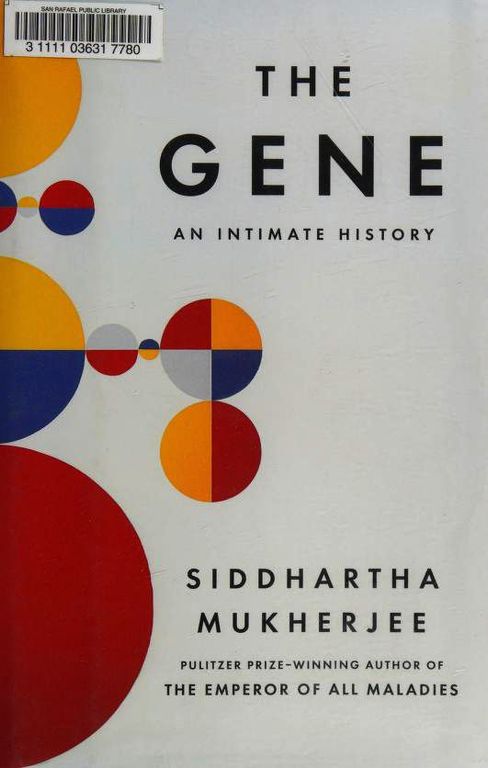
Nova: It absolutely does! And today, we’re diving into the incredible journey of that endeavor, drawing heavily from two monumental works. First, Siddhartha Mukherjee's Pulitzer Prize-winning masterpiece, "The Gene: An Intimate History." Mukherjee, himself a physician and oncologist, brings such a personal and profound perspective to the story of genetics, making it feel less like a dry textbook and more like a sweeping human drama.
Atlas: That makes sense. An oncologist writing about genes would definitely have an intimate understanding of their impact. And then, for the deeper scientific bedrock, we’re also looking at "Genetics and Genomics in Medicine" by Tom Strachan and Andrew Read, which provides that rigorous academic foundation for understanding the molecular mechanics.
Nova: Exactly. It's the perfect pairing to explore how our understanding of the genetic blueprint has evolved, from curious observation to powerful intervention.
The Historical Journey and Ethical Landscape of Genetics
SECTION
Nova: So, let's start at the very beginning, or perhaps, a significant early beginning: Mendel and his peas. Long before we even knew what a gene was, or what DNA looked like, Gregor Mendel, a monk in a monastery garden, was meticulously cross-breeding pea plants. He wasn’t looking at the double helix; he was observing patterns. He saw that traits like height or pea color weren’t just blending; they were inherited in predictable, discrete units.
Atlas: Huh. That’s fascinating, because it’s so fundamental. It’s like discovering the rules of grammar before you even know what a letter is.
Nova: Precisely! He called them "factors," and his work, though largely ignored for decades, laid the groundwork for everything that followed. Fast forward to the mid-20th century, and we get the electrifying discovery of the DNA double helix by Watson and Crick, building on the crucial work of Rosalind Franklin and Maurice Wilkins. Suddenly, those abstract "factors" had a physical, elegant form: a twisted ladder, a molecular blueprint.
Atlas: Wow, that must have been mind-blowing. Going from abstract patterns to seeing the actual structure of life’s code. That gives me chills.
Nova: It was a true eureka moment, marking the birth of modern molecular biology. But the real game-changer, in terms of scale, came much later with the Human Genome Project. Imagine trying to read an instruction manual with three billion letters. That's what scientists set out to do: map the entire human genetic code.
Atlas: Oh man, that sounds like an undertaking of epic proportions. What was the driving force behind something that ambitious?
Nova: The promise was immense: to understand the genetic basis of disease, to unlock new therapies, and fundamentally, to understand what makes us human at the molecular level. But as Mukherjee so eloquently details, with that promise came profound ethical questions. Suddenly, we weren't just talking about predicting eye color; we were talking about predicting predispositions to Alzheimer's or certain cancers.
Atlas: But wait. Wouldn’t that make people incredibly nervous? The idea that your genetic destiny could be read, or even worse, used against you? I imagine a lot of our listeners would feel uneasy about that.
Nova: Absolutely. This was the core ethical clash. On one hand, the hope for personalized medicine, where treatments could be tailored to an individual's genetic makeup. On the other, the very real fear of genetic discrimination—in employment, insurance, or even social standing. Mukherjee explores how this project, meant to illuminate, also cast long shadows of potential misuse. It sparked intense debates about privacy, identity, and the very definition of human worth.
Atlas: So, it’s not just about the science; it's about the societal and philosophical implications. For someone like me, who's always thinking about developing novel diagnostic tools, this really highlights the responsibility that comes with innovation. You're not just building a tool; you're building a tool that has profound human consequences.
Nova: Exactly. It’s a constant dance between scientific advancement and ethical reflection. The Human Genome Project essentially gave us the first draft of the book of life, but then the crucial question became: what do we with it?
Genetic Mechanisms of Disease and the Promise of Personalized Interventions
SECTION
Nova: Understanding that history sets the stage for where we are now, truly decoding disease and moving towards interventions. Because once we had the map, we could start pinpointing the specific "typos" or missing instructions in the genetic code that lead to inherited disorders.
Atlas: So, it’s like going from understanding the alphabet, to reading the whole book, and now you’re looking for the specific misspellings in certain chapters.
Nova: That’s a perfect analogy! Consider something like sickle cell anemia. It’s caused by a single letter change, a single nucleotide polymorphism, in the gene that codes for hemoglobin. This tiny change leads to a cascade of effects, altering the red blood cells into a sickle shape, which then causes blockages, pain, and a host of debilitating symptoms.
Atlas: That’s incredible, that such a small change can have such widespread and devastating effects. It really underscores how precise and intricate our genetic machinery is.
Nova: It truly does. And the more we understand these molecular pathways, as detailed in Strachan and Read’s comprehensive work, the more targeted our interventions can become. This is where the idea of personalized medicine really takes off. We’re not just treating symptoms anymore; we’re aiming at the root cause, at the genetic level.
Atlas: This is fascinating for anyone aspiring to develop novel diagnostic tools. How does this understanding translate into a new diagnostic tool for, say, a rare genetic disease?
Nova: Well, imagine a child with a mysterious neurological condition. In the past, diagnosis was often a long, agonizing journey of exclusion. Now, with whole-exome or whole-genome sequencing, we can rapidly scan their entire genetic code, compare it to known healthy sequences, and often pinpoint the exact mutation responsible. This not only gives families answers but also opens the door to existing targeted therapies or even gene-editing approaches.
Atlas: That’s a huge leap forward. But what about the really cutting-edge stuff? Like actually the code? I’m thinking about CRISPR.
Nova: Ah, CRISPR—the ultimate expression of "rewriting the code." It’s a revolutionary gene-editing technology that allows scientists to precisely cut out problematic sections of DNA and insert healthy ones. The potential for diseases like Huntington's, cystic fibrosis, or even certain cancers is staggering. It moves us from merely reading the blueprint to actively correcting errors within it.
Atlas: Whoa. That sounds a bit out there, but also incredibly hopeful for conditions that were once considered untreatable. But wait, this also brings up those ethical concerns again, doesn’t it? Similar to the Human Genome Project, if we can edit genes, where do we draw the line?
Nova: Absolutely. The ethical debates surrounding CRISPR are intense. We’re talking about germline editing, altering genes in a way that could be passed down through generations. It raises profound questions about unintended consequences, "designer babies," and who gets access to such powerful technology. Mukherjee’s book, while pre-dating widespread CRISPR application, lays the philosophical groundwork for these discussions.
Atlas: That makes me wonder, how does something like epigenetics further complicate or simplify the development of novel diagnostic tools? Because it's not just the static code, but how it's expressed, right?
Nova: That’s an excellent point, Atlas, and it adds another layer of complexity, but also immense opportunity. Epigenetics refers to changes in gene expression that don't involve altering the underlying DNA sequence. Think of it like annotations or bookmarks on the genetic blueprint that tell genes when and how much to turn on or off. Our environment, diet, stress—these can all influence our epigenome.
Atlas: So, the same genetic code can be read differently depending on these external factors? That means diagnostics aren’t just about looking for a faulty gene; it’s about looking at that gene is being used.
Nova: Precisely. For diagnostics, it complicates things because you're not just looking for a simple mutation; you're looking for patterns of gene activation or suppression. But it also simplifies in a way, because epigenetic markers can be early indicators of disease, or even reveal susceptibility that the DNA sequence alone wouldn't. It opens up a whole new frontier for non-invasive diagnostics, like blood tests that could detect cancer early by looking at epigenetic signatures.
Atlas: That’s mind-blowing. It's like the code is just one part of the story; the context of how it's being read is just as vital. This is exactly what someone looking to make an impact on untreatable conditions needs to understand.
Synthesis & Takeaways
SECTION
Nova: So, what we’ve seen today is this incredible spectrum: from Mendel’s quiet observations in a pea garden, to the ambitious mapping of the Human Genome, all the way to the precise molecular surgery of CRISPR and the nuanced understanding of epigenetics. It’s a journey of relentless discovery, always pushing the boundaries of what we understand about life itself.
Atlas: Yeah, it really highlights that the genetic blueprint isn't just a static instruction manual; it's a dynamic, evolving story that we’re constantly learning to read, and now, to interact with. It’s a story of both profound vulnerability and incredible potential for healing.
Nova: Absolutely. The "untreatable conditions" of today are increasingly becoming the targets of tomorrow's genetic breakthroughs. It's a field that demands both intense scientific rigor, as highlighted by Strachan and Read, and deep ethical reflection, as Mukherjee so powerfully argues.
Atlas: That’s such a hopeful way to look at it, Nova. It truly is a testament to human ingenuity. For all our listeners out there who are driven to innovate and make an impact, what’s one final thought you’d leave them with regarding unraveling life's code?
Nova: I'd say, embrace the journey of discovery, but always carry the torch of ethical responsibility. The power we gain to manipulate life's code is immense, and with it comes the profound duty to wield it wisely, always for the betterment of humanity. The answers aren't always clear, but the pursuit of understanding, guided by a strong moral compass, is what truly defines us.
Atlas: Beautifully put. What an insightful look into the genetic blueprint of disease.
Nova: This is Aibrary. Congratulations on your growth!