The Ultimate Venture: Investing in Humanity's Future Beyond Earth
Golden Hook & Introduction
SECTION
Dr. Celeste Vega: Jeremie, as a venture capitalist, you evaluate high-risk, high-reward ventures every day. But what if I told you about a startup with a 100% failure rate for every competitor in its category over 4.5 billion years?
Jeremie: I'd say that's a tough sell, Celeste. The due diligence would be brutal. What's the company?
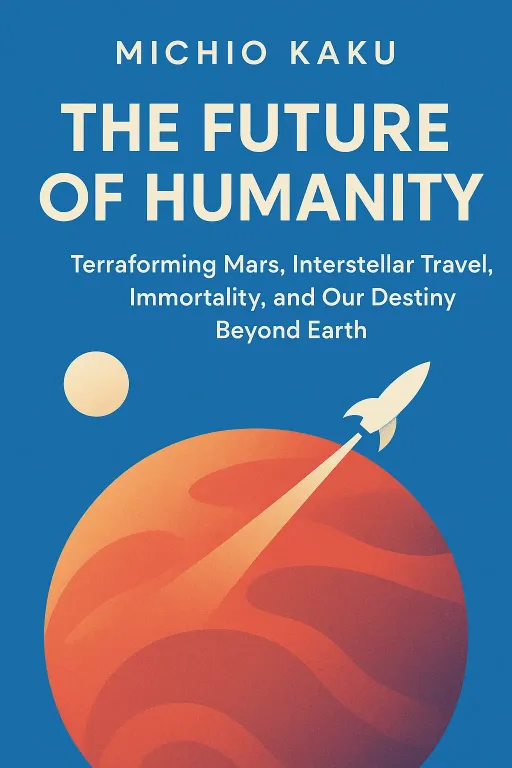
Dr. Celeste Vega: The startup is 'Humanity,' and its competitors are the 99.9% of all species on Earth that have gone extinct. Physicist Michio Kaku argues it's time for a pivot... a big one. His book, "The Future of Humanity," is essentially the pitch deck for our species' survival, an insurance policy against the inevitable.
Jeremie: I love that framing. In venture, we talk about mitigating existential risk for a company. Kaku is talking about mitigating existential risk for our entire species. It’s the ultimate long-term investment thesis.
Dr. Celeste Vega: Exactly. And that's why I'm so excited to have you here. Kaku’s book explores terraforming Mars, interstellar travel, and even immortality. Today, we're going to analyze this 'pitch deck' from two angles that are right in your wheelhouse. First, we'll look at the new space race as the ultimate venture capital play—is colonizing Mars a business or a fantasy?
Jeremie: A fantastic question. The cap table on that would be interesting.
Dr. Celeste Vega: And then, we'll dive into the technology of human survival itself, exploring the frontiers of longevity, transhumanism, and a theme you were curious about: whole brain emulation. It’s a journey to the stars and into ourselves.
Deep Dive into Core Topic 1: The New Space Race as a Venture Capital Play
SECTION
Dr. Celeste Vega: So let's start with that first venture: leaving Earth. For decades, space was the domain of superpowers and government budgets. But Kaku argues we're in a new golden age, one driven not by politicians, but by entrepreneurs. He points directly at figures like Jeff Bezos and, most notably, Elon Musk.
Jeremie: The new titans of industry, for sure. They've completely changed the calculus.
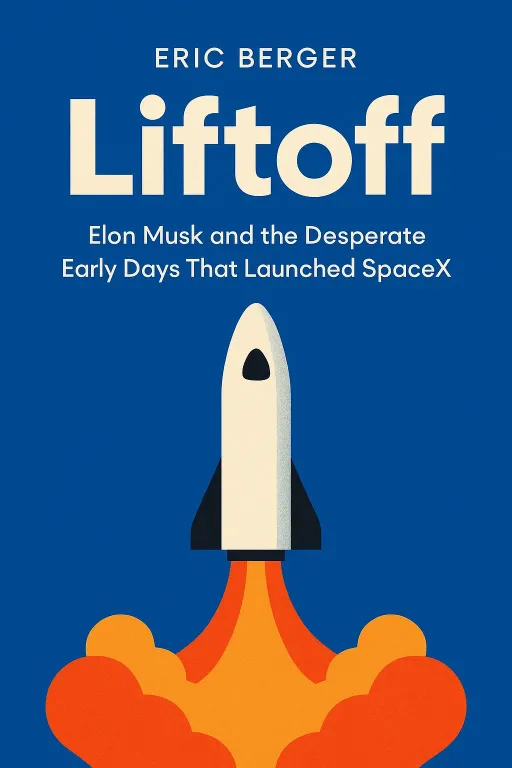
Dr. Celeste Vega: They really have. Kaku details how Musk, with SpaceX, tackled the single biggest problem: cost. Traditional rockets were like flying a Boeing 747 from New York to L. A. and then just... throwing the plane away. Insanely expensive. Musk’s obsession became reusability—landing those boosters on drone ships in the middle of the ocean. It’s an incredible image.
Jeremie: It’s a fundamental disruption of the cost structure. In any industry, if you can drop the core cost by an order of magnitude, you don't just make the old business cheaper, you enable entirely new businesses.
Dr. Celeste Vega: And Kaku captures Musk's philosophy perfectly with this quote: "There’s a silly notion that failure’s not an option at NASA. Failure is an option here. If things are not failing, you are not innovating enough." Jeremie, from an investor's standpoint, when a founder says "failure is an option," what does that signal to you?
Jeremie: It signals that they understand how to build in the physical world, especially with deep technology. It's the opposite of a red flag. In software, you can iterate cheaply. In hardware, especially something as complex as a rocket, your only path to innovation is through rapid, and often explosive, trial and error. Each failure is a data point that de-risks the final product. It shows a mindset focused on speed and learning, which is far more valuable than a slow, cautious approach that might never get off the ground. It's a calculated risk strategy.
Dr. Celeste Vega: That's a great way to put it. This venture-driven approach extends beyond just rockets. Kaku gets excited about what he calls "mining the heavens." He draws a parallel to the California Gold Rush, describing asteroids as "flying gold mines in outer space," packed with platinum and rare earth metals worth trillions.
Jeremie: And that's where my investor skepticism kicks in a little. The vision is incredible, but the business model is still highly speculative. The logistical hurdles of capturing an asteroid, mining it in zero gravity, and returning the materials are just staggering.
Dr. Celeste Vega: So you wouldn't invest in 'Asteroid Mining Inc.' tomorrow?
Jeremie: I'd be more interested in the "picks and shovels" play. The real, investable businesses for the next few decades are in the technologies that enable these grand visions. Think robotics for remote operations, advanced materials, sensor technology, the software for managing autonomous fleets. The money is in building the tools to get to the gold rush, not necessarily in the first pan of gold itself. That's a much more grounded, venture-scale bet.
Dr. Celeste Vega: So, the infrastructure of the dream, not the dream itself.
Jeremie: Precisely. You fund the foundation.
Deep Dive into Core Topic 2: Hacking Humanity: Longevity, Transhumanism, and Digital Immortality
SECTION
Dr. Celeste Vega: Well, building the infrastructure to get to Mars is one thing, but surviving the journey and the destination is another. A trip to our nearest star, Proxima Centauri, would take a chemical rocket about 75,000 years. This brings us to our second, and perhaps even more profound, venture: upgrading humanity itself.
Jeremie: The software upgrade for our biological hardware. This is a fascinating area.
Dr. Celeste Vega: Kaku lays out the options. First, there are multigenerational starships, basically giant arks sailing through space for centuries. But he points out the immense sociological problems—how do you keep a society stable and motivated when their only goal is for their distant descendants to arrive?
Jeremie: It’s the ultimate deferred gratification. And from an operational perspective, it's a nightmare. Resource management, social engineering... it's a closed system with no margin for error.
Dr. Celeste Vega: Exactly. So, he moves on to suspended animation, like in the movies. The problem is, when you freeze a human, the water in our cells forms jagged ice crystals that shred our tissues. Not ideal. This leads him to the real frontier, which I know is your world: radical life extension. He talks about the potential of telomerase, an enzyme that rebuilds the ends of our chromosomes, and even "age genes" like the "Mighty Mouse gene" that creates super-muscular mice. He floats the idea of "curing death."
Jeremie: Right, and this is where we need to separate the science from the science fiction, which Kaku blends beautifully. The work being done in the longevity space today is very real and incredibly exciting, but it's more incremental. We're seeing promising results from targeting specific aging pathways, like mTOR with drugs like rapamycin, or clearing out senescent 'zombie' cells. These are investable theses with clinical pathways.
Dr. Celeste Vega: So where does something like telomerase fit in? Kaku presents it as a key to cellular immortality.
Jeremie: It's a key, but it's a key that also unlocks the door to cancer. Uncontrolled cell division is the definition of cancer, and telomerase is highly active in most cancer cells. So, the risk profile is enormous. No responsible investor would pour billions into a therapy that might make you live forever but also gives you a near-certainty of terminal cancer. The challenge isn't just extending life; it's extending safely.
Dr. Celeste Vega: That’s a critical distinction. Kaku, of course, takes it a step further, into the realm of digital immortality and whole brain emulation. He discusses projects like the Human Brain Project, which aim to simulate the brain in a supercomputer. The idea is that if you can map your 'connectome'—your unique neural wiring—you could upload it and live forever as a digital being.
Jeremie: This is the philosophical endgame for a lot of people in Silicon Valley. From an investment perspective, it’s pure, long-range R&D. The practical, commercial path to that future isn't a single moonshot project to "upload a brain." It's through developing the enabling technologies, often for medical reasons.
Dr. Celeste Vega: Like what?
Jeremie: Brain-computer interfaces, or BCIs. Kaku mentions Professor Miguel Nicolelis, who enabled a paralyzed man to kick a soccer ball at the World Cup using an exoskeleton controlled by his thoughts. That's a real, tangible product that helps people. The technology developed for that—the chips, the software that decodes neural signals—that's where the value and the investment opportunities are. We're building the tools to read and write to the brain to restore function. The idea of copying the whole thing comes much, much later. It's about therapy first, enhancement second, and transcendence as a distant, theoretical third.
Synthesis & Takeaways
SECTION
Dr. Celeste Vega: So, when we look at Kaku's grand vision for humanity's future, we see these two massive, parallel ventures. On one hand, the external venture: building the rockets and businesses to take us to other worlds, which is becoming a real, albeit risky, industry.
Jeremie: Right, a hardware and logistics play.
Dr. Celeste Vega: And on the other, the internal venture: re-engineering our own biology and consciousness to survive the journey. This path seems even more complex, more ethically fraught, but also potentially more transformative.
Jeremie: It's a software and systems biology play. And you're right, the ethical questions are profound. Who gets access to these technologies? What does it mean for society if some people can live to 150 and others can't?
Dr. Celeste Vega: It's a powerful thought to end on. If you had to advise humanity as a species, where would you place your bet?
Jeremie: You know, it makes you ask a fundamental question for our species' 'investment thesis': Do we bet on changing our location, or do we bet on changing ourselves? Kaku's book brilliantly suggests we have to do both. The challenges of space demand that we become more than we are. And as an investor, I'd say the portfolio that diversifies across both—the external and the internal frontiers—is probably the one that survives in the long run. You need a hedge. One bet is on real estate, the other is on the residents. You need both to build a civilization.
Dr. Celeste Vega: A diversified portfolio for survival. I think that's the perfect takeaway. Jeremie, thank you for bringing your incredible perspective to these cosmic ideas.
Jeremie: It was my pleasure, Celeste. It’s the most exciting conversation to have.