The Blueprint for Peak Cognitive Performance
Golden Hook & Introduction
SECTION
Nova: The average professional spends roughly twenty-one hours a week in meetings, and research suggests that nearly half of those hours are considered a complete waste of time by the participants themselves. That is a massive, systemic leak of human potential happening every single day.
Atlas: That is an aggressive number. If I told a project manager that they were effectively burning half their fuel just idling the engine, they would be horrified. But somehow, we have normalized this. We treat these calendar black holes as if they are just the weather—something that happens to us rather than something we design.
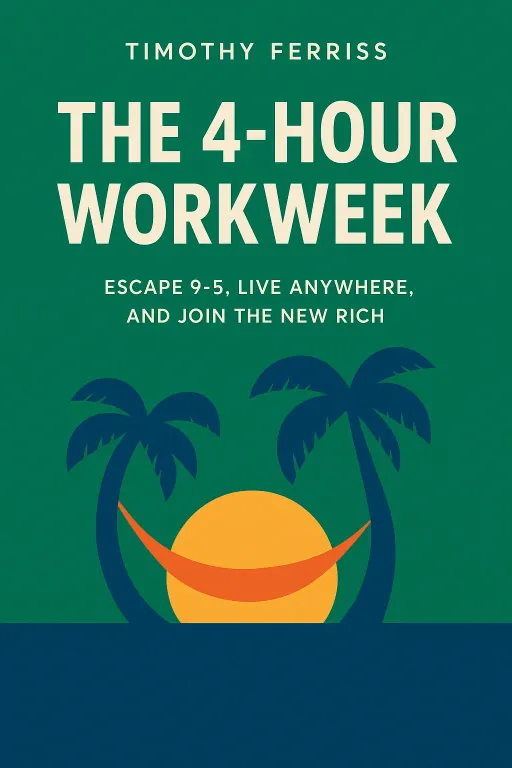
Nova: Exactly. We accept it as the cost of doing business. Today, we are going to dismantle that assumption. We are looking at a dual-layered approach to performance, combining the systemic rigor of Tim Ferriss’s The 4-Hour Workweek with the internal operating system found in Don Miguel Ruiz’s The Four Agreements. It is a collision of industrial-strength productivity and ancient, minimalist philosophy.
Atlas: I am intrigued by that pairing. Ferriss is the king of the tactical, bottom-line optimization, while Ruiz is operating on a totally different frequency with his Toltec code of conduct. How do these two even talk to each other?
Nova: They talk to each other through the concept of friction. Ferriss focuses on removing the external friction that clogs up your output, while Ruiz removes the internal friction that drains your energy. When you combine them, you stop fighting the environment and you stop fighting yourself.
Atlas: That sounds like a powerful combination for anyone managing high-stakes environments. Before we dive into the mechanics, let’s ground this. Ferriss wrote The 4-Hour Workweek back in 2007, and it was a massive cultural pivot. He basically took the traditional retirement model—the idea of slaving away for forty years—and flipped it on its head. He introduced this idea of "lifestyle design" before it was even a buzzword.
Nova: And it is fascinating because it wasn't just a productivity book. It was a manifesto against the industrial-era obsession with "busyness." Meanwhile, Don Miguel Ruiz’s The Four Agreements, which came out a decade earlier, has this enduring, quiet power. It is not about managing your time; it is about managing your reality. It is rooted in Toltec wisdom, and it has sold millions of copies because it speaks to a universal struggle: the mental noise that keeps us from being effective.
Atlas: Okay, so we have the external architect and the internal guide. Let's start with the external architecture. How do we actually apply the Ferriss model without blowing up our professional reputations?
The Ferriss Framework & External Systems
SECTION
Nova: The core of the Ferriss approach is the DEAL framework: Definition, Elimination, Automation, and Liberation. For a systems thinker, the most dangerous part of that is the second step: Elimination. Most people try to optimize their work by doing it faster. Ferriss argues that is the wrong variable to change.
Atlas: I have been down that rabbit hole. I used to think that if I just got faster at clearing my inbox, I was winning. But all I did was teach people to send me more emails. It is the classic efficiency trap. You are just optimizing a process that should not exist in the first place.
Nova: Precisely. The Ferriss philosophy is that you cannot optimize what you should be eliminating. If you audit your calendar today, you will likely find recurring meetings that serve no purpose other than to report on status, or to make people feel included. Ferriss suggests a ruthless audit. If a meeting does not have a clear, binary outcome—a decision made or a problem solved—it is a candidate for the chopping block.
Atlas: That is a tough sell in a corporate culture. I imagine a lot of listeners are thinking, "Sure, I can cancel my weekly status update, but the boss is going to want to know why I am not there." How do we handle the social friction that comes with that kind of elimination?
Nova: That is where the strategy comes in. You do not just stop showing up. You replace the meeting with a system. You provide the output—the status report, the data, the project update—in a written format that people can consume on their own time. You are essentially trading a synchronous, time-heavy interaction for an asynchronous, low-friction document.
Atlas: So you are saying that the resistance isn't about the work itself, but about the visibility. People use meetings to prove they are working. If you remove the meeting, you have to find a better way to prove your value.
Nova: Exactly. You shift the metric from "time spent in the room" to "value delivered." Ferriss’s approach is fundamentally about redefining what "work" means. It is not about the hours logged. It is about the impact created. When you start ruthlessly eliminating the non-essential, you create the space to actually think. And that leads us to the second, more internal, part of the puzzle.
Internal Friction & The Toltec Agreements
SECTION
Atlas: I want to bridge this to the Ruiz side of the conversation. You have cleared your calendar, you have automated your systems, but now you have this empty space. And in that space, the internal noise often gets louder. This is where the Four Agreements come in, specifically "Don't Take Anything Personally" and "Don't Make Assumptions."
Nova: That is the perfect segue. You can have the most optimized calendar in the world, but if you walk into a meeting and take a colleague’s critique as a personal attack, or if you spend three hours in a mental loop assuming your manager is dissatisfied with your performance, your cognitive output drops to zero.
Atlas: I know that loop well. It is a massive drain on processing power. You are essentially allocating a huge chunk of your brain's CPU to run a background program that is just interpreting other people's motives.
Nova: That is a brilliant way to put it. Don Miguel Ruiz argues that taking things personally is the ultimate form of selfishness, because it assumes that everything others do is about us. When someone is rude, or a project gets critiqued, or a stakeholder is difficult, it usually has nothing to do with you. It is about their own internal state, their own pressures, their own history.
Atlas: I can see the logic, but I have to play devil's advocate here. In a high-stakes, competitive environment, isn't there a risk in being too detached? If someone is critiquing my work, shouldn't I take it personally enough to care about the quality?
Nova: There is a vital distinction between "taking it personally" and "taking responsibility." When you take a critique personally, you are making it about your identity. You are thinking, "I am a failure because this project was criticized." When you take responsibility, you are making it about the work. You think, "The project needs this adjustment to be successful."
Atlas: That is a clean distinction. It is the difference between an ego reaction and a strategic correction.
Nova: Exactly. And the second agreement, "Don't Make Assumptions," is the natural partner to that. Assumptions are the primary source of drama in any organization. We assume we know what the boss wants. We assume we know why a client said no. We assume we know our colleagues' intentions. And those assumptions create a false reality that we then act upon.
Atlas: It is like building a house on a foundation of sand. If you act on an assumption, you are making a decision based on a hallucination. In a systems architecture, if your input data is wrong, your output is going to be wrong.
Nova: You hit the nail on the head. You are feeding your brain bad data. Ruiz suggests that the antidote is simple: ask questions. Speak up. If you are not sure what someone meant, ask. If you are not sure why a decision was made, ask. It sounds simple, but it is incredibly rare because it requires the courage to look uncertain.
Atlas: It requires the courage to say, "I don't know," which is often seen as a weakness in high-stakes environments. But you are saying it is actually a strength because it saves you from the massive energy cost of maintaining a false narrative.
Nova: Precisely. The energy you spend worrying about an assumption is energy you are not spending on solving the actual problem. It is a trade-off. You can either spend your energy on the drama of your own assumptions, or you can spend it on the clarity of reality.
Synthesis & Takeaways
SECTION
Atlas: Okay, so let's synthesize this for the listener who is sitting in their office, feeling the weight of the day. We have the Ferriss approach for the external world: audit your calendar, be ruthless with elimination, and prioritize output over hours. And then we have the Ruiz approach for the internal world: stop making it about you, and stop guessing what others are thinking.
Nova: That is the complete package. If you can master both, you are not just working less; you are working with a different level of clarity and power. You are effectively clearing the clutter from your desk and the static from your mind.
Atlas: And the beauty of this is that it is not a "one and done" event. It is a practice. You don't just audit your calendar once. You do it every week. You don't just decide not to take things personally once. You do it every time you feel that spike of defensiveness.
Nova: That is the most important part. It is a system of maintenance. Just like a high-performance engine needs regular tuning, your cognitive performance needs these adjustments.
Atlas: So, for the listener who wants to apply this today, what is the single, highest-leverage move they can make?
Nova: Start with the audit. Look at your calendar for the next week. Identify one recurring meeting that you are only attending out of habit or obligation. Apply the Ferriss elimination criteria: Can you replace it with an email, a document, or a quick update? Then, for the rest of the day, choose one interaction where you would normally feel defensive or anxious, and practice the Toltec agreement. Don't take it personally. Remind yourself that the other person’s behavior is a reflection of their world, not yours.
Atlas: That is a concrete, actionable, and frankly, liberating way to approach the day. It turns the chaos of the office into a series of manageable, solvable problems rather than a personal struggle.
Nova: And that is how you sustain performance over the long term. It is not about grinding harder; it is about building a system that allows you to thrive without burning out.
Atlas: This has been a great breakdown. I feel like I have a much clearer map for navigating the noise.
Nova: I am glad to hear that. The goal is always to move from being a passenger in your own life to being the architect of your own performance.
Atlas: Well said. This is Aibrary. Congratulations on your growth!