

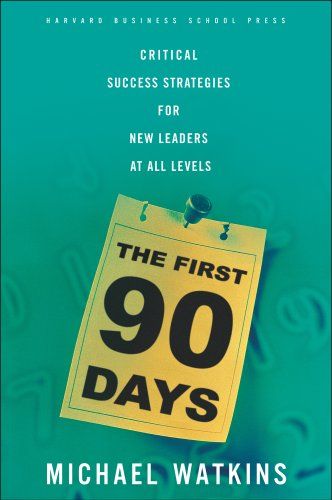
The First 90 Days
Introduction
Nova: Did you know that the average leader will go through a major professional transition every thirteen months? That is not just moving to a new company. It is a promotion, a lateral move, or even a new boss. And according to Michael D. Watkins, the author of The First 90 Days, these transitions are the most critical times in a professional career because that is when you are most vulnerable.
Nova: Exactly. And the stakes are high. Watkins points out that transitions are like a pivot point where you either create a virtuous cycle of success or a vicious cycle of failure. He introduces this concept called the break-even point. It is that magical moment where you have contributed as much value to your new organization as you have consumed since starting. Most people think they have all the time in the world, but Watkins argues you need to hit that point as fast as possible, ideally within those first ninety days.
Nova: It really is. It is a systematic framework to help you stop being a consumer of value and start being a producer. Today, we are going to break down how Watkins suggests we navigate that ninety-day window, from diagnosing the mess you might have inherited to securing those early wins that make everyone think you are a genius.
Key Insight 1
The Transition Mindset
Nova: The very first step Watkins talks about is something many people overlook because they are too busy celebrating their new title. He calls it promoting yourself. It sounds like vanity, but it is actually about a mental shift. You have to consciously let go of your old job and embrace the requirements of the new one.
Nova: You would be surprised. Watkins found that many leaders fail because they keep doing what made them successful in their previous role. If you were a great salesperson and you get promoted to sales manager, your instinct is to go out and close deals yourself. But that is actually a failure in your new role because your job now is to build the team that closes the deals.
Nova: Spot on. And once you have mentally promoted yourself, you have to accelerate your learning. Watkins argues that the biggest mistake is coming in with the answer before you even know the questions. You need to become a sponge for the first few weeks. But he is specific about what you need to learn. It is not just the technical stuff or the financial reports. It is the cultural and political landscape.
Nova: Exactly. He suggests creating a learning agenda. You should be asking questions like: How did this organization get to where it is today? Who are the people whose opinions really matter? What are the sacred cows that no one is allowed to touch? If you do not learn the culture fast, you might step on a landmine before you even get your first paycheck.
Key Insight 2
The STARS Model
Nova: That transition from learning to doing is where most people stumble, and that is why Watkins created the STARS model. It is a diagnostic tool to help you understand exactly what kind of situation you have walked into. STARS is an acronym that stands for Start-up, Turnaround, Accelerated Growth, Realignment, and Sustaining Success.
Nova: Precisely. In a Start-up, you are building everything from scratch. You need energy and vision because there are no rules. But in a Turnaround, the house is on fire. You have to make tough, fast decisions to save the business. If you go into a Turnaround and try to spend three months learning the culture, the company might be gone by the time you are done.
Nova: Realignment is actually the most dangerous one. It is for situations where the organization is still successful on the surface, but there are deep-seated problems brewing underneath. People are often in denial. They think everything is fine, so they will resist any change you try to make. In a Turnaround, everyone knows there is a problem. In a Realignment, you have to convince them there is a problem first.
Nova: Exactly. Watkins says you have to match your strategy to the situation. For example, in a Sustaining Success role, your job is to learn the nuances and avoid breaking what already works. You are a steward. In Accelerated Growth, you are building the systems to handle the scaling. Identifying which of the five STARS you are in tells you how much authority you have and how fast you should move.
Key Insight 3
Securing Early Wins
Nova: Momentum comes from what Watkins calls securing early wins. This is about building credibility quickly. You want people to feel that something good is happening now that you are here. But there is a catch. The early wins have to be consistent with the long-term goals. You do not want to just do random easy things; you want to solve a visible problem that matters to the team.
Nova: It could be, but often it is simpler. It might be fixing a broken process that has been annoying the staff for years. Maybe the weekly meeting is a disorganized mess that everyone hates. If you come in and turn that into a crisp, efficient, thirty-minute session where things actually get decided, you have just won over the entire room. You have demonstrated that you are a fixer.
Nova: Precisely. But you cannot do this in a vacuum. You have to negotiate success with your boss. This is one of the most brilliant parts of the book. Watkins says you should never assume you and your boss are on the same page. You need to have five specific conversations with them.
Nova: They are the Situational Diagnosis conversation, where you agree on which STARS situation you are in. Then the Expectations conversation, so you know exactly what success looks like. The Resource conversation, to make sure you have the budget and people you need. The Style conversation, to figure out how you will communicate. And finally, the Personal Development conversation, about how you can grow in the role.
Nova: Exactly. If you do not proactively negotiate your success, you are essentially letting your boss's unstated expectations dictate your fate. And in a transition, those expectations can be wildly unrealistic unless you ground them in the reality of the situation.
Key Insight 4
The Human Element
Nova: Even if you have the perfect strategy and your boss loves you, Watkins warns that you will still fail if you do not get the people right. This leads to his strategies on building your team and creating alliances. He has this concept called the V-Model of alignment. You have to ensure that the strategy, the structure, the systems, and the skills of the people all line up.
Nova: Watkins suggests a very systematic approach. You categorize your team members into four groups: the Keepers, who are the high performers; the Developers, who have potential but need coaching; the Relocatable, who are good but in the wrong role; and the No-Gos, who simply do not fit the new direction.
Nova: It is about being fair but firm. The longer you wait to deal with the No-Gos, the more you lose the respect of the Keepers. The high performers want to see that you have a standard for excellence. But Watkins also emphasizes that you cannot just rely on your direct reports. You need to build alliances horizontally and even upward across the organization.
Nova: Exactly. He calls them the shadow influencers. You need to map out the influence networks. Who do people go to for advice? Who can block your initiatives? You need to build bridges with those people early, before you actually need their help. If the first time you talk to the IT head is when you are demanding a new system, you are going to have a hard time. If you have been building a relationship for two months, they are much more likely to support you.
Conclusion
Nova: As we wrap up our look at The First 90 Days, it is clear that Michael Watkins views leadership transitions not as a single event, but as a deliberate process. We have talked about promoting yourself, diagnosing the STARS situation, negotiating success with your boss, and building the right team. But there is one final piece Watkins mentions: expediting everyone. A leader's job is not just to transition themselves, but to help their entire team transition into this new era.
Nova: Absolutely. The goal is to reach that break-even point as a collective. By using these frameworks, you reduce the time it takes to become productive, which is good for you, your team, and the company. It turns a period of high anxiety into a structured path toward success. The biggest takeaway is that you should never just wing it. A transition is too important to leave to chance.
Nova: It really does. Whether you are stepping into your first management role or taking over a global corporation, these principles remain the same. Master the transition, and you master your career.
Nova: This is Aibrary. Congratulations on your growth!