

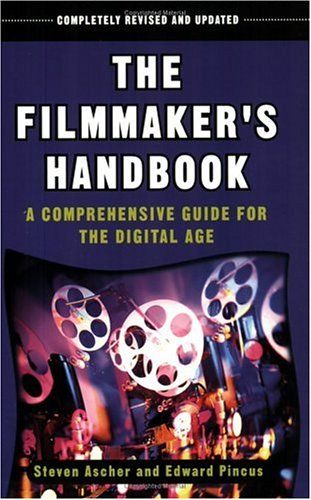
The filmmaker's handbook
Introduction
Nova: Imagine you are standing on a film set. There are cables everywhere, three different people are asking you questions about the lighting, and the lead actor just realized they forgot their lines. In that moment of pure chaos, what is the one thing every filmmaker wishes they had?
Nova: Those would help, but for decades, the real answer has been a book. Specifically, The Filmmaker's Handbook by Steven Ascher and Edward Pincus. It is widely known in the industry as the bible of filmmaking.
Nova: They do, and for good reason. This book has survived the transition from 16mm film to 8K digital sensors because it does something a ten-minute video cannot. It connects the technical how-to with the creative why. Today, we are diving into the fifth edition of this massive guide to see why it remains the gold standard for everyone from Oscar nominees to high school students with a smartphone.
Key Insight 1
The Philosophy of the Frame
Nova: One of the most striking things about Steven Ascher and Edward Pincus is their background. They are not just technical writers; they are legends in the documentary world. Pincus was a pioneer of cinema verite, that fly-on-the-wall style of filmmaking.
Nova: Exactly. And that is why the book starts in a place most people do not expect. It does not start with cameras or lenses. It starts with story and audience. Ascher says you have to eat your vegetables before you get dessert.
Nova: Spot on. He argues that the technical, creative, and financial aspects of film are so tightly interwoven that you cannot separate them. If you do not know who your audience is or what your story is trying to say, the most expensive 8K camera in the world is just a very heavy paperweight.
Nova: That is the Pincus influence. He believed that style is subjective, but the craft is universal. The book teaches you that while digital delivery has exploded with YouTube and TikTok, the human brain still responds to the same storytelling principles it did fifty years ago. The marketplace is flooded with content, which means viewers are more fickle than ever. To stand out, you need more than just high resolution; you need a perspective.
Key Insight 2
The Digital Revolution and the Sensor War
Nova: That is the magic of how Ascher writes. He focuses on the physics and the fundamentals. For example, he spends a lot of time explaining how digital sensors actually work—things like photosites and color filters.
Nova: You could, but then you would be lost when things go wrong. The book dives deep into concepts like RAW and Log profiles. If you are shooting in Log, the image looks flat and gray on your monitor, which can be terrifying if you do not understand that it is actually preserving more data for the color grade later.
Nova: Precisely. And he does not just stick to digital. He actually keeps the information on film stocks and analog processes in there.
Nova: More people than you think! But more importantly, Ascher argues that understanding film helps you understand digital. Digital sensors are designed to mimic the behavior of film. When you learn about latitude and grain, you suddenly understand why your digital highlights are blowing out or why your shadows look noisy. It is about knowing the history to master the future.
Key Insight 3
The Invisible Art of Sound and Editing
Nova: Ascher would agree with you, and he would probably give you a stern look for it. The Handbook is famous for its rigorous chapters on audio. He makes a point that is a bit of a wake-up call: audiences will forgive a slightly blurry image, but they will turn off a movie in seconds if the audio is bad.
Nova: He goes into incredible detail about microphone placement, the difference between omnidirectional and shotgun mics, and the physics of how sound bounces off walls. It is not just about recording; it is about the psychology of sound. How a low-frequency hum can create dread, or how silence can be the loudest thing in a scene.
Nova: Yes. The book treats editing as the final rewrite of the script. It covers the technical side—codecs, NLE systems, and metadata—but it also covers the pacing. Ascher explains that an edit is not just a cut between two shots; it is a transition between two ideas. If you cut too early, you lose the emotion. If you cut too late, the audience gets bored. The Handbook teaches you how to find that rhythm.
Key Insight 4
The Business of the Hustle
Nova: That is arguably the most important part for anyone trying to make a career out of this. Ascher is very honest. He says that as a business model, filmmaking often makes no sense. You spend years raising money, months shooting, and then you have to fight to get anyone to see it.
Nova: It is realistic! He covers the headaches of copyright law, how to clear music rights, and the logistics of insurance. He even talks about the strategy of begging for funding. It is about the hustle.
Nova: He does. The fifth edition specifically looks at how to launch a movie into the world today. It is no longer just about getting into a theater. It is about navigating film festivals, digital aggregators, and self-distribution on platforms like Vimeo or Amazon.
Nova: Exactly. He calls the book a mentor. A good mentor does not just tell you how to use a camera; they tell you how to survive the industry. He wants you to solve the artistic challenges, but he also wants you to be able to sustain yourself financially so you can make the next film.
Conclusion
Nova: We have covered a lot of ground, but that is really the essence of The Filmmaker's Handbook. It is a massive, dry, technical, and deeply philosophical guide that refuses to give you shortcuts.
Nova: That is exactly how most professionals use it. It is a reference for when you are stuck. Whether you are trying to figure out why your green screen looks terrible or how to structure a documentary proposal, Ascher and Pincus have an answer for you.
Nova: Well said. If you are serious about the craft, this book is an investment in your future self. It is the mentor that is always available at 3:00 AM when your edit isn't working.
Nova: Definitely not. This is Aibrary. Congratulations on your growth!