

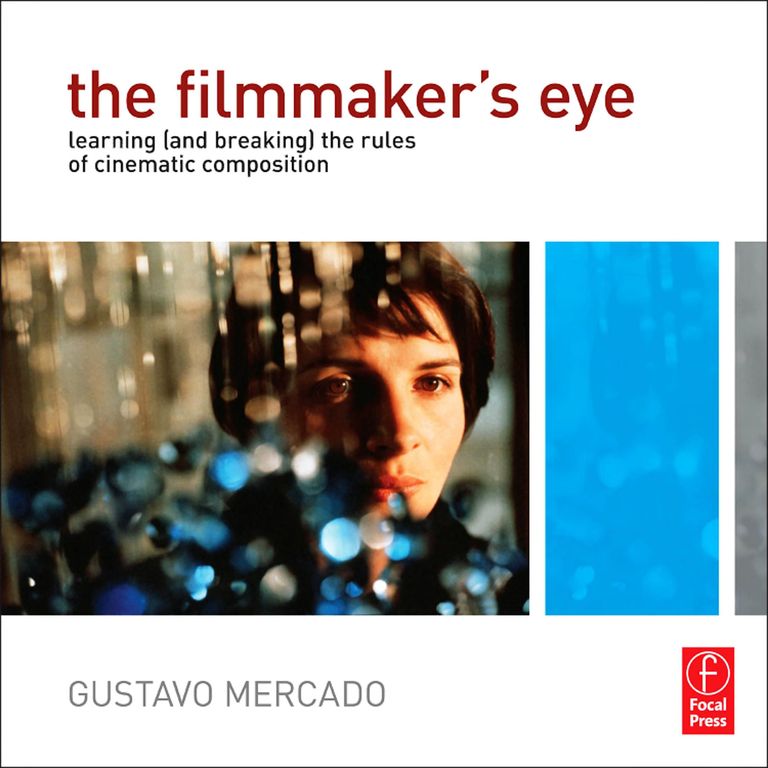
The filmmaker's eye
Learning (and Breaking) the Rules of Cinematic Composition
Introduction
Nova: Have you ever watched a movie and felt a sudden chill or a rush of excitement, but you couldn't quite put your finger on why? You know the story is good, the acting is great, but there is something deeper happening on the screen that is pulling your strings.
Nova: That is exactly what we are diving into today. We are looking at a book that acts as a decoder ring for that secret language. It is called The Filmmaker's Eye: Learning and Breaking the Rules of Cinematic Composition by Gustavo Mercado.
Nova: That is the beauty of it. Mercado argues that once you understand the eye of the filmmaker, you never look at a screen the same way again. Whether you are holding a cinema camera or just a bucket of popcorn, this book changes your perspective on how stories are told visually.
Key Insight 1
The Philosophy of the Frame
Nova: The first thing Mercado does is strip away the idea that cinematography is just about expensive gear or technical settings. He introduces this brilliant framework: the Technical versus the Conceptual.
Nova: The conceptual is the why. It is the narrative intent behind the shot. Mercado says that a technically perfect shot can be a complete failure if it does not serve the story. You could have the most beautiful, high-resolution image in the world, but if it does not tell us something about the character's internal state, it is just a pretty picture.
Nova: Exactly. He uses this example of a shot from the movie Rocky. Technically, it is a simple composition. But conceptually, it is about the isolation and the weight of the world on Rocky's shoulders. Mercado pushes us to ask: What is the dramatic core of this moment? And how does the frame support that?
Nova: Precisely. Every choice—where you put the camera, how close you get, what you leave out of the frame—is a sentence in the visual story. Mercado breaks down about twenty-five essential shots, and for every single one, he provides a technical breakdown and a conceptual analysis.
Nova: They are. But Mercado shows us that these building blocks are incredibly versatile. It is like having twenty-five notes on a piano. You can play a simple melody or a complex symphony depending on how you arrange them.
Nova: Spot on. It is about moving from being a passive observer to an active visual storyteller. He wants us to understand that the frame is a limited space, and every square inch of it is prime real estate.
Key Insight 2
The Anatomy of a Shot
Nova: Let's get into the actual shots. Mercado organizes the book by shot types, starting from the widest views down to the most intimate details. Take the Extreme Long Shot, for example.
Nova: Right. Technically, you are using a wide-angle lens and placing the camera far back. But Mercado explains that conceptually, this shot is often about the relationship between a character and their environment. It can represent loneliness, or it can represent the epic scale of a journey.
Nova: Exactly. But then he flips it and looks at the Close-up. This is where the camera is right in the character's face. Mercado calls this the most powerful tool in the filmmaker's arsenal because it forces an intimate connection. You can't look away from the character's emotions.
Nova: And Mercado uses real film stills to prove it. He analyzes shots from movies like The Graduate or Children of Men. He doesn't just use diagrams; he shows you how master directors like Mike Nichols or Alfonso Cuarón actually did it.
Nova: He also talks about the Medium Shot, which he describes as the workhorse of cinema. It is the most naturalistic shot because it mimics how we see people in everyday conversation. It is great for dialogue, but Mercado warns that it can also be the most boring shot if you don't use the composition to add depth.
Nova: Never. Mercado is very big on the idea that there are no neutral shots. Every shot is making a statement. If you aren't choosing what that statement is, the audience will make one up for you, and it might not be the one you wanted.
Key Insight 3
The Grammar of Composition
Nova: Now, once you have your shot type, you have to decide where everything goes inside the frame. This is where the rules of composition come in. Most people have heard of the Rule of Thirds.
Nova: It is. But Mercado goes deeper. He explains why it works. It creates a sense of balance and movement. If you put a character right in the center, the image can feel static or confrontational. By moving them to a third, you create space for the eye to wander.
Nova: Yes! Lead room is the space in front of a character when they are looking or moving in a certain direction. If a character is looking to the right, you want more space on the right side of the frame than the left.
Nova: It feels claustrophobic. Mercado explains that our brains naturally want to see where the character is looking. If you cut off that space, it creates a sense of unease. It feels like the character is staring into a wall.
Nova: Exactly. And then there is Headroom. That is the space between the top of the character's head and the top of the frame. Too much headroom and the character looks like they are sinking. Too little and they look like they are being crushed.
Nova: Mercado also emphasizes Depth of Field. This is using the focus to guide the eye. By blurring the background, you are literally telling the audience, ignore that, look at this. It is a way of prioritizing information in a crowded frame.
Key Insight 4
The Art of Breaking Rules
Nova: This is my favorite part of the book. The title isn't just Learning the Rules; it is Learning and Breaking the Rules. Mercado argues that you have to master the conventions so you know exactly how to subvert them for a specific effect.
Nova: Exactly. The Dutch Angle is a classic example of breaking the rule of a level horizon. Technically, you just tilt the camera. Conceptually, you are signaling that something is wrong. The world is out of balance. The character is losing their mind or the situation is chaotic.
Nova: Right. Or think about Negative Space. Usually, we want to fill the frame with interesting things. But Mercado shows how leaving a massive amount of empty space around a character can communicate profound isolation or vulnerability.
Nova: That is a perfect analogy. He also mentions breaking the 180-degree rule. That is the rule that says if two people are talking, the camera should stay on one side of an imaginary line between them so their eye lines match up.
Nova: It does. But Mercado points out that some directors cross that line on purpose to make the audience feel disoriented or to show a shift in the power dynamic between the characters.
Nova: Precisely. Mercado says that a rule is just a tool. If the tool doesn't fit the job, you throw it out and find a better one. But you have to know the tools exist first. You can't just stumble into greatness; you have to engineer it.
Conclusion
Nova: We have covered a lot of ground today, from the technical settings of a lens to the psychological impact of a tilted frame. Gustavo Mercado's The Filmmaker's Eye really is a masterclass in visual literacy.
Nova: That is the best way to learn. The next time you are watching a show or a film, ask yourself: Why did they put the camera there? What is this shot trying to tell me that the dialogue isn't?
Nova: If you are interested in filmmaking, or even if you just love the art of storytelling, this book is an essential guide. It teaches you that the most important piece of equipment a filmmaker has isn't a camera or a lens—it is their eye.
Nova: Well said. We hope this deep dive into Mercado's work has given you a new set of lenses to view the world through.
Nova: This is Aibrary. Congratulations on your growth!