

Mastering the Art of Systems Thinking: Connecting Code to the Cosmos
Golden Hook & Introduction
SECTION
Nova: You know that feeling, right? That nagging bug in your code that just won't die, or that recurring problem in your daily routine that you keep patching, but it always resurfaces, like a particularly stubborn weed.
Atlas: Oh, I know that feeling. It’s like playing whack-a-mole with reality. You hit one, and two more pop up. It’s infuriating, honestly. Especially when you think you’ve fixed it for good.
Nova: Exactly! Most of us, when faced with these persistent issues, tend to focus on the immediate symptom. We try to squash the bug, or tweak the routine. But what if the problem isn’t the bug itself, or the routine, but the invisible system that keeps producing it?
Atlas: Wait, so you’re saying my code isn't just broken; it's to be broken? That's a bit out there.
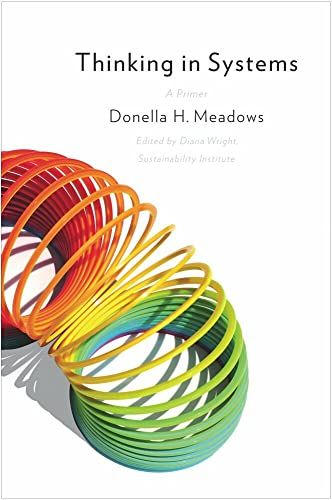
Nova: Not designed to be broken, but operating within a system that that behavior. And today, we’re peeling back the layers of that invisible system. We’re diving into the profound world of systems thinking, guided by two towering figures: Donella H. Meadows’ foundational work, "Thinking in Systems: A Primer," and Peter M. Senge’s transformative "The Fifth Discipline: The Art & Practice of The Learning Organization."
Atlas: Oh, I love that. So it's not just about fixing the symptom, but understanding the blueprint itself.
Nova: That's right. Donella Meadows, an environmental scientist and a true pioneer in system dynamics at MIT, was instrumental in developing this field. Her work emerged from a time when complex environmental and social challenges were overwhelming traditional, linear problem-solving. She gave us the language to describe these complex interconnections. And Peter Senge, from the MIT Sloan School of Management, built directly on Meadows’ insights, showing how to apply systems thinking to the most complex system of all: human organizations. His work became a cornerstone for how we think about learning and adaptation in teams.
Atlas: So, one gives us the mechanics, and the other gives us the application. I’m already intrigued, because as builders, we’re always looking for those underlying blueprints, not just the surface-level fixes.
The Fundamental Mechanics of Systems: Unveiling Feedback Loops and Flows
SECTION
Nova: Absolutely. And that brings us to our first core idea: understanding the fundamental mechanics of systems. Meadows taught us that every system, whether it’s your morning commute, a forest ecosystem, or a complex piece of software, is made up of three core components: elements, interconnections, and a purpose. But the real magic, and often the source of those stubborn bugs you mentioned, lies in the, particularly what she called feedback loops, stocks, and flows.
Atlas: Okay, so elements, interconnections, purpose. That seems pretty straightforward. But feedback loops, stocks, and flows? Can you give me an example? My brain immediately goes to a stock market, and that feels too big.
Nova: Let's use something simpler, something every builder can relate to: a thermostat in a room. The elements are the furnace, the thermostat, the air, the people. The purpose is to maintain a comfortable temperature.
Atlas: Right, simple enough.
Nova: Now, the interconnections. When the room gets cold, the thermostat senses it, sends a signal to the furnace, the furnace kicks on, heats the room. When the room reaches the set temperature, the thermostat senses that, sends a signal to the furnace to turn off. This is a classic. It works to keep the system at a desired state, maintaining equilibrium.
Atlas: So, the feedback loop is the constant adjustment, like how my code might self-correct based on certain inputs?
Nova: Precisely. It’s a self-regulating mechanism. But systems also have. Think about a viral social media post. Someone shares it, more people see it, more people share it, and it grows exponentially. That’s a reinforcing loop, driving growth or decline.
Atlas: Oh, I see. So a balancing loop tries to keep things stable, and a reinforcing loop pushes things further in one direction or another. That makes sense.
Nova: Exactly. And then we have and. A stock is the accumulation of something—water in a bathtub, money in a bank account, or lines of code in a repository. Flows are the rates of change that increase or decrease that stock—water flowing in, water flowing out; deposits, withdrawals; new features added, old features refactored.
Atlas: So, the stock is the current state, and the flows are the actions that change that state. Like my project backlog is a stock, and tasks being added or completed are flows.
Nova: You've got it. Now, here's where it gets interesting for those frustrating, recurring problems. Often, we focus on manipulating the flows directly—"let's add more water to the tub," or "let's fix this specific bug." But if we don't understand the underlying feedback loops, our interventions can have unintended consequences, or the problem just shifts.
Atlas: That’s actually really inspiring. So, understanding these loops and flows means we can see the bug keeps coming back, not just it's coming back. It's like debugging at a much higher level.
Nova: It’s seeing the system that produces the behavior, rather than just the behavior itself. Meadows often highlighted how easy it is for humans to misinterpret system behavior because we tend to think in linear cause-and-effect chains, when reality is a web of interconnected loops. Her work was celebrated for demystifying this complexity, making it accessible even to those without a scientific background, though some found it a bit too theoretical without enough clear-cut "how-to" steps.
Atlas: That’s fair. It’s one thing to understand the theory, another to apply it when your sprint deadline is looming. So, how do we move from seeing these invisible forces to actually building better systems?
Building Learning Organizations: Applying Systems Thinking to Teams and Beyond
SECTION
Nova: That’s a perfect segue to our second core idea, and where Peter Senge's "The Fifth Discipline" comes in. Senge built on Meadows' fundamental insights, asking: how do we apply this deep understanding of systems to create organizations that can truly learn and adapt? He introduced the concept of the "learning organization," where systems thinking isn't just an individual skill, but a collective discipline.
Atlas: Okay, so it scales up. From an individual understanding of loops to an entire team or company understanding them. But how does that manifest? What does a "learning organization" actually do differently?
Nova: Senge identified five disciplines, with systems thinking being the "fifth" and integrating all the others. A learning organization is one where people are continually expanding their capacity to create the results they truly desire, where new and expansive patterns of thinking are nurtured, where collective aspiration is set free, and where people are continually learning how to learn together.
Atlas: Wow, that’s quite a vision. It sounds almost utopian compared to some of the rigid corporate structures we see.
Nova: It can feel that way, and Senge's book has been widely acclaimed for its holistic and human-centered approach to management, influencing countless leaders. However, it has also faced criticism for being highly aspirational and difficult to implement in organizations that aren't already open to radical change. The key is in shared understanding and mental models.
Atlas: What do you mean by "mental models"?
Nova: Our mental models are the deeply ingrained assumptions, generalizations, or even pictures and images that influence how we understand the world and how we take action. In a team, if everyone has different, unexamined mental models about how a project should run or why a bug keeps appearing, you’ll have constant friction and misunderstanding. A learning organization actively surfaces and challenges these models.
Atlas: So, it's about getting everyone on the same page, not just about the task, but about the of the task? That’s powerful. I can imagine how many project delays or miscommunications come from unstated mental models.
Nova: Precisely. And this is where the systems thinking discipline becomes crucial for a team. Instead of blaming individuals for project failures or recurring issues, a team that practices systems thinking looks at the entire system. They ask: "What are the feedback loops here? What are the stocks and flows? What are our collective mental models causing this behavior?"
Atlas: That’s a game-changer. For anyone trying to build something, whether it's software, a product, or even a new habit, understanding the system means you can design for resilience and growth, not just react to problems. It's like an architect who understands not just the rooms, but the plumbing, the electrical grid, and how the building breathes.
Nova: Exactly. Think about a software development team struggling with constant technical debt. A traditional approach might be to just assign more developers to "fix the debt." But a systems thinking approach would ask: What are the reinforcing loops that technical debt? Is it pressure for features over quality? A lack of shared understanding of the code base? Inadequate refactoring time?
Atlas: And then you start to see the leverage points, the places where a small intervention can create a big, systemic change. It’s not just about writing more code; it’s about writing code within a system.
Nova: That’s the beauty of it. Meadows called these "leverage points"—places in a system where a small shift can lead to large changes in behavior. They're often counter-intuitive. Senge’s work then shows us how to identify and act on those leverage points collectively, as a learning organization, fostering a shared vision that allows everyone to work towards a common, desired future, rather than just reacting to the present.
Synthesis & Takeaways
SECTION
Atlas: So, we started with those frustrating, recurring problems, and now we’ve gone from seeing the invisible mechanics of systems to understanding how entire organizations can learn and adapt. It feels like we've been given a new pair of glasses.
Nova: Indeed. What Meadows and Senge illuminate is that the world isn’t a collection of isolated parts; it's an intricately interconnected web. To truly master building, whether it’s code or a company, you must first master seeing the system. The "invisible feedback loops" in your projects aren't just abstract concepts; they're the silent architects of long-term stability or insidious decline.
Atlas: That gives me chills. It means we have more agency than we think, if we just know where to look. It’s not about working harder, but about understanding the system that our work exists within.
Nova: Precisely. And for our listeners, the architects, seekers, and builders out there, the tiny step we suggest is to simply pick one recurring problem in your daily routine or a bug in your code. Don't just fix it. Map out its system. Identify the inputs, the outputs, and those sneaky feedback loops. Then, identify one leverage point where you could intervene.
Atlas: That’s actionable. And the deep question to carry with us is: How do the 'invisible' feedback loops in your current projects influence their long-term stability and success? It’s about building awareness first.
Nova: Awareness is the first step to mastery. By understanding these fundamental principles, we move beyond just reacting to symptoms and begin to design for profound, lasting change. It’s about seeing the forest, the trees, and the entire ecosystem they inhabit.
Atlas: And ultimately, building things that truly last and thrive. What an incredible journey today.
Nova: It truly was. Thank you for joining us on this exploration of systems thinking.
Atlas: This is Aibrary. Congratulations on your growth!