

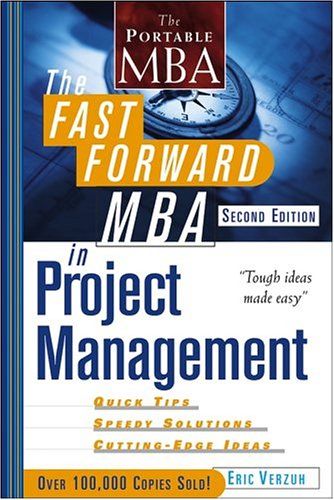
The Fast Forward MBA in Project Management
Introduction: The MBA in Your Back Pocket
Introduction: The MBA in Your Back Pocket
Nova: Welcome to 'The Blueprint,' the podcast where we dissect the essential texts that shape modern business. Today, we’re cracking open a book that promises to deliver the equivalent of a graduate-level project management course in one accessible volume: Eric Verzuh’s "The Fast Forward MBA in Project Management."
Nova: : That title is bold. It suggests you can skip the late nights studying finance and statistics and just get straight to the execution. Nova, what makes this particular guide a perennial bestseller, especially when the PM landscape is constantly shifting with Agile and new methodologies?
Nova: That’s the million-dollar question. Verzuh, who is a PMP himself and a founding board member of a Project Management Institute chapter, doesn't just list processes. The research shows his core strength is distilling complex theory into practical, actionable steps. It’s designed to be the go-to resource for everyone from the first-time project lead to the seasoned professional needing a refresher on best practices.
Nova: : So it’s not just theory; it’s a toolkit. I’m picturing a dusty binder on a shelf that everyone secretly relies on. What’s the central philosophy that Verzuh hammers home right from the start? What’s the one thing he insists separates success from failure?
Nova: He has a mantra that I found incredibly powerful, and it’s the perfect place to start our deep dive. He states, and I quote, "Successful projects meet stakeholder expectations." That simple sentence shifts the entire focus from just delivering on time and budget to delivering as perceived by the people who matter most. It’s a crucial distinction.
Nova: : That makes sense. If you deliver exactly what was asked for, but the sponsor hates the result because their underlying need wasn't met, you’ve failed. It sounds like Verzuh forces us to look beyond the Gantt chart and into the human element of project delivery. Let’s break down how he builds that foundation.
Key Insight 1: Building the Unshakeable Foundation
The Bedrock: Charter, Scope, and Demystifying Complexity
Nova: Let’s start at the very beginning, Chapter One territory. Verzuh dedicates significant space to the foundational documents, specifically the Project Charter and defining the Scope. In a world obsessed with speed, why is this upfront planning so critical, according to him?
Nova: : I think many listeners, myself included sometimes, feel the pressure to jump straight into the work once the idea is approved. We want to start building. What does Verzuh say about that urge to skip the paperwork?
Nova: He treats the Project Charter not as bureaucracy, but as the project's constitution. He emphasizes that this document must clearly define the project’s objectives, success criteria, and, crucially, the authority of the project manager. Without that clarity, you’re building a skyscraper on sand. He stresses that the initial investment in defining scope prevents 80% of future headaches.
Nova: : That’s a powerful statistic, even if it’s an illustrative one. How does he make defining scope less abstract? Scope creep is the classic project killer.
Nova: He provides very concrete techniques for scope definition. One key takeaway is the necessity of a detailed Work Breakdown Structure, or WBS. He frames the WBS as the ultimate tool for scope control. If it’s not in the WBS, it’s not in the project. It forces decomposition—breaking that massive, scary goal into manageable, measurable pieces.
Nova: : So, the WBS isn't just a task list; it’s a legal document for the project’s boundaries. Does he offer any specific advice on how to handle stakeholders who inevitably try to sneak in 'just one small change' after the scope is locked?
Nova: Absolutely. This ties back to his stakeholder focus. He advises that scope changes must be managed formally through a Change Control process. He frames scope creep not as a personal attack, but as a risk event that needs formal assessment. You don't just say 'no'; you say, 'Yes, we can add that feature, but based on our charter, that will require X additional budget and Y weeks of schedule extension. Do you approve this change to the baseline?'
Nova: : That reframes the conversation from confrontation to objective analysis. It moves the decision back to the sponsor, which is where the authority lies. It sounds like Verzuh is teaching us how to be the objective referee, not just the task master.
Nova: Precisely. He’s equipping the PM to manage expectations by quantifying the impact of every deviation. He also covers the importance of a formal sign-off on the initial scope baseline. If you don't have that signed agreement, you have no leverage when things go sideways later. It’s about establishing that baseline authority early on.
Nova: : I appreciate that focus on the start. It’s the part everyone rushes. Let’s pivot slightly. If the charter is the constitution, what’s the next layer of governance he emphasizes for keeping the project on track once the actual work begins?
Key Insight 2: Managing Expectations, Not Just Tasks
The People Problem: Stakeholder Engagement and Communication
Nova: This brings us perfectly to the human side, which I know is a huge focus in the newer editions—stakeholder management. Verzuh argues that project management is fundamentally about communication. How much of a PM’s time does he suggest should be dedicated to talking, listening, and managing relationships versus managing the technical work?
Nova: : I’ve heard figures ranging from 70% to 90% dedicated to communication. Does Verzuh land on a specific number, or does he focus more on the of that communication?
Nova: He leans heavily on quality and tailoring. While he acknowledges the high percentage, his real insight is in the. He pushes PMs to categorize stakeholders not just by their power, but by their interest level and their current attitude—are they supportive, resistant, or neutral?
Nova: : That’s smart. A highly powerful, highly resistant stakeholder needs a completely different communication strategy than a low-power, highly supportive one. What’s his prescription for dealing with those resistant stakeholders? The ones who actively undermine the project?
Nova: For the resistant ones, he advocates for proactive, one-on-one engagement, often involving the project sponsor as an escalation point. He suggests finding out the root cause of their resistance. Is it fear of job loss? A past bad experience? He treats resistance as a problem to be solved, not an obstacle to be crushed. He often points out that a stakeholder who feels heard is far less likely to become an active blocker.
Nova: : That’s a very mature approach. It moves away from the stereotypical image of the PM as a task-master barking orders. Speaking of communication, what about reporting? How does Verzuh advise structuring status updates to keep everyone informed without overwhelming them with data?
Nova: He’s a huge proponent of the 'No Surprises' rule. Status reports must be concise and targeted. For executives, he recommends a simple Red/Yellow/Green status, focusing only on variances from the baseline and the required decisions. For the team, the report needs more detail on dependencies and immediate roadblocks. He’s very clear: don't bury the bad news under five pages of positive fluff.
Nova: : The Red/Yellow/Green system is classic, but it only works if people trust the initial assessment. If a PM consistently reports 'Green' right up until the day the project collapses, that system breaks down. How does Verzuh build that trust?
Nova: Trust is built through consistency and follow-through, which brings us back to the charter. If you commit to a communication plan—say, a weekly meeting at 10 AM every Tuesday—you stick to it. If you promise to investigate a risk and report back by Friday, you report back by Friday, even if the answer is, 'I still don't know, but I'm still looking.' Reliability breeds trust, and trust is the currency of stakeholder management.
Nova: : It sounds like the book treats the PM role as a blend of diplomat, psychologist, and administrator. Before we move to the final piece—risk—can you share one surprising piece of advice he gives regarding team motivation or leadership within the project context?
Key Insight 3: Proactive Management in a Changing World
Controlling the Unknown: Risk, Quality, and Agility
Nova: We’ve covered setting the stage and managing the people. Now, let’s talk about the inevitable chaos: risk and change. Verzuh’s book has been updated several times to incorporate modern practices. How does he integrate concepts like Agile into this traditional, structured framework?
Nova: : That’s where many older PM guides fall flat. They describe a waterfall world that no longer exists. What’s his approach to blending the structure of the charter with the iterative nature of Agile development?
Nova: He doesn't force a choice; he advocates for situational awareness. He presents Agile techniques—like sprints and continuous feedback loops—as excellent tools for managing scope uncertainty, especially in software or R&D projects. However, he insists that even an Agile project needs a strong, defined —the project charter—and clear acceptance criteria, which is where his foundational principles still apply.
Nova: : So, the structure defines the destination, and Agile defines the best route to get there, given the terrain. That’s a useful analogy. Let’s focus on risk management specifically. What’s the most common mistake he sees PMs make regarding risk identification and mitigation?
Nova: The biggest mistake, according to Verzuh, is treating risk management as a one-time event during planning. He champions continuous risk identification. He suggests making risk review a mandatory, short agenda item in every single team meeting. It keeps risk top-of-mind rather than burying it in a separate, rarely-opened risk register.
Nova: : That makes risk management feel organic to the work, not an administrative burden. And what about the mitigation strategies themselves? Does he favor avoiding risk entirely, or embracing calculated risk?
Nova: He strongly favors calculated risk, but only after rigorous analysis. He details the process of quantifying risk impact—not just qualitatively, but by estimating the potential cost and schedule slip. He wants PMs to move beyond vague statements like 'vendor reliability is a risk' to concrete statements like, 'If Vendor X fails to deliver Component B on time, we incur $50,000 in expedited shipping costs and a two-week delay.'
Nova: : That quantification is key. It allows the sponsor to make an informed decision about whether to accept that risk or invest in a contingency plan. I also saw mentions of a new chapter on Project Quality. How does Verzuh define quality in a project context?
Nova: For Verzuh, quality is directly tied back to those initial stakeholder expectations. It’s not about perfection; it’s about fitness for use. A project is high quality if it meets the agreed-upon requirements and satisfies the stakeholders. He introduces tools like Quality Checklists and formal Quality Gates—checkpoints where the deliverables must pass a specific standard before the team can proceed to the next phase. This prevents low-quality work from compounding down the line.
Nova: : So, we have a strong start with the charter, constant communication to manage people, and proactive risk/quality checks to manage the unknown. It sounds like the book provides a comprehensive, almost defensive strategy for project success.
Conclusion: The Fast Track to Project Mastery
Conclusion: The Fast Track to Project Mastery
Nova: We’ve covered a lot of ground today, exploring Eric Verzuh’s "The Fast Forward MBA in Project Management." If we had to boil down the essence of this guide into three actionable takeaways for our listeners, what would they be?
Nova: : I think the biggest takeaway for me is the relentless focus on the and the before the. First, never start work without a signed Project Charter that clearly defines authority and scope. Second, treat stakeholder expectation management as your primary job function, using tailored communication to keep everyone aligned.
Nova: I agree completely. And for the third point, let’s focus on proactivity. Don't treat risk and quality as administrative chores to be done once. Integrate continuous risk review into your weekly cadence, and use formal Quality Gates to ensure fitness for use before you move forward. That’s how you avoid those catastrophic late-stage surprises.
Nova: : It’s clear why this book remains a staple. It strips away the jargon and gives you the essential framework—the 'fast forward' path—to navigate the complexities of modern project delivery, whether you’re using Waterfall, Agile, or a hybrid approach.
Nova: It’s a masterclass in practical application. It reminds us that project management isn't just about tools; it’s about disciplined leadership and clear communication. If you want to move from simply managing tasks to truly leading successful outcomes, this book is the essential roadmap.
Nova: : A fantastic summary of a dense topic. Thank you for guiding us through the key insights of Eric Verzuh’s work today.
Nova: My pleasure. Keep building those strong foundations and managing those expectations. This is Aibrary. Congratulations on your growth!