

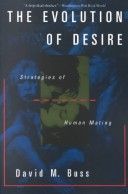
The Evolution of Desire
Introduction
Nova: Imagine you could read the instruction manual for human desire. Not the romanticized version from movies or poetry, but the raw, scientifically tested blueprint of what men and women actually want in a mate. That's exactly what David Buss set out to create. He surveyed over ten thousand people across thirty-seven cultures on six continents and five islands. And what he found was so provocative that the Washington Post called his book a drop-dead shocker.
Nova: : A drop-dead shocker? That's quite the endorsement. But I have to ask, Nova — can you really reduce something as complex and mysterious as human desire to a set of evolutionary strategies? I mean, love is supposed to be this ineffable thing, right?
Nova: That's the exact tension at the heart of The Evolution of Desire. Buss isn't saying love isn't real or beautiful. He's saying that underneath our romantic feelings are psychological mechanisms shaped by millions of years of evolution. And here's the thing — these mechanisms are still operating today, whether we're swiping on Tinder or navigating a thirty-year marriage. The book was first published in 1994, revised in 2003, and updated again in 2016, and it remains one of the most influential and controversial works in evolutionary psychology.
Nova: : So we're going to dig into what Buss discovered about the mating mind. What women want, what men want, why we cheat, why we get jealous, and why conflict between the sexes might actually be the norm rather than the exception.
Nova: Exactly. And I promise, by the end of this episode, you'll never look at a first date the same way again. Let's get into it.
How 10,000 People Across 37 Cultures Revealed Universal Patterns
The Grand Study and Sexual Strategies Theory
Nova: Let's start with the foundation. In the late 1980s, David Buss conducted what was at the time the largest cross-cultural study of human mating ever attempted. He and his collaborators surveyed 10,047 people across 37 cultures — from Australia to Zambia, from urban centers to rural villages. They asked people to rank the importance of various traits in a potential mate.
Nova: : Ten thousand people across 37 cultures. That's an enormous undertaking. What was he actually looking for?
Nova: He was testing a core prediction of evolutionary theory. If mate preferences are purely cultural — shaped by movies, media, and local norms — then you'd expect huge variation across cultures. But if they're rooted in our evolved biology, you'd expect to find universal patterns that transcend culture. And that's exactly what he found.
Nova: : So what were those universal patterns?
Nova: Across every single culture studied, women placed roughly twice as much importance on a mate's financial prospects as men did. In all 37 cultures, men preferred younger mates, and women preferred older mates. In 34 out of 37 cultures, men rated physical attractiveness as more important than women did. These sex differences were not just statistically significant — they were remarkably consistent.
Nova: : Wait, but doesn't that just reflect the fact that in many cultures women had less economic power? Maybe women valued resources because they couldn't earn their own?
Nova: That's the obvious counterargument, and Buss addressed it directly. He studied women in high-income brackets, women with advanced degrees, and even women in a tribe in Africa where women actually controlled more resources than men. The result? Wealthy, high-status women placed an even greater value on a mate's financial prospects than poorer women did. One study asked men and women the minimum earning percentile they'd accept in a spouse. Men said the 40th percentile. Women said the 78th percentile — meaning they wanted a man who earned more than 78 percent of all other men.
Nova: : So having your own resources doesn't diminish the preference — it actually intensifies it. That's counterintuitive.
Nova: It is. And Buss's explanation is that these preferences aren't about current economic necessity. They're about ancestral selection pressures. For millions of years, a woman's reproductive success depended heavily on securing a mate who could provide resources during pregnancy and child-rearing. The women who preferred resourceful men had children who survived and thrived. Those preferences got passed down. Today's women are the descendants of those who chose wisely.
Nova: : But Buss also developed something called Sexual Strategies Theory, right? It's not just about long-term marriage.
Nova: Exactly. Sexual Strategies Theory proposes that humans have evolved multiple mating strategies — not just one. We have psychological mechanisms for long-term committed mating, short-term casual mating, extra-pair mating, mate poaching, and mate guarding. And which strategy gets activated depends on context — your own mate value, the available options, the sex ratio in your environment, and so on. It's a flexible, context-sensitive system, not a rigid instinct.
Resources, Status, Ambition, and the Complexity of Female Choice
What Women Want
Nova: So let's dive into what Buss found about women's mate preferences. And I should warn you — it's more complex than most people assume.
Nova: : I've heard the stereotype: women want a rich guy with a fancy car. Is that what the science actually shows?
Nova: It's both more nuanced and more interesting than that. Yes, women across cultures value resources and social status. But Buss found that women also place enormous importance on traits like ambition, industriousness, intelligence, dependability, and emotional stability. In fact, women rated lack of ambition as extremely undesirable in a mate — while men didn't care much about a woman's ambition at all.
Nova: : That makes a certain evolutionary sense. A man who is ambitious and hardworking today is likely to have resources tomorrow, even if he's broke right now.
Nova: Precisely. And this is especially important in cultures where people marry young. You can't assess a twenty-two-year-old's lifetime earning potential, so women look for cues that predict future success. Buss's lab identified 26 distinct tactics people use to elevate their social status, and industriousness — working hard, prioritizing goals, putting in extra time — was by far the biggest predictor of income and promotions.
Nova: : What about physical appearance? Do women not care about looks?
Nova: They do, but context matters enormously. For short-term mating, women place much higher value on physical attractiveness, masculinity, and what Buss calls good genes indicators. But for long-term partners, traits signaling commitment and resource provision take priority. And here's a fascinating finding: women with high mate value are more drawn to highly masculine men. Buss speculates that's because these women feel confident they can keep such a man faithful — they have the leverage to remind him what he'd lose by straying.
Nova: : What about kindness? That seems like something everyone would want.
Nova: Absolutely. Kindness is universally valued by both sexes across all cultures. Buss argues this is because we depend on our mate's kindness for survival and thriving — not the kindness of strangers. A kind mate is more likely to commit, provide, and be a good parent. Interestingly, in Japan and Taiwan, men actually valued kindness more than women did.
Nova: : And age preferences? You mentioned women prefer older men.
Nova: Yes, across all 37 cultures, women preferred men older than themselves, with a global median age difference of about three years. Buss says age serves as a cue for resources and maturity. Young men rarely command the respect, power, and status to acquire significant resources. But women don't go for much older men either — too large an age gap increases relationship strife, and sperm quality declines with age.
Nova: : So to summarize: women want a kind, ambitious, emotionally stable man with resources and status who's a few years older. That's a tall order.
Nova: It is. And Buss argues that's exactly why men have been baffled by what women want for so long. Women's preferences are inherently complex, multi-faceted, and context-dependent. They sometimes seek traits that rarely coexist in the same person. As Buss puts it, women want everything — and evolution has shaped them to be discriminating because the costs of a bad choice were so high.
Youth, Beauty, Fidelity, and the Logic of Male Desire
What Men Want
Nova: Now let's flip the lens. What did Buss discover about male desire?
Nova: : Let me guess — men want young, attractive women. Is it really that simple?
Nova: It's a major part of the story, but again, there's more depth than the stereotype suggests. Buss found that men universally value youth and physical attractiveness in a mate. And the reason, he argues, is that these are cues to fertility and reproductive value. A woman's fertility has a relatively narrow window — it peaks in the early twenties and declines steadily, dropping to near zero by menopause. Ancestral men who were attracted to cues of youth and health had more children. Those preferences got selected for.
Nova: : But wait — is the standard of beauty really universal? Don't different cultures have different beauty standards?
Nova: Buss addresses this directly. He argues that while cultures vary in adornment and style, the core markers of attractiveness — clear skin, symmetrical features, a waist-to-hip ratio around 0.7, lustrous hair, full lips — are remarkably consistent across cultures. These are all cues to youth and health. They're not arbitrary cultural inventions. They're biological signals.
Nova: : And what about body type? I've heard that men supposedly prefer very thin women.
Nova: Actually, Buss found that most men do not prefer runway-model thinness. The preference is for a waist-to-hip ratio that signals health and fertility, not extreme thinness. And here's something important: men's preferences shift depending on what they're looking for. For a short-term sexual partner, men relax their standards considerably. But for a long-term mate, men become much more selective — and they prioritize fidelity above almost everything else.
Nova: : Fidelity. That's the big one, isn't it?
Nova: It is. Buss found that men across cultures abhor promiscuity and infidelity in a long-term partner. In fact, sexual infidelity is more upsetting to men than any other pain a spouse can inflict. Buss explains this through the lens of paternity uncertainty. A woman always knows a child is hers. A man never has that certainty — at least not in ancestral environments. A man whose partner was unfaithful risked investing his resources in another man's child. That's an evolutionary dead end. So men evolved an intense emotional response to sexual infidelity.
Nova: : That's a powerful explanation. But men also value things beyond looks and fidelity, right?
Nova: Absolutely. Men also deeply value intelligence, kindness, personality, and social skills in a long-term partner. And here's a finding that might surprise people: in terms of what increases a man's status among other men, dating someone physically attractive gives a huge boost. For women, dating an attractive man increases status only somewhat. The social dynamics around mate value are asymmetrical.
Nova: : So men are status-conscious about their partner's appearance in a way women aren't?
Nova: Exactly. And Buss also found that men are especially sensitive to deception about age and sexual history. Given the importance men place on youth and fidelity, women who misrepresent these things are hitting men's most sensitive psychological triggers. It's a form of what Buss calls strategic interference — when one person's mating strategy obstructs another's.
Jealousy, Mate Poaching, Infidelity, and Strategic Conflict
The Battle of the Sexes
Nova: This brings us to one of the book's most provocative arguments: conflict between the sexes is not a bug in the system. It's a feature.
Nova: : That's a pretty bleak view of relationships.
Nova: It sounds bleak, but Buss is describing what is, not what ought to be. He argues that men and women have evolved different mating strategies, and these strategies often interfere with each other. He calls this strategic interference. For example, men have evolved a desire for sexual variety. Women have evolved a desire for commitment before sex. When a man pushes for sex early and a woman withholds it, both are experiencing strategic interference. Neither is wrong — they're just running different evolutionary software.
Nova: : And this plays out in jealousy too, doesn't it?
Nova: Yes, and the sex differences in jealousy are among Buss's most famous and controversial findings. Men are more distressed by sexual infidelity. Women are more distressed by emotional infidelity — a partner falling in love with someone else. The logic: for men, sexual infidelity threatens paternity certainty. For women, emotional infidelity threatens the diversion of resources and commitment to another woman and her children.
Nova: : And jealousy can turn violent.
Nova: It can. Buss reports that male sexual jealousy is the single most frequent cause of all types of violence directed at wives, including physical abuse and murder. In evolutionary terms, a man's mate-guarding efforts should be most intense when his partner is youngest and most reproductively valuable. It's a dark finding, but Buss argues we can't solve these problems if we don't understand their roots.
Nova: : What about mate poaching? That's a fascinating concept.
Nova: Mate poaching is when someone tries to attract a person who's already in a relationship. Buss found it's surprisingly common and has likely been successful often enough to have evolved as a distinct strategy. Poachers use specific tactics: boosting the target's self-esteem, driving a wedge between the couple by saying things like he doesn't appreciate you or you deserve better, and presenting themselves as the superior alternative.
Nova: : That sounds like every romantic comedy where the protagonist steals someone's partner.
Nova: It does. And Buss found that women's most effective derogation tactic against rivals is questioning their fidelity — saying a rival can't stay loyal. Men's most effective tactic is questioning a rival's resources and status. We're all running these ancient programs, often without conscious awareness.
Nova: : And what about infidelity itself? Do men and women cheat for different reasons?
Nova: Buss found a striking asymmetry. Women tend to have affairs when they're unhappy with their primary relationship. Men who have affairs are no less happy with their marriages than men who remain faithful. For men, the desire for sexual variety — what Buss calls the Coolidge effect — operates somewhat independently of relationship satisfaction. Kinsey famously said the human male would be promiscuous throughout his life if there were no social restrictions, while the human female is much less interested in a variety of partners.
Nova: : That's going to make some listeners uncomfortable.
Nova: It should. Buss is describing average sex differences, not prescribing how anyone should behave. And he emphasizes that these are statistical patterns with enormous individual variation. But understanding these patterns can help us navigate relationships more honestly and compassionately.
Dating Apps, Mate Switching, and Why Our Stone-Age Psychology Clashes with Modern Life
Modern Love, Ancient Brains
Nova: One of the most compelling sections of the book deals with how our ancient mating psychology interacts with modern technology. Buss argues that dating apps like Tinder, Match. com, and OKCupid are essentially supernormal stimuli for our mating minds.
Nova: : Supernormal stimuli — meaning they hijack our evolved preferences?
Nova: Exactly. The ability to scroll through thousands of potential mates tricks our psychology into thinking there's always someone better just one more swipe away. Buss reports that men typically swipe right on dozens or even hundreds of profiles hoping a few will reciprocate, while women are considerably more selective, picking just one or a few for potential matches. This maps perfectly onto the evolved sex differences: men's desire for sexual variety and women's discriminating choosiness.
Nova: : So dating apps aren't changing our nature — they're revealing it.
Nova: That's the argument. But there's a dark side. Buss suggests that the abundance of options may undermine commitment. When you believe there's always a better option available, you're less likely to invest in the relationship you have. We confront these modern novelties with an ancient set of mating strategies that evolved in small hunter-gatherer bands where you might meet only a few dozen potential mates in a lifetime.
Nova: : What about mate switching? The idea that people are always evaluating alternatives?
Nova: Buss found that most people continue to assess outside options even while in a committed relationship. Mate switching happens when there's a mate value discrepancy — when one partner becomes less desirable or the other's options improve. A classic example: a man's status and resources increase dramatically in his forties while his same-age wife's reproductive value declines. Suddenly he has mating opportunities that didn't exist before.
Nova: : That's a grim calculus.
Nova: It is. But Buss also identifies the conditions that trigger mate switching: when a current mate fails to provide expected resources, when someone's own mate value increases and opens new possibilities, or when compelling alternatives become available. Understanding these triggers can help couples protect their relationships.
Nova: : And what about mate retention? How do people try to keep their partners?
Nova: Buss identified a range of tactics, from vigilance to violence. On the benign end: monopolizing a mate's time, concealing them from potential rivals, enhancing your own appearance, and displaying affection and commitment. On the darker end: emotional manipulation, threats, and physical violence. He also found that men and women derogate their rivals in sex-specific ways. Women call competitors promiscuous. Men call competitors poor providers or weak.
Nova: : So we're all playing these strategic games, often without realizing it.
Nova: That's Buss's central insight. We are not blank slates. We carry within us the psychological legacy of millions of years of evolution. Our desires, our jealousies, our attractions, and our conflicts are not random. They have a deep logic. Understanding that logic doesn't mean we're slaves to it — but it does mean we can navigate the mating market with clearer eyes.
Conclusion
Nova: So where does all of this leave us? The Evolution of Desire is not a comfortable book. It challenges our romantic ideals and forces us to confront the evolutionary logic behind our most intimate feelings. But it also offers something valuable: understanding.
Nova: : And I think that's what I'm taking away from this. Knowing that men and women have evolved different mating strategies doesn't mean we're doomed to conflict. It means we can approach relationships with more empathy. When your partner reacts with jealousy, or when you feel that pull toward someone new, you can recognize these as ancient psychological mechanisms firing — not necessarily as truths about your relationship.
Nova: Beautifully put. Buss himself emphasizes that evolution has also given us the capacity for deep love, commitment, and cooperation. The same evolutionary processes that produced sexual conflict also produced pair-bonding, paternal investment, and romantic love. We contain multitudes.
Nova: : What would you say is the single most important insight from the book?
Nova: That human mating strategies are not simple, not uniform, and not arbitrary. They are complex, context-dependent, and shaped by the most powerful force in the natural world: the ruthless criterion of reproductive success. Whether we find that inspiring or disturbing, it's the reality we inhabit. And as Buss writes, our mating mechanisms are the living fossils that reveal who we are and where we came from.
Nova: : And on that note, maybe the next time you're on a date or swiping through an app, you'll have a little more insight into what's actually driving all that desire.
Nova: That's the hope. Thanks for joining us on this journey through The Evolution of Desire by David M. Buss. If this episode sparked your curiosity, the book is available in its third edition, updated in 2016 with new research integrated throughout. It's a fascinating, provocative read.
Nova: : This is Aibrary. Congratulations on your growth!