

The 'Great Man' Fallacy: Why Leaders Are Products, Not Just Producers.
Golden Hook & Introduction
SECTION
Nova: We're often told history is made by great individuals. We lionize them, study their speeches, and attribute sweeping changes to their singular genius. But what if that's not just wrong, but actively blinding us to the true, deeper forces shaping our world?
Atlas: Oh, really? That's a bold claim, Nova. I think most people, myself included, have always been drawn to the stories of the 'great men' or 'great women' who shaped eras. It's a comforting narrative, isn't it? The idea that one person can change everything.
Nova: It is, Atlas, and it's deeply ingrained. But today, we're challenging that comforting narrative with a concept we're calling 'The Great Man Fallacy.' It's the core idea explored in a fascinating, unnamed book that's sparked significant debate among historians and political scientists for its provocative re-evaluation of how we understand power and progress.
Atlas: So, if it's not just the individuals, what it? What are these hidden levers that we're missing when we focus solely on the charismatic leader or the brilliant strategist? Because for someone trying to understand current geopolitical events, that distinction feels crucial.
The 'Blind Spot': Why We Overemphasize Individual Leaders
SECTION
Nova: Exactly. That's our first core idea: the 'blind spot' we all have for individual leaders. Think about Alexander the Great. We imagine him as this unparalleled military genius, sweeping across continents, building an empire through sheer force of will and tactical brilliance. And he brilliant, no doubt.
Atlas: Oh, absolutely. The stories are legendary. The Gordian Knot, his undefeated armies, founding cities. He embodies that singular, transformative figure.
Nova: He does. But what if I told you that Alexander's conquests weren't just about his personal genius, but were also a product of the highly advanced Macedonian military machine his father, Philip II, had painstakingly built? The sarissa, the cavalry tactics, the siege engines – these were systemic innovations. And the Persian Empire he conquered was already in a state of political fragmentation and internal strife.
Atlas: Hold on. So, are we saying Alexander was just in the right place at the right time, or was he truly exceptional? Because it feels like you're diminishing his agency. Doesn't that take away from the inspiration we draw from these figures?
Nova: Not at all, Atlas. It's not about diminishing, it's about contextualizing. It’s about understanding the interplay. Alexander still had to execute, to lead, to inspire. But his stage, his tools, and the vulnerabilities of his opponent were all pre-existing conditions. The 'blind spot' is when we look at the finished painting and only see the artist's brushstrokes, ignoring the canvas, the paints, the light, and the entire art movement that influenced them. We crave simple narratives, and a single hero is much simpler than a complex web of historical, economic, and social forces.
Atlas: I can see that. It's easier to point to one person than to unravel decades, even centuries, of underlying currents. And honestly, it's more satisfying to believe in the power of a single individual, isn't it? It gives us hope that a 'great leader' can fix things.
Nova: Precisely. And that psychological need for heroes can blind us to the profound pre-existing conditions that make certain types of leadership possible or even inevitable. It makes us miss the bigger picture, the systemic forces at play.
The 'Shift': Understanding Systemic Forces in Leadership
SECTION
Nova: And that naturally leads us to the crucial 'shift' in thinking this book advocates, one that's been profoundly shaped by thinkers like Francis Fukuyama and Jared Diamond. They help us move beyond the individual to the system.
Atlas: Okay, so give me the systemic view. How do they reframe our understanding of leadership and history?
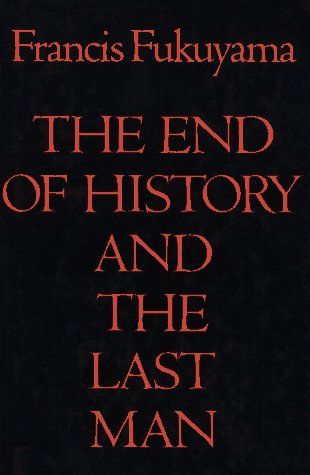
Nova: Let's start with Francis Fukuyama and his influential work, "The End of History and the Last Man." Fukuyama argues that broad ideological forces, specifically the triumph of liberal democracy as the final form of human government, drive historical progression. He wasn't saying history literally ends, but that the major ideological conflicts were resolving.
Atlas: So, in today's world, are leaders like Putin or Xi simply expressions of larger ideological currents, rather than purely individual actors? Are they just riding the wave of certain nationalistic or authoritarian ideologies?
Nova: In many ways, yes. Fukuyama's framework suggests that certain leaders emerge at specific times because the prevailing ideological currents, the 'software' of human society, create the conditions for their ascent and define the limits of their actions. Leaders are powerful, but they operate within the intellectual and political atmosphere of their time. If the world is shifting towards a certain governing philosophy, leaders who embody that philosophy are more likely to gain traction.
Atlas: That makes sense. It's like a river carving a path; the river is a powerful force, but the geology underneath dictates where it can flow.
Nova: A perfect analogy, Atlas! Now, let's layer on Jared Diamond's "Guns, Germs, and Steel." Diamond takes a much broader, deeper view. He illustrates how geographical and environmental factors – things like the availability of domesticable plants and animals, climate, and continental shapes – laid the groundwork for societal development over millennia. These weren't choices; these were profound pre-existing conditions.
Atlas: Wow. So, we're talking about forces that literally shaped continents, not just countries. How do leaders even begin to operate against that? If your land doesn't have the right crops or animals for domestication, you're at a massive disadvantage from the start.
Nova: Exactly! Diamond shows how the Fertile Crescent, with its abundance of domesticable species, created an agricultural surplus that freed people to specialize, develop technologies, and build complex societies, ultimately leading to political structures and leaders. Conversely, regions without those advantages faced a much harder path. This isn't about individual leaders' decisions; it's about geological luck and deep ecological patterns determining the very possibility of certain types of societies and leadership.
Atlas: So, the 'hardware' of the planet, as you put it, combined with the 'software' of prevailing ideologies. It completely reframes how we look at the rise and fall of empires, or even the success of modern nations. It's not just about who's in charge, but the millennia of factors that put them there. But what about the truly transformative figures who seem to defy all odds and change the system itself? Doesn't this view make them mere puppets of destiny?
Synthesis & Takeaways
SECTION
Nova: That's a critical question, Atlas, and it gets to the heart of our discussion. This systemic lens isn't about denying individual genius or agency. It's about empowering us with a more accurate, less naive view of power. Think of it this way: a brilliant chess player is still bound by the rules of chess and the layout of the board. They can make incredible moves, but they can't suddenly decide rooks fly diagonally.
Atlas: So, for our listeners who are trying to make sense of today's complex geopolitical landscape, what does this systemic lens actually offer them? How does it change their interpretation of current events, beyond just admiring or blaming a particular leader?
Nova: It offers an incredible advantage. By understanding the deep currents—the ideological shifts Fukuyama highlights, or the environmental legacies Diamond uncovers—you can begin to predict trends, identify genuine leverage points for change, and avoid simplistic blame or praise. It moves you from reacting to symptoms to understanding root causes. It helps you see that a leader's apparent "success" or "failure" often says more about the system they are operating within than their inherent qualities.
Atlas: That's actually really inspiring. It means we don't just have to be passive observers of a few powerful individuals. We can analyze the forces, understand the patterns, and perhaps even influence the systems ourselves. It shifts the focus from hero-worship to informed action.
Nova: Absolutely. It encourages us to ask: What are the deep-seated conditions enabling this situation? What are the ideological currents at play? And how might focusing on these systemic forces, rather than solely on individual leaders, change your interpretation of current geopolitical events? It’s a powerful question to ponder.
Atlas: A powerful question indeed.
Nova: This is Aibrary. Congratulations on your growth!