

Beyond the Diagnosis: Mastering Complex Disease Mechanisms
Golden Hook & Introduction
SECTION
Nova: What if everything you've learned about disease, every intricate mechanism, every diagnostic criterion, is actually missing the most crucial parts of the story?
Atlas: Wait, are you saying our textbooks, the very foundations of our medical understanding, are giving us an incomplete picture? That's a bold claim, Nova. It flies in the face of years of rigorous scientific training.
Nova: It absolutely does, Atlas. And it’s a claim backed by some of the most profound medical minds of our time. Today, we're diving into how we master complex disease mechanisms not just by dissecting them, but by seeing them as living, breathing narratives, shaped by history, biology, psychology, and even society.
Atlas: That sounds like a radical shift in perspective for anyone in medicine, especially for those of us who are meticulously studying every cellular pathway.
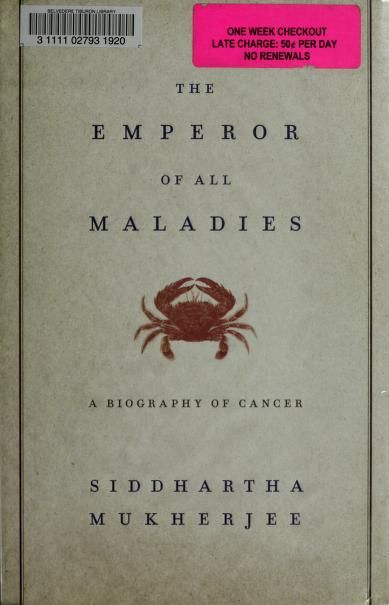
Nova: Exactly. We’re going beyond the diagnosis. We're exploring two monumental works that shatter the reductionist view of illness: Siddhartha Mukherjee's Pulitzer Prize-winning "The Emperor of All Maladies," which he penned as an oncologist himself, bringing that frontline perspective, and Gabor Maté’s "When the Body Says No," a book deeply informed by his extensive clinical work with addiction and trauma, and even his own experiences as a Hungarian Holocaust survivor.
Atlas: Two books that challenge the very definition of what we call 'disease.' I'm intrigued. So, how do these seemingly different perspectives connect to give us this 'mastery' you're talking about?
Disease as a Dynamic, Evolving Narrative
SECTION
Nova: Well, let's start with Mukherjee. He doesn't just chronicle cancer; he writes its biography. He tells the story of humanity's centuries-long struggle to understand, classify, and conquer this elusive foe. He shows us cancer not as a static entity, but as a dynamic, evolving adversary that has adapted and shifted throughout history, forcing science into relentless inquiry, countless failures, and astonishing breakthroughs.
Atlas: But how does knowing the 'biography' of cancer help a doctor treat a patient today? Isn't it just a historical curiosity, a fascinating read, but not directly applicable in a high-stakes clinical setting?
Nova: That’s the beauty of it, Atlas. When you understand the of scientific discovery – the dead ends, the paradigm shifts, the moments of sheer genius – you gain a deeper appreciation for why certain treatments exist, why some fail, and why the "cutting edge" is always moving. It transforms your understanding from a collection of isolated facts into a living, evolving landscape.
Atlas: So you're saying that by understanding the historical context, we can better anticipate where the disease might go next, or even where our understanding of it might evolve?
Nova: Precisely. Take, for instance, the early days of cancer treatment. For centuries, it was often viewed as a local problem, a tumor that could be cut out. Then came the realization that it was a systemic disease, leading to radical surgeries and chemotherapy. Later, the understanding of its genetic basis opened up targeted therapies. Each shift wasn't just a new treatment; it was a fundamental re-conceptualization of the disease itself.
Atlas: That’s a great way to put it. It’s like watching a complex chess game unfold over centuries, rather than just memorizing the rules. It gives you a sense of the strategy behind the moves.
Nova: Exactly. And it fosters a humility too, recognizing that even our most advanced treatments are just another chapter in this ongoing, evolving story. It prepares future physicians for the inevitable changes and challenges, encouraging them to be active participants in that evolving narrative, not just passive recipients of current knowledge.
Atlas: It also helps to explain why different diseases have such varied approaches. Some are targeted, some are broad-spectrum. It’s all part of this long, winding road of trial and error and discovery.
Nova: It’s about cultivating what Mukherjee calls a "narrative intelligence" in medicine. Not just knowing cancer is, but it came to be understood, and that understanding continues to shape our approach.
The Profound Mind-Body-Social Connection
SECTION
Nova: And if disease is this dynamic, evolving narrative, then who are the co-authors we often overlook, perhaps even dismiss? This naturally leads us to Gabor Maté and the profound mind-body-social connection.
Atlas: Ah, the realm where chronic stress and emotional repression mysteriously manifest as physical illness. This is often the part that feels most abstract in medical training, almost outside the scope of "real" medicine.
Nova: And that’s precisely the blind spot Maté illuminates. He argues that our Western medical model, while brilliant at acute care and biological mechanisms, often overlooks the profound impact of psychological and social factors on our physical health. He shows, through countless patient stories, how chronic stress, unexpressed emotions, and early life trauma can literally "write" themselves into our biology, manifesting as everything from autoimmune diseases to heart conditions.
Atlas: Okay, but as future doctors, aren't we trained to look for biological markers, for tangible evidence? How do you diagnose "emotional repression" in a blood test? This sounds incredibly empathetic, but how does it integrate into a fast-paced clinical setting where we often have ten minutes per patient?
Nova: That's the challenge, and the opportunity, Atlas. Maté isn't saying throw out the blood tests; he's saying broaden your lens. He provides compelling evidence from psychoneuroimmunology—the study of how our minds, brains, and immune systems interact—showing the biological pathways through which stress hormones, for example, can suppress immune function or promote inflammation. It’s not esoteric; it’s physiological.
Atlas: So it's not just "stress makes you sick," but rather, "stress creates a measurable physiological environment that predisposes you to illness." That's a much more concrete idea.
Nova: Absolutely. He recounts stories of patients who developed severe illnesses after periods of intense emotional suppression or chronic stress, often stemming from childhood experiences. He's not blaming the patient; he's illuminating the profound interconnectedness of our inner world and our physical health.
Atlas: This perspective could completely change how we take patient histories. Instead of just asking about symptoms, we’d be exploring their life story, their emotional landscape.
Nova: Precisely. It shifts the question from "What's wrong with you?" to "What happened to you?" It’s about recognizing that the heart attack might not just be about diet and genetics, but also about decades of a high-pressure job, unaddressed grief, or the lingering effects of childhood adversity.
Atlas: That gives me chills. It’s a powerful idea, but it also feels like an enormous responsibility. To not just treat the disease, but to consider the entire human being and their life context.
Nova: It is. And it’s why aspiring physicians, who are driven by a desire to make a real impact, need this holistic understanding. It’s not just about adding another layer of complexity; it’s about unlocking a deeper level of healing and empathy. It acknowledges the patient as a whole person, not just a collection of malfunctioning parts.
Synthesis & Takeaways
SECTION
Nova: So, by bringing together Mukherjee's dynamic biography of disease and Maté's powerful insights into the mind-body connection, we move beyond a purely reductionist view. We understand that a diagnosis is just one point in a much larger, interconnected narrative that includes history, biology, psychology, and social context.
Atlas: This really reframes what 'mastering complex disease mechanisms' means. It’s not just memorizing pathways, it’s understanding the story, the context, the human experience behind the science.
Nova: Exactly. It cultivates a deeper empathy, a more profound clinical intuition, and ultimately, a more effective and humane approach to medicine. You're not just treating a disease; you're engaging with a life, a history, a complex interplay of forces that have shaped that individual's health.
Atlas: And for anyone training in this field, who wants to truly understand and make a real impact, that kind of depth is invaluable. It transforms the practice of medicine from a technical exercise into an art and a science of profound human connection.
Nova: It allows you to see the patient in front of you not just as a case file, but as a testament to the dynamic, evolving nature of life and illness itself. The question for our listeners, then, is: How might integrating these psychological and historical perspectives fundamentally change your approach to understanding a specific complex disease you’re currently studying?
Atlas: That's a question that could spark a lifetime of deeper inquiry.
Nova: Indeed. This is Aibrary. Congratulations on your growth!