The Growth Illusion: Why Your Startup Needs a System, Not Just Heroics.
8 minGolden Hook & Introduction
SECTION
Nova: What if I told you that the very thing you pour your heart and soul into every day—your passion, your hustle, your individual brilliance—could actually be the biggest bottleneck to your startup's long-term success?
Atlas: Whoa, that's a bold claim, Nova. I imagine a lot of our listeners, especially the ones burning the midnight oil right now, are thinking, "But my passion my business!"
Nova: Exactly, Atlas. It's a common and understandable belief. We're often told to "follow our passion," and it's absolutely essential to get a startup off the ground. Yet, what we're going to explore today is how that very passion, if not channeled correctly, can inadvertently keep your business small, dependent, and ultimately, limit its true growth potential.
Atlas: Okay, so you’re saying that while passion lights the fire, it doesn't necessarily build the engine? That makes me wonder what actually build the engine.
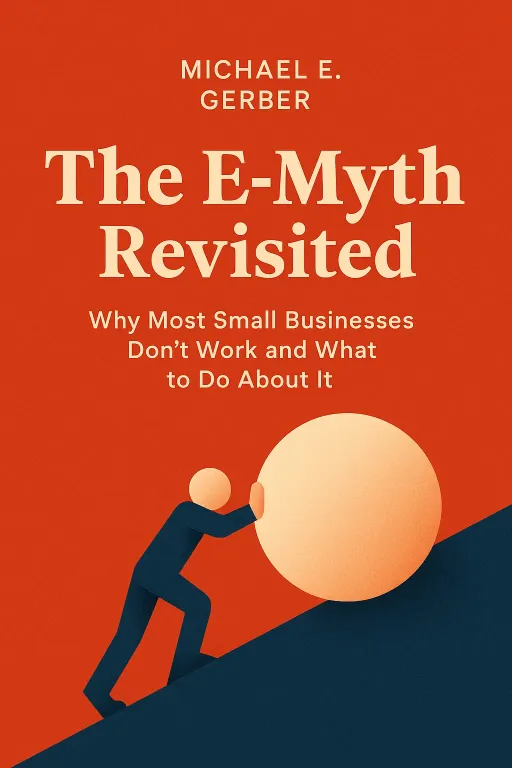
Nova: That's precisely where we're headed. Today, we're diving into two foundational texts that revolutionized thinking about entrepreneurship: by Michael E. Gerber, and by John Warrillow. Gerber, whose work became a cornerstone for small business owners, essentially argued that most businesses are set up to fail because they're built around a technician's skill, not a scalable system. And Warrillow, with his focus on creating a business that's an asset rather than a job, provides the blueprint for that scalability. Their insights, while decades apart, fundamentally solve the problem of founder dependence by providing a structured approach to systemize operations and achieve scalable growth.
Atlas: So, these aren't just feel-good books, they're manuals for building something that can run without you? I love that idea.
Nova: Absolutely. They're about architecting freedom, not just chasing a dream.
The Illusion of Heroic Entrepreneurship: Why Passion Alone Isn't Enough
SECTION
Nova: Let’s start with that initial spark, that heroic founder energy. Think of Sarah, a brilliant software engineer. She sees a gap in the market for an AI-powered learning tool for K-12 education, something truly innovative. She codes day and night, builds a fantastic MVP, and her early clients are thrilled. Sarah the product, the sales team, the customer support, and the visionary.
Atlas: I know that feeling! In an AI-native edtech startup, that initial burst of innovation and personal touch feels like the only way to get traction. You to be everything.
Nova: And for a while, it works. But then, the demand grows. Sarah is still coding, still selling, still supporting. She’s working 80-hour weeks, missing family events, and constantly putting out fires. The business is growing, but is shrinking. She’s built a successful for herself, disguised as a startup. This is the technician's trap that Michael Gerber so vividly describes in. He argues that most small businesses begin with someone who is excellent at a technical skill—whether it’s baking, coding, or consulting—but then they mistakenly assume that being good at the means they’ll be good at.
Atlas: So, the chef who makes amazing pastries but can't manage inventory or staff? I get that. But for a high-growth tech company, isn't agility and responsiveness more critical than rigid systems? It feels like too much process can stifle that early innovation.
Nova: That’s a crucial distinction, Atlas. Gerber isn't advocating for bureaucracy or stifling creativity. He's talking about transforming the mindset from "I do the work" to "I design the system that does the work." Imagine Sarah again. She’s so busy the coding that she never documents her best practices, never trains someone else to handle basic support queries, never creates a repeatable sales pipeline. When she tries to hire, she brings in more technicians, not system builders. The business remains utterly dependent on her individual brilliance, and her time becomes the ultimate bottleneck. Her company isn't truly growing; it's just expanding the amount of work she has to do.
Atlas: So, it's not about being less passionate or less hands-on initially, but recognizing when that heroic phase needs to evolve. It's about building a predictable output, not just a brilliant one-off.
Nova: Precisely. It’s about building a system that allows others to replicate your brilliance, consistently. Without that, the startup becomes a treadmill rather than a rocket ship, always moving, but never truly escaping the gravitational pull of its founder.
Building a System-Driven Startup: From Job to Scalable Asset
SECTION
Nova: Once you realize you're stuck the business, the next logical step is to figure out how to build something that can truly stand you. This is where John Warrillow's becomes an invaluable guide. Warrillow’s core message is about transforming your business from a job into an asset, making it attractive for acquisition, even if you never intend to sell. The key is creating something that isn't reliant on the owner’s constant presence.
Atlas: That's a powerful idea. For our listeners in AI-native edtech, where the 'product' is often deeply tied to cutting-edge expertise and personal client relationships, how do you systemize that without losing the magic? It sounds like you're asking us to package up our secret sauce.
Nova: You are, in a way, packaging the methodology of your secret sauce. Warrillow emphasizes creating a "productized service." Think about an agency that offers custom website development. Every project is unique, right? But if that agency instead decided to specialize in, say, "AI-driven content generation platforms for universities," and they created a specific methodology, a repeatable process, and a standardized offering around that niche, they've productized their service. They've built a system that delivers a consistent outcome, regardless of which individual developer is assigned.
Atlas: So, it's less about the individual genius and more about the playbook they follow to deliver that specific genius. I can see how that would make it more scalable. It’s like a recipe for innovation.
Nova: Exactly. It makes the value transferable. The business value moves from "Sarah, the brilliant coder" to "the 'NovaEd' system for rapid AI-tool deployment in schools." This means documenting processes for client onboarding, for feature development, for bug reporting, for content updates. Every recurring task becomes a step-by-step guide.
Atlas: That makes sense. It’s about creating a business that can function predictably, even if you, as the founder, decide to take a much-needed vacation or focus on big-picture strategy. It sounds like a path to true growth and, let's be honest, sanity.
Nova: Absolutely. It frees you from the day-to-day grind so you can work the business, strategizing, innovating, and truly leading, rather than constantly it, just doing. The fundamental shift is from "doing" to "designing." You're building a machine, not just a masterpiece crafted by one person.
Synthesis & Takeaways
SECTION
Nova: So, bringing it all together, the growth illusion is this seductive idea that sheer force of will and individual talent are enough. But the reality, as Gerber and Warrillow illuminate, is that sustained, scalable growth demands robust systems. It’s about building a business that can thrive independently, not just survive because of your heroic efforts.
Atlas: That's a profound reframe. It makes me realize that systems aren't about stifling creativity, but about the founder's creativity for the truly strategic, impactful work. It’s about creating leverage for your brilliance.
Nova: Precisely. The outcome is a business that's not just profitable, but also resilient, scalable, and ultimately, an asset that offers you freedom. It’s the difference between owning a job and owning a true enterprise.
Atlas: So, for our listeners, especially those managing the demands of a fast-growing startup and perhaps personal life milestones, what’s one tiny step they can take today to move from heroics to systems?
Nova: Here’s your tiny step, and it’s incredibly powerful: identify one recurring task in your startup. Just one. Then, document its steps. Create a simple, repeatable process for someone else to follow. It could be how you onboard a new client, how you post social media content, or even how you manage your inbox.
Atlas: I love that. Starting small makes it feel achievable. You don't have to overhaul everything overnight, just pick one thing and make it repeatable. That’s a practical, actionable insight that anyone can implement right now.
Nova: Exactly. It's about building that system, one brick at a time, until you have a foundation strong enough to launch your rocket ship.
Atlas: Fantastic advice, Nova. This has been incredibly insightful.
Nova: This is Aibrary. Congratulations on your growth!