

Mastering the Art of Clinical Assessment & Communication
Golden Hook & Introduction
SECTION
Nova: Atlas, imagine for a moment you’re in a high-stakes scenario. Perhaps a surgeon in an operating room, or an ER doctor facing a critical intake. What's the one thing you'd want most from your team?
Atlas: Oh, Nova, that's easy. Beyond raw skill? I'd want absolute clarity. No room for ambiguity, no missed steps. And a deep sense of connection, seeing beyond just the task.
Nova: Exactly! And that combination, that delicate dance between rigorous precision and profound human empathy, is the heart of what we’re exploring today. We’re diving into the art of clinical assessment and communication, drawing wisdom from giants like Atul Gawande, John Stone, and our own insights. It's about mastering complex information, yes, but also about the resilient spirit of an aspiring healer.
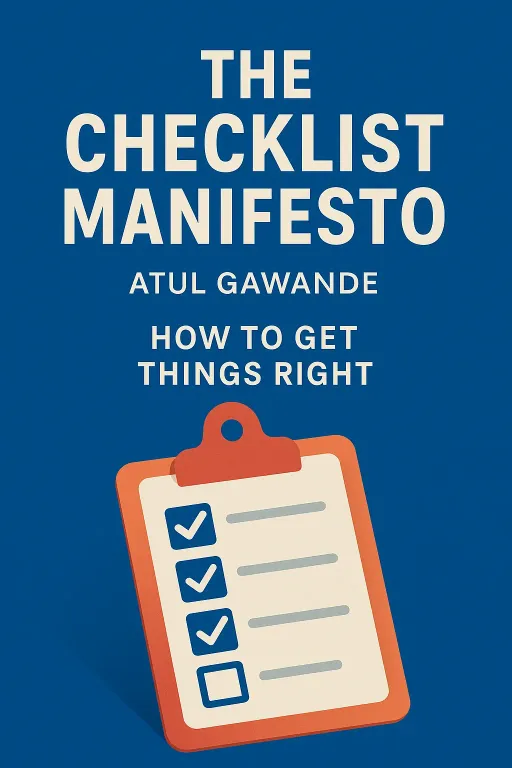
Atlas: That sets a powerful stage. When you mention Atul Gawande, my mind immediately jumps to. It's such a compelling argument for something so seemingly simple, yet so revolutionary in high-stakes environments.
Nova: Absolutely. Gawande, himself a surgeon, fundamentally shifted how we think about preventing errors in fields as complex as medicine. He wasn't just writing an academic paper; he was sharing a profound realization from the front lines.
Atlas: And it resonated so deeply. It’s hard to argue with the sheer data he presented about how a simple, systematic approach, a checklist, could dramatically reduce mistakes and improve patient outcomes. It feels almost counterintuitive that something so basic could have such a profound impact in a field driven by highly specialized expertise.
Nova: It does, doesn't it? But that's the genius of it. The book became a phenomenon, widely acclaimed, because it wasn't just about medicine. It was about human fallibility and the power of collective intelligence, applicable everywhere from aviation to finance. People read it and thought, "Why aren't we doing this everywhere?"
Precision Through Checklists and Communication
SECTION
Nova: So, let's start with that precision piece, the systematic verification. Gawande’s argument in wasn't about dumbing down expertise. It was about recognizing that even the most brilliant minds can overlook crucial steps under pressure.
Atlas: Right, like when you're rushing out the door and forget your keys, but the stakes here are, well, life and death. He's saying that even for highly trained professionals, the sheer volume and complexity of tasks can lead to simple, avoidable errors.
Nova: Exactly. He recounts stories, like the one where surgeons would consistently miss basic steps, not because they were incompetent, but because the procedure itself had become so intricate. The checklist acts as an externalized memory, a cognitive net. It forces communication, too. Think of the pre-surgical "timeout" they implemented – everyone stops, confirms the patient, the procedure, the site. It's a simple verbal checklist, but it ensures everyone is literally on the same page.
Atlas: I can see how that would transform a chaotic environment into something more structured. It's not about micromanaging, then, but about creating a shared mental model and preventing those "oops" moments that can have catastrophic consequences. And for our listeners, especially those mastering complex clinical information, this idea of externalizing some of that cognitive load must be incredibly appealing.
Nova: It is. It’s about building a foundation of reliability. Gawande’s work, which has been widely celebrated and adopted globally, showed that even a simple, well-designed checklist could cut complication rates and deaths by a significant percentage. It's not just a theoretical concept; it's a proven intervention. The beauty is its simplicity, making it accessible even to those grappling with the steepest learning curves in their careers.
Atlas: That makes me wonder, though, what about the human element? We're talking about clinical assessment, which is so much more than just ticking boxes. How does a checklist, which feels very mechanistic, account for the nuances of human interaction, the patient's individual story? That's where I imagine some of the deeper meaning comes in for our listeners who are driven by a desire to serve.
Nova: That’s a brilliant segue, Atlas, because that’s precisely where Gawande takes us with his other seminal work,. If is about the precision of, is about the empathy of and.
Atlas: I remember that book. It explores such a profoundly difficult subject, aging, illness, and end-of-life care. It's not the kind of medical book you'd expect from a surgeon known for checklists.
Nova: And that's what makes it so powerful. It’s a deeply personal exploration, and it received widespread critical acclaim for its honest, unflinching look at a topic often avoided. Gawande, through both professional experience and personal loss, realized that modern medicine often fails patients not by lack of skill, but by failing to understand their priorities beyond just extending life. He highlights the need for conversations about what truly matters to a patient, their values, their fears, their hopes, not just their medical conditions.
Atlas: So, it's about shifting the focus from "what can we to you" to "what does mean to you"? That’s a huge paradigm shift, especially for aspiring healers who are constantly learning new treatments and interventions.
Nova: Exactly. He argues that healthcare professionals often default to aggressive treatments, even when they offer little benefit, because it’s what they’re trained to do. But patients, when truly heard, might prioritize comfort, dignity, or time with loved ones over another round of chemotherapy. He makes a compelling case that the art of medicine lies in facilitating these difficult conversations, in truly listening to the patient's individual journey, and honoring their choices.
Atlas: That's powerful. It’s about recognizing that a patient is not just a collection of symptoms, but a whole person with a life, a history, and aspirations. And it speaks directly to that holistic approach our listeners are seeking. How does one even begin to integrate that kind of empathetic presence into a busy clinical practice? It feels like it requires a deep well of emotional intelligence.
Empathy, Observation, and Connection
SECTION
Nova: It does, and that leads us beautifully to the third perspective we’re weaving in today: the emotional and human aspects of medical practice, as beautifully articulated by poets and physicians like John Stone in. Stone's work, a collection of poems and reflections, really delves into the soul of what it means to be a healer.
Atlas: A poet-physician? That's a fascinating combination. It suggests a different kind of observation, perhaps one that sees beyond the purely clinical.
Nova: Absolutely. Stone, an acclaimed cardiologist and poet, saw the world through both a scientific lens and an artistic one. His writings emphasize the need for empathy, for keen observation not just of symptoms, but of the human condition, and for genuine connection. He reminds us that medicine, at its core, is a deeply human endeavor. He’s not offering checklists or treatment protocols, but insights into the inner world of both patient and practitioner.
Atlas: So, it's about the "art" in "the art of medicine," isn't it? The subtle cues, the unspoken fears, the way a patient holds themselves. These are things a checklist can't capture, but a compassionate, observant clinician can.
Nova: Precisely. His work encourages healthcare professionals to cultivate a deeper sense of presence, to truly their patients. It’s about listening with more than just your ears, but with your heart and your intuition. It’s the kind of subtle wisdom that often comes from experience, but which Stone eloquently puts into words, helping aspiring healers understand that there's a profound ethical and emotional dimension to their work. This resonates with the "empathetic innovator" within our audience, who seeks not just to treat, but to connect and understand.
Atlas: It almost sounds like a call to slow down, to breathe, and to ground oneself, which loops back to the growth recommendations for our listeners. To truly connect, you can’t be rushing through every interaction.
Nova: You've hit on a crucial point. My own take, which weaves all of this together, is that clinical mastery isn't just about accumulating knowledge; it's about applying that knowledge with precision, compassion, and crystal-clear communication, always honoring the patient's individual journey. It's the synthesis of Gawande's systematic rigor, his call for patient-centered communication, and Stone's emphasis on the deeply human art of healing.
Atlas: That's a powerful synthesis. So, if we’re talking about tiny steps, what's one practical thing a listener can do tomorrow to integrate these powerful ideas? Something that bridges the checklist mentality with the empathetic heart.
Synthesis & Takeaways
SECTION
Nova: Here’s a tiny step: for your next patient interaction, implement a mini-checklist, but an empathetic one. Mentally check off: "Listen actively," "Ask about their biggest concern," and "Confirm understanding." It’s a simple structure that forces you to engage on a deeper level.
Atlas: That’s brilliant. It’s like a checklist for connection, ensuring you don’t just treat the illness, but acknowledge the person. And it answers that deep question: how can you integrate both systematic precision and empathetic presence more intentionally into your daily practice?
Nova: Exactly. It’s about conscious intention. And for a healing moment, I want our listeners to reflect on a time they felt truly heard or understood by a healthcare professional. How did that impact their experience? How did it make them feel? That feeling is the gold standard we're all striving for.
Atlas: I think that’s going to resonate deeply. Ultimately, what you're saying is that clinical mastery isn't just about technical skill. It's about combining that skill with a profound respect for the human experience, a willingness to listen, and the discipline to ensure precision. It's about being both a scientist and an artist.
Nova: It is, Atlas. The real mastery comes from that integration. It’s about building a strong foundation of knowledge, yes, but then using that foundation to advocate for better healthcare, to sustain that compassionate spirit, and to truly excel in specialized care, because you're seeing the whole person.
Atlas: That’s a truly inspiring vision, Nova. For anyone on the path to clinical mastery, or simply striving for more holistic well-being and ethical leadership, these insights are invaluable.
Nova: This is Aibrary. Congratulations on your growth!