

The Silent Language of Influence: How Nonverbal Cues Shape Your Leadership
Golden Hook & Introduction
SECTION
Nova: Atlas, if I told you that the silent twitch of an eyebrow could reveal more about someone's intentions than a meticulously crafted speech, would you believe me?
Atlas: Huh. I'd say it sounds like something straight out of a spy movie, Nova. But knowing you, there's a profound truth lurking beneath that dramatic opening. What secret language are we decoding today?
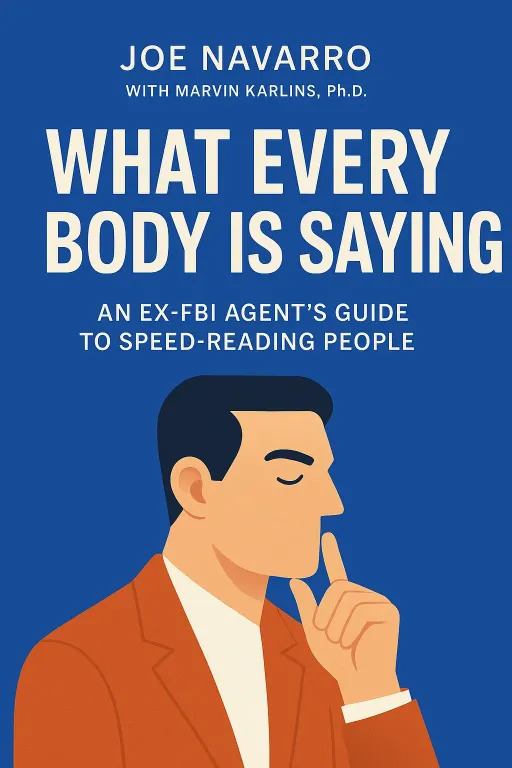
Nova: Today, we're diving into the fascinating world of nonverbal communication, guided by the insights of former FBI agent Joe Navarro, particularly his seminal works, "What Every BODY Is Saying" and "The Dictionary of Body Language." Navarro spent decades in counterintelligence, honing his ability to read people, and his books are essentially a masterclass in that very skill.
Atlas: That’s a great way to put it. I imagine a lot of our listeners, especially those in high-stakes environments, are constantly trying to get a read on people, whether it's a team member, a client, or a competitor. So, how does this former FBI agent's work translate to, say, a boardroom or a product launch meeting?
The Unspoken Truth: Deciphering Nonverbal Cues
SECTION
Nova: Exactly! Navarro argues that our bodies are constantly broadcasting signals, a silent language that often betrays our true thoughts and feelings, regardless of what our words are saying. He breaks it down into practical observations. For instance, he talks about "pacifying behaviors" – those little self-soothing gestures people make when they're stressed or uncomfortable.
Atlas: Pacifying behaviors? Like someone rubbing their neck or touching their face?
Nova: Precisely. Imagine you're in a negotiation. Your counterpart is calmly stating their terms, but you notice them repeatedly stroking their chin or fiddling with a pen. According to Navarro, those aren't just nervous habits; they're indicators of discomfort, uncertainty, or perhaps even an attempt to self-soothe due to deception. They're telling you, "I'm not entirely at ease right now."
Atlas: So, it's like a subconscious tell, a poker face for the body. But how do you differentiate between just a habit and an actual signal of discomfort? I mean, I fidget sometimes when I'm just thinking.
Nova: That's the crucial part, and where Navarro's work truly shines. He emphasizes observing clusters of behaviors, not just isolated gestures. One isolated gesture could be anything. But if you see someone’s lips compress, their foot start tapping, and they rub their neck all within a few seconds while discussing a particular topic, that's a cluster, and it's a strong indicator of stress or negative sentiment related to that topic. It's about context and consistency.
Atlas: So, if I'm presenting a new strategy to my team, and I see a key stakeholder suddenly cross their arms tightly, then subtly lean away, and their eyes dart around, that’s not just them being cold, that’s a signal?
Nova: Absolutely. That cluster – arm crossing, leaning away, darting eyes – suggests defensiveness, disagreement, or a desire to disengage. As a leader, understanding that signal gives you an immediate advantage. You can then adjust your approach, perhaps by asking an open-ended question to draw them out, or by rephrasing your points to address their unspoken concerns.
Atlas: That’s actually really insightful. It means I don’t just react to their words; I'm reacting to their entire being. It’s about building trust and connection, even if the initial signals are negative.
Leadership & The Power of Projecting Confidence
SECTION
Nova: And it’s a two-way street, Atlas. Navarro also talks extensively about how nonverbal cues project our own leadership and confidence. As a leader, you're not just reading others; you're constantly being read. Your posture, your hand gestures, your eye contact – they all contribute to how your team perceives your authority, trustworthiness, and conviction.
Atlas: So, if I walk into a room slouched, avoiding eye contact, and fidgeting, even if I'm delivering brilliant insights, my team might subconsciously dismiss me?
Nova: Precisely. Navarro would say you're undermining your own message. Think about "gravitas." Part of that is the unspoken language of confidence: an open, expansive posture, calm and steady eye contact, controlled and purposeful gestures, and a steady vocal tone. These signals convey competence and composure, especially in high-stakes situations.
Atlas: That gives me chills. So, it's not about putting on an act, but about aligning your internal state with your external presentation. It's about embodying the confidence you want your team to feel in your leadership.
Nova: Exactly. It's not about manipulation; it's about congruence. When your nonverbals align with your verbal message, you project authenticity and strength. Navarro even details how something as simple as walking into a room with your shoulders back, head held high, and a relaxed, open expression can instantly alter perceptions and create a more positive, receptive environment.
Atlas: That makes me wonder, what about when you nervous but need to appear confident? Can you fake it till you make it with body language?
Nova: Navarro would suggest that while you can consciously adjust some behaviors, true confidence comes from within. However, by consciously adopting confident nonverbals, you can actually influence your internal state. It’s a feedback loop. Standing tall, taking up space, making steady eye contact – these actions can actually reduce your internal stress and help you more confident. It’s like a form of self-pacifying, but in a positive way.
Atlas: That’s a powerful idea. It’s not just about reading others, but about actively shaping how you're perceived, and even how you feel, through your own body language.
Synthesis & Takeaways
SECTION
Nova: The core of our podcast today is really an exploration of how mastering nonverbal cues can be a game-changer for leaders. It's about gaining a powerful edge, allowing you to read your team and stakeholders more accurately, build trust, and project unwavering confidence.
Atlas: I can see that. For leaders, who are constantly analyzing numbers and optimizing processes, this adds a whole new layer of data to consider. It’s about understanding the human element that often drives those numbers.
Nova: Absolutely. Navarro’s work teaches us that the most significant conversations often happen without a single word being spoken. The ability to understand this silent language allows you to navigate complex interactions, build stronger relationships, and ultimately, lead with greater impact. It's about recognizing that not every answer is in data; sometimes, it's in the subtle shift of someone's weight or the fleeting expression on their face.
Atlas: That’s actually really inspiring. It means we have access to so much more information than we realize, simply by paying attention. And by being intentional about our own nonverbals, we can unlock team potential and solidify our foundation as leaders.
Nova: Indeed. It's a journey into the depths of human communication, beyond the superficial. And for anyone looking to truly understand and influence those around them, Navarro's insights are invaluable.
Atlas: What a fantastic deep dive. So, the next time you're in a meeting, don't just listen to the words; watch the story being told by the silent language of the body.
Nova: This is Aibrary. Congratulations on your growth!