

The Empathy Gap: Why Understanding Users Isn't Just About Data
Golden Hook & Introduction
SECTION
Nova: Atlas, quick question for you: what's one thing you think everyone gets fundamentally wrong when they try to understand their users?
Atlas: Oh, Nova, it's gotta be thinking a spreadsheet full of survey answers or a dashboard of click-through rates tells you anything truly meaningful. Like, "90% of users clicked the red button"—great, but did they click it? Were they happy? Confused? Desperate because it was the only option left?
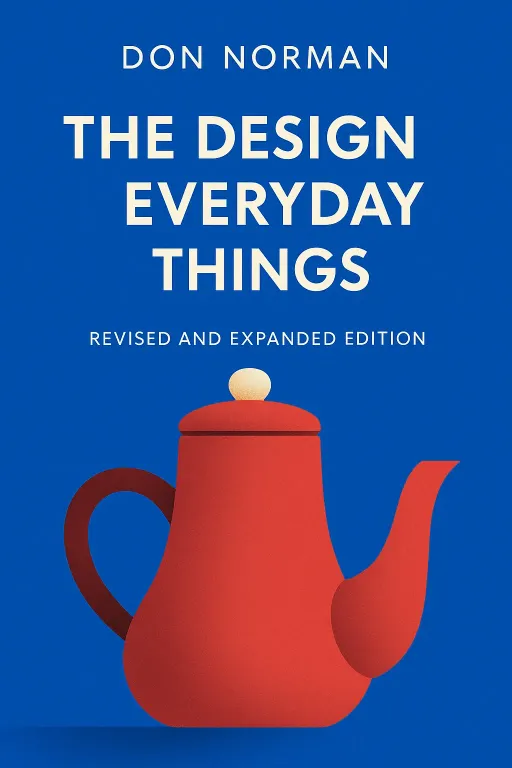
Nova: Exactly! You've just perfectly articulated what we call "the empathy gap," and it's the core of what we're tackling today. This isn't just about bad surveys; it's about a fundamental blind spot in how we build things. We're diving into how to bridge that gap, drawing on two absolute titans in the field of design: Don Norman's "The Design of Everyday Things" and Alan Cooper's "About Face: The Essentials of Interaction Design."
Atlas: I love that pairing. Norman and Cooper are like the OGs of user-centric thinking.
Nova: They really are. What's fascinating about Norman, a former cognitive scientist, is how he applied rigorous academic thinking to everyday objects, revealing that when users struggle, it's almost always the design's fault, not theirs. It changed how we think about everything from teapots to door handles.
Atlas: And Cooper, if I remember correctly, started out deep in the coding world, right?
Nova: Precisely! He's often called the "father of Visual Basic." He made this incredible pivot from programming to championing user experience, bringing a deeply practical, engineering mindset to user advocacy. He really showed that even the most complex software needs a human touch.
Atlas: So, it sounds like we're moving beyond just the technical specifications and into the actual human experience.
Nova: Absolutely. Their insights fundamentally shift our focus from "what can it do" to "what do people need it to do," making our creations genuinely user-friendly. And that leads us straight into our first big idea: the peril of the purely data-driven approach.
The Peril of the Purely Data-Driven Approach: The Empathy Gap
SECTION
Nova: Many teams today are obsessed with data, which is fantastic for telling us happened. But that's where the blind spot often emerges. Imagine a team launching a new social app. Their metrics show incredible "engagement": users are spending hours on the platform, constantly refreshing their feeds, clicking everywhere. The team celebrates, thinking they've built a hit.
Atlas: Okay, but those numbers sound like a win, right? Hours of engagement? That's the dream.
Nova: It sounds like it, doesn't it? But then they start observing users in their natural environment. They see people scrolling endlessly, not finding what they're looking for, feeling overwhelmed by notifications, and ultimately, feeling more anxious than connected. The "engagement" wasn't delight; it was a desperate search for connection amidst a sea of noise. The data told them, but it completely missed users were active and how they during that activity.
Atlas: Wow, that's kind of heartbreaking. So, the numbers were a smoke screen for underlying frustration. It’s like a restaurant measuring how long people stay, but not that they're only staying because the service is so slow.
Nova: Exactly! That's the empathy gap in action. When we prioritize metrics over human experience, we create products that feel clunky, frustrating, or even detrimental, despite hitting all our key performance indicators. It's the difference between knowing someone opened your email and understanding if they felt respected or spammed.
Atlas: So, are we saying data is bad? Because for a lot of people building products, data is king. How do you even know what to build without metrics?
Nova: Not at all! Data is incredibly powerful. The key is understanding its limitations. Data tells you happened; empathy tells you it happened, and it felt. It’s the difference between a doctor knowing your fever is 102 degrees and understanding you feel exhausted, achy, and scared. One is a number, the other is an experience. The problem arises when we let the numbers become our sole lens, ignoring the rich tapestry of human needs, contexts, and emotions that drive behavior. We end up designing for a statistical average, not a living, breathing person.
Atlas: So, it's about seeing beyond the surface-level interaction to the deeper motivation and emotional state. That makes me wonder, how do we actually that? How do we bridge this gap and get to that deeper understanding?
Bridging the Gap: The Human-Centered Design Revolution
SECTION
Nova: That’s a perfect segue, Atlas, because that's exactly what Don Norman and Alan Cooper set out to answer. Norman's work, especially in "The Design of Everyday Things," fundamentally shifted our understanding of how we interact with the world around us. He introduced concepts like "affordances" and "signifiers."
Atlas: Okay, "affordances" and "signifiers." Can you break those down for us? They sound a bit like design jargon.
Nova: Absolutely. Think of it this way: an "affordance" is a property of an object that suggests how it can be used. A handle grasping. A flat surface placing things on it. A "signifier" is a cue that tells you what those affordances are. So, a push bar on a door that you should push it.
Atlas: Wait, so you're telling me that struggling with a door—you know, the classic "push" when it's a "pull"—isn't my fault, it's the fault? My entire life, I've just been blaming my spatial awareness!
Nova: Precisely! Norman's radical insight was that when users struggle, it's often the design's fault, not theirs. It's about designing things that intuitively communicate how they work, rather than expecting people to read a manual for every object. A good design disappears; a bad one constantly reminds you of its existence through frustration.
Atlas: That’s such a simple but profound idea. It's like a remote control with a hundred tiny, identical buttons. It might have a million features, but if I can't figure out which button changes the channel without a magnifying glass, the design has failed me.
Nova: Exactly. And building on that, Alan Cooper takes it a step further with "goal-directed design." While Norman focuses on how objects communicate their functions, Cooper emphasizes focusing on what users —their goals—rather than just the tasks they perform or the features we can build.
Atlas: So, instead of thinking "I need to build a button that does X," it's "My user needs to conveniently"?
Nova: You got it. Cooper argued strongly against feature-driven development, where teams just keep adding more functionalities because they. He championed creating "personas"—archetypal users with specific goals, motivations, and pain points, based on real user research. Instead of designing for "everyone," you design for "Sarah, the busy marketing manager who needs to quickly approve campaigns on her phone."
Atlas: That makes so much sense! Instead of building a super-advanced calculator, you're building a tool for a specific accountant trying to close their books before a deadline, right? That’s a huge shift from just adding more buttons and hoping people figure it out. It's about understanding the entire context of their day.
Nova: It truly is. These insights fundamentally shift your focus from "what can it do" to "what do people need it to do," making your creations genuinely user-friendly. It’s the difference between building a bridge that’s technically sound and building one that people actually to cross because it connects them directly to where they need to go.
Atlas: So, it's not just about functionality; it's about making things intuitive and delightful, almost invisible in their effectiveness. For anyone trying to build products, whether it's software or a physical object, this is gold. It’s about making your creations genuinely useful and enjoyable.
Synthesis & Takeaways
SECTION
Nova: So, what we’ve explored today is that the "empathy gap" isn't just a minor inconvenience; it's a critical blind spot that can lead to products that are technically sound but humanly frustrating. And the solution, championed by legends like Don Norman and Alan Cooper, isn't to abandon data, but to supplement it with deep, human-centered understanding.
Atlas: It's about seeing the world through their eyes, not just looking at a spreadsheet. It's about designing for the human experience, not just the technical specifications. If you want to create something truly impactful, you can't just count clicks; you have to understand the heart behind them.
Nova: Absolutely. It’s about asking "why" as much as "what." Because when you understand the underlying motivations, the frustrations, the goals, that's when you can truly innovate and create delightful experiences. The best designs aren't just functional; they're empathetic.
Atlas: That's a powerful challenge for anyone listening. How can you step into your user's shoes today, seeing their world not just as a problem to solve, but as an experience to enhance? For everyone listening, start small. Connect with one new user this week. Listen more than you speak. That's where the real insights begin.
Nova: Because ultimately, the goal isn't just to build; it's to build better, for people.