

The 'Build Better' Principle: Designing for Impact, Not Just Features
Golden Hook & Introduction
SECTION
Nova: Atlas, I’ve got a challenge for you today. We’re talking about "The 'Build Better' Principle"—designing for impact, not just features. In one witty, slightly cynical line, what's the real problem with just chasing after more features?
Atlas: Oh, that’s easy. Chasing features is like buying a bigger, fancier toolbox when you don’t even know what you’re trying to build. You end up with a lot of shiny things, but no masterpiece. It’s all… potential energy, no kinetic.
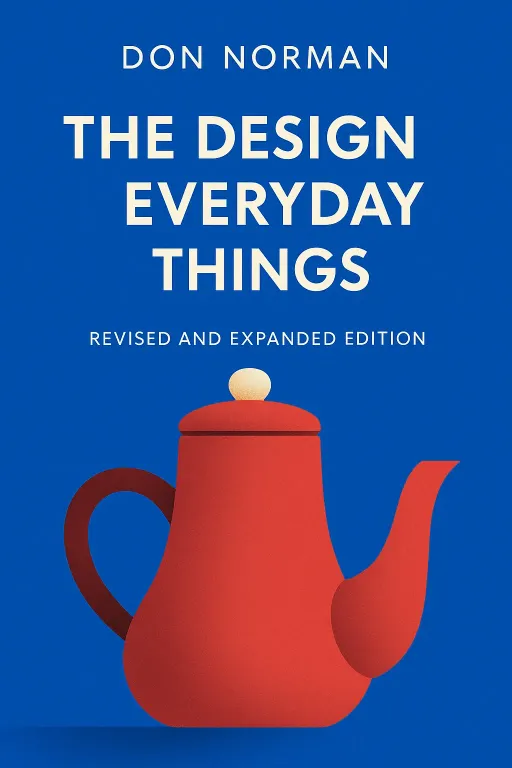
Nova: Ha! "Potential energy, no kinetic." I love that! And you’ve perfectly set the stage for why we’re diving into some truly foundational thinking today, inspired by two absolute titans in the field: Don Norman’s classic,, and Marty Cagan’s incredibly influential.
Atlas: Norman and Cagan, that’s a powerful pairing. What makes them so essential for our listeners who are out there building and leading?
Nova: Well, Norman, for instance, is fascinating because he’s this incredible blend—a cognitive scientist and an engineer. He didn't just theorize about design; he understood the human mind the mechanics of creation. His work isn't just about aesthetics; it’s about how we intuitively understand and interact with the world around us. And Cagan, coming from the heart of Silicon Valley, gives us the modern, practical playbook for how to actually it. Together, they form the bedrock of building things that don't just work, but truly resonate.
Atlas: That makes sense. So, we're moving beyond just the 'what' and into the 'why' and 'how' of truly impactful creation.
Unmasking Hidden Needs: The Invisible Art of Intuitive Design
SECTION
Nova: Exactly. Let’s start with that "why." The cold, hard fact is, building something truly innovative means understanding the user's hidden needs. It's not just about adding features. It’s about designing solutions that truly resonate and solve real problems, making your work indispensable. Norman argues that good design is intuitive and invisible. Products fail when their functionality isn't immediately clear, leading to frustration and disuse.
Atlas: That’s going to resonate with anyone who’s ever stared at a new piece of software or a complex machine and just felt… lost.
Nova: Absolutely. Think about the classic example of a "Norman door." You walk up to it, and you don’t know whether to push or pull. There’s no clear handle, no obvious signifier. You end up pushing when you should pull, or vice versa, and you feel like an idiot. The door isn’t badly made; it’s badly designed from a user experience perspective. The hidden need there is simply: 'I need to know how to open this door without thinking.'
Atlas: Oh, I know that feeling! It’s like when you’re trying to use a new app, and you’re hunting for the save button or the settings, and it’s buried under three layers of menus. You’re not thinking, "Wow, this app has so many features!" You’re just thinking, "Why can’t I do the one thing I need to do?"
Nova: Precisely. That frustration isn't about a lack of features; it’s about a lack of intuitive connection between the product and the human using it. The product might be technically brilliant, but if its functionality isn't immediately clear, if it doesn't the right action, it’s a failure in design. The cause is often a feature-first mindset, where engineers or product managers focus on what be built, rather than what be built for human interaction. The process leads to user confusion, and the outcome is disuse or abandonment.
Atlas: But wait, for someone who’s building high-performance systems or complex engineering solutions, how do you even these 'hidden needs' when you’re often working from detailed specifications? Isn't it faster to just build what the client or the market says they want?
Nova: That’s a critical question, and it’s where Norman’s insights really shine. He’d argue that good design isn't about ignoring specifications; it's about interpreting them through the lens of human behavior. It means observing how people interact with similar systems, not just asking them what they they want. It’s about understanding the psychology behind the interaction. A great example of this is the evolution of car dashboards. Early ones were just gauges. Now, they’re designed for glanceability, with haptic feedback, and voice commands – all driven by the hidden need for safety and minimal distraction while driving. No one explicitly asked for "less distraction," but it was an underlying need.
Atlas: So it’s like, the specification might say "display navigation," but the hidden need is "help me navigate safely and efficiently without taking my eyes off the road for too long." That’s a subtle but profound difference. It means asking a deeper 'why' behind every 'what.'
Nova: Exactly! It’s about moving beyond the superficial request to the underlying human goal. That’s the invisible art. And it’s not just for consumer products; it applies to complex industrial interfaces, to software for engineers, to team workflows. Anywhere humans interact with a system, there are hidden needs for clarity, efficiency, and reducing cognitive load.
From Guesswork to Groundwork: The Power of Continuous Discovery
SECTION
Nova: And this leads us perfectly to we actually uncover those hidden needs and ensure our designs hit the mark, which is where Marty Cagan comes in with his emphasis on continuous discovery and validation. Cagan argues that truly understanding customer problems needs to happen you build. It’s not about collecting a list of requirements and handing them off; it’s about constant, ongoing engagement with potential users.
Atlas: Okay, so that’s the practical framework for the "how." Can you give an example of how this continuous discovery actually plays out? Because for innovators trying to move fast, "continuous" could sound like "endless."
Nova: That’s a fair concern, and it’s a common misconception. Continuous discovery isn't about getting bogged down. It's about smart, rapid iteration and validation. Think about the early days of a now-ubiquitous ride-sharing app. They didn't launch with every feature they have today. They started by solving a core problem: "How do I get a ride quickly and reliably when I need one?" They talked to potential riders, they talked to drivers, they built tiny prototypes, they observed. They continuously tested assumptions about pricing, convenience, and safety, often with very low-fidelity methods.
Atlas: So, they weren't just guessing what people wanted; they were actively unearthing the real pain points and testing minimal solutions to see if they resonated.
Nova: Precisely. They weren't just collecting requirements like a grocery list. They were conducting problem interviews, solution interviews, usability tests, A/B tests—all in a continuous loop. This process prevented massive feature creep because they were constantly validating if a proposed solution actually addressed a problem, and if that solution was intuitive and valuable. It’s moving beyond just collecting feedback after launch, to actively shaping the product from the ground up, based on real-world utility. The cause is a desire for genuine impact. The process is continuous learning and adaptation. The outcome is a product that users truly value.
Atlas: That makes me wonder, how do you balance that need for continuous feedback and validation with the pressure to deliver quickly, especially in a fast-paced entrepreneurial environment or a high-performance engineering project? It sounds like it could slow things down.
Nova: That's the art of it, Atlas. Cagan would argue it actually things up in the long run. The alternative is building a complex solution based on assumptions, only to find out later that nobody wants it, or it doesn't solve their actual problem. That’s far more costly and time-consuming in terms of rework, reputation, and lost opportunity. Continuous discovery is about "failing fast" on small, inexpensive experiments, rather than failing slowly and expensively on a huge launch. It’s about building the thing, not just building things right. It’s an investment in certainty.
Atlas: So, it’s not about endless features, it’s about endless refinement of purpose. That’s a powerful distinction for leaders and engineers who are driven by impact. It shifts the focus from simply executing to truly innovating with purpose.
Synthesis & Takeaways
SECTION
Nova: Absolutely. Marrying Norman’s insights on intuitive design with Cagan's framework for continuous discovery gives us the ultimate 'Build Better' principle. It’s about building with profound empathy, understanding those invisible needs, and then relentlessly refining your solution through real-world validation. Impact doesn't come from a longer feature list; it comes from a deeper understanding of the human experience.
Atlas: For someone leading a team or building something new right now, what’s one immediate, tiny step they can take tomorrow to start applying this principle?
Nova: A fantastic question. My recommendation, directly from our insights today, would be this: pick just one feature you're currently designing or that your team is working on. Then, map out its intended user journey step-by-step, from start to finish. As you go, consciously identify every single potential point of confusion, friction, or unexpected behavior.
Atlas: So, instead of just assuming the user will know what to do, you’re actively looking for where they might get stuck or frustrated. It’s like stress-testing the user experience before you even build it out fully.
Nova: Exactly! It forces you to put yourself in the user’s shoes, uncover those hidden needs, and anticipate where the design might be intuitive. It’s a micro-dose of continuous discovery and an empathy exercise that can prevent significant headaches down the line. It's about designing for impact, not just for the sake of adding another bullet point to a spec sheet.
Atlas: That’s incredibly actionable. It shifts the mindset from just 'what are we building?' to 'what problem are we truly solving, and how will it feel to use it?' It's about building with a legacy in mind, not just a launch.
Nova: Indeed. True innovation, whether in high-performance automotive design or a new entrepreneurial venture, isn't just about technical brilliance. It's an act of profound empathy and relentless, intelligent refinement. It's about creating something so fundamentally useful and intuitive, it feels like it was always meant to be there. Ask yourself: Is what you're building truly indispensable, or just another feature?