

Beyond the Algorithm: How to Design AI That Truly Understands Human Needs.
Golden Hook & Introduction
SECTION
Nova: We're building AI that's smarter than ever before, right? It can write essays, generate images, even compose music. But here's the contrarian challenge: are we making it? What if our relentless pursuit of pure algorithmic intelligence is actually making our technology more frustrating, not less?
Atlas: Oh man, Nova, that hits home. I think everyone listening can immediately picture an AI interaction that makes them want to throw their device across the room. Like when your smart assistant misunderstands a simple request three times in a row, or an automated customer service bot sends you into an endless loop. Why does this happen? Isn’t everyone to make AI better?
Nova: It’s a fantastic question, Atlas, and it’s precisely what we’re diving into today. We’re exploring how we can move beyond building merely functional AI to designing intelligent systems that genuinely understand and serve human needs. Our conversation is really an exploration of the ideas resonating from the core concepts in "Beyond the Algorithm: How to Design AI That Truly Understands Human Needs." We'll be drawing on foundational thinkers who've shaped our understanding of design itself. It’s about making technology intuitive, trustworthy, and, dare I say, delightful.
Atlas: Delightful AI? That sounds like a dream for anyone who interacts with these systems daily, especially those trying to shape their impact.
Nova: Exactly. And to truly understand this, we need to first unearth a critical blind spot that often plagues AI development.
The Human Blind Spot in AI Design
SECTION
Nova: So, let's talk about "The Blind Spot." In our rush to build powerful AI, we sometimes completely overlook the most basic human element: how people actually interact with technology. It's like building the fastest, most technologically advanced car in the world, but then giving it steering that's counter-intuitive, pedals that are labeled backwards, and a dashboard that requires a pilot's license to understand. It’s brilliant, yes, but utterly unusable.
Atlas: But wait, Nova, isn't everyone in tech talking about 'user-centricity' and 'customer experience' these days? It feels like it's a buzzword everywhere. So why does this blind spot persist? Why are we still getting these frustrating experiences?
Nova: That’s where the nuance lies. Many teams are user-centric in theory, but in practice, technical efficiency often takes precedence. The focus becomes "can we make the algorithm faster, more accurate, more powerful?" rather than "can we make this and for the human using it?" Take, for instance, an AI-powered smart home system. On paper, it's a marvel – it learns your habits, optimizes energy, secures your home. But the reality for many users is a nightmare of complex setup procedures, requiring five different apps to control various devices, and voice commands that constantly misunderstand context. You say "turn on the living room lights," and it adjusts the thermostat in the bedroom.
Atlas: Oh, I’ve been there! I had an AI assistant that would consistently schedule my alarms for 3 AM instead of 3 PM, no matter how clearly I articulated it. It was technically 'hearing' me, but it wasn't my intent, or the context of 'morning' versus 'afternoon.' It led to so much frustration that I just unplugged the thing. For our listeners who are managing high-pressure teams, or trying to integrate AI into critical workflows, that kind of unreliability isn't just an annoyance; it’s a genuine impediment. So, we're building these incredibly powerful tools, but if they're unusable, aren't we just creating more barriers instead of breaking them down?
Nova: Absolutely. It's a failure of design, not necessarily of the underlying intelligence itself. A brilliant but unusable AI is still a failed product from a human perspective. It creates friction, erodes trust, and ultimately, users abandon it. This highlights a fundamental truth: the best technology in the world is useless if people can't intuitively figure out how to use it, or if it doesn't align with their natural human behaviors. This frustration isn't new, though. Design luminaries have been warning us about this for decades. And that naturally leads us to the foundational principles that can help us overcome this blind spot.
Principles of Human-Centered AI Design
SECTION
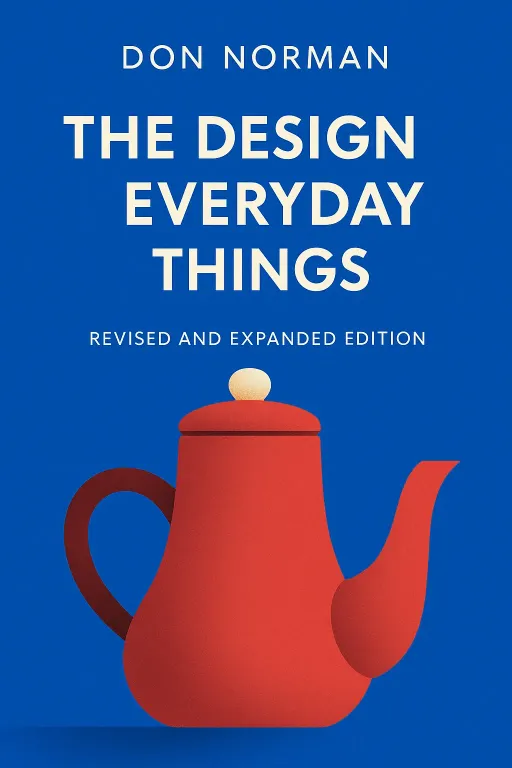
Nova: This shift in perspective is crucial, and it’s where we turn to the giants of design. First, let’s talk about Don Norman, author of "The Design of Everyday Things." What's fascinating is that Norman literally coined the term "user experience design" when he was at Apple. That's how foundational his work is. His classic book reveals how good design is intuitive, understandable, and forgiving.
Atlas: Okay, so it’s like the AI equivalent of a well-designed physical door, right? You don't have to guess whether to push or pull; the design makes it obvious. But how does that apply to, say, an ethical AI system? For someone building an AI product strategy, 'forgiveness,' for example, sounds great, but what does it mean in practice for a complex algorithm?
Nova: That’s a brilliant connection, Atlas. Forgiveness in AI means the system allows for easy correction of mistakes, understands ambiguous commands, or gracefully recovers from user errors without catastrophic consequences. Think about an AI-powered writing assistant. If it makes a suggestion that completely changes your meaning, a 'forgiving' AI lets you instantly undo, or offers alternative phrasing without making you feel stupid. It doesn't just auto-correct; it. Norman's principles are vital for designing AI interfaces that users can trust and effectively integrate into their lives, reducing frustration and increasing adoption.
Nova: Building on that, we have Alan Cooper, often called the 'Father of Visual Basic,' with his seminal work "About Face." Cooper advocates for something called goal-directed design. This isn't just about what the computer technically, but what the as their ultimate goal. It's focusing on user behaviors and needs rather than just technical capabilities. Imagine an AI designed for a busy project manager. Instead of just giving them a suite of generic tools, a goal-directed AI anticipates their needs: summarizing meeting notes, flagging urgent emails from key stakeholders, or even drafting follow-up actions based on previous conversations. It's designing what people, not just what the AI.
Atlas: That sounds like a massive shift. Instead of 'here's a hammer, go find a nail,' it’s 'what problem do you have, and how can we craft a tool just for that?' It makes me wonder about the implication for leaders trying to foster responsible innovation. If we're truly designing for human needs, does that inherently make for more ethical AI? Because if you're focusing on the user's goals and potential frustrations, you're forced to consider the impact.
Nova: Precisely. Human-centered design inherently leads to more ethical considerations. It forces designers to think beyond the immediate function and consider the long-term impact on the user, the potential for misuse, and how the AI will integrate into their lives. It’s about building AI that fosters trust and seamless interaction in complex systems. It shifts your focus from merely functional AI to AI that is truly human-centered.
Synthesis & Takeaways
SECTION
Nova: So, what we’ve been discussing today isn't just about making AI easier to use; it's about shifting our mindset from building intelligent to crafting intelligent. It's about designing AI that doesn't just process information faster, but understands the messy, beautiful, unpredictable context of human life.
Atlas: It’s a profound shift, Nova. Earlier, you posed a deep question: Think about an AI interaction you find frustrating. How might applying Norman's principles of good design transform that experience into something intuitive and delightful? For our listeners who are embracing the learning curve and exploring one new AI concept daily, this is such a crucial lens to apply. It's not just about understanding the tech, but understanding the who will use it.
Nova: Exactly. The key isn't just more powerful algorithms, it's more thoughtful design. It's about recognizing that the 'human element' isn't a secondary consideration; it's the very core of what makes AI truly valuable.
Atlas: So the next time you're frustrated by an AI, instead of just blaming the tech, maybe ask: 'How could this have been designed with in mind?' It changes the whole conversation from a technical problem to a design challenge.
Nova: And that, Atlas, is where the real innovation happens.
Atlas: Absolutely.
Nova: This is Aibrary. Congratulations on your growth!