Stop Guessing, Start Measuring: The Scientific Approach to Progress.
Golden Hook & Introduction
SECTION
Nova: Atlas, quick game: what's the most common advice you hear when someone's trying to make a big decision?
Atlas: Oh, easy. "Trust your gut." Or "go with your intuition." It's practically a mantra in every self-help book.
Nova: Exactly! And today, we're going to playfully roast that advice, because while our gut is great for knowing if you're hungry, it's often a blind spot when it comes to understanding the world.
Atlas: Oh, I like that. So, we're talking about when our instincts lead us astray? Because honestly, that happens to me more often than I'd care to admit.
Nova: Absolutely. And the book that really lays this bare, and which we're diving into today, is essentially a call to action to "Stop Guessing, Start Measuring." It's a powerful argument for applying the scientific approach to everything, not just lab experiments. It’s an idea championed by intellectual giants like Carl Sagan, whose work fundamentally shifted how many people view the universe.
Atlas: Right, like, Sagan wasn’t just a scientist; he was a master communicator who could make astrophysics feel like a campfire story. That's a huge part of why his work resonated so deeply with so many people.
The Blind Spot: Overcoming Gut Instinct with Scientific Rigor
SECTION
Nova: Precisely. And that naturally leads us to our first core idea: the 'blind spot.' We often trust our gut too much, don't we? We rely on assumptions, on what right, or what we've always been told, and in doing so, we miss the elegant, verifiable truths that science offers.
Atlas: I can definitely relate. It’s like when you’re driving somewhere new, and you you know the way, but then you ignore the GPS and end up completely lost. Your gut felt right, but the map had the data.
Nova: That's a perfect analogy! And it’s not just about getting lost physically. It's about getting lost in our understanding of how the world works, how our bodies function, or even how our businesses operate. We make decisions based on anecdote or tradition, rather than empirical evidence.
Atlas: So you're saying that understanding the scientific method isn't just for people in white lab coats, then? It's a powerful lens to see the world more clearly and make better decisions, even in daily life?
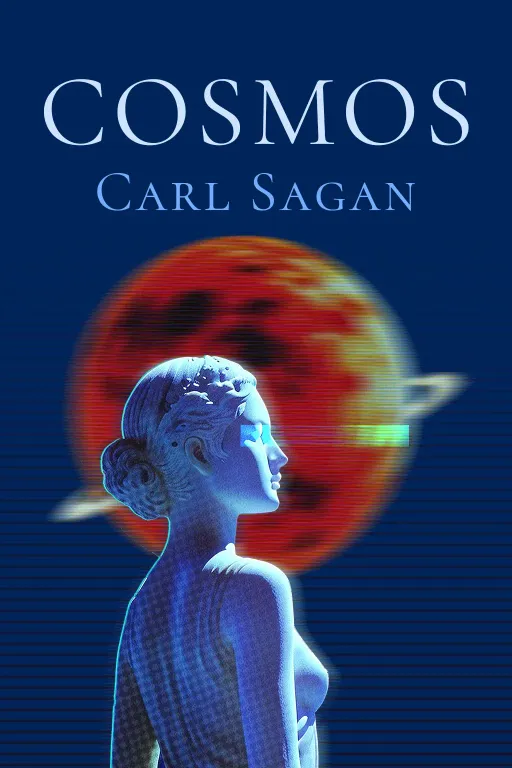
Nova: Exactly! Take Carl Sagan’s monumental work, "Cosmos." He wasn't just presenting scientific facts; he was showing scientific inquiry, this rigorous process of observation, hypothesis, and testing, has expanded our understanding of the universe. It challenged ancient myths that people had believed for millennia.
Atlas: Wow. So, it wasn't just about the stars, but about the of looking at the stars? That makes me wonder, how did he manage to make something so abstract, like the scientific method, so compelling and accessible to millions? I mean, it's not exactly a beach read, usually.
Nova: He did it through storytelling, Atlas. He didn’t just present data; he wove narratives around the human journey of discovery. He showed the sheer audacity of early astronomers, the painstaking observations, the intellectual bravery required to challenge established dogma. He made the of science feel like an adventure.
Atlas: That's a great way to put it. He made the scientific method itself the hero of the story, revealing a deeper, more awe-inspiring reality than any myth could conjure. It's like, instead of just saying 'the Earth revolves around the sun,' he told the story of Copernicus and Galileo, and the decades of observation that led to that understanding.
Nova: And that's the power of moving beyond the gut feeling. Our intuition might tell us the sun revolves around us because we see it rise and set. But rigorous observation and mathematical models, the scientific method, reveal a much grander, more accurate, and frankly, more beautiful truth. It's about moving from assumption to certainty.
Atlas: I guess that makes sense. So many of our everyday assumptions are just unchallenged gut feelings passed down through generations. How do we even begin to question something that feels so inherently true?
The Shift: Embracing Critical Thinking and Evidence-Based Exploration
SECTION
Nova: That’s where our second core idea comes in: 'the shift.' It’s about embracing critical thinking and evidence-based exploration, and no one championed this more passionately than Sagan in his other seminal work, "The Demon-Haunted World." He argued that science is a candle in the dark, protecting us from irrationality and misinformation by demanding evidence.
Atlas: Oh, I’ve heard about that one. It’s supposed to be a powerful defense of skepticism, right? Like, not being cynical, but being smart about what you believe.
Nova: Precisely. He emphasized that skepticism isn’t about being negative; it’s about demanding evidence, questioning claims, and being open to changing your mind when new evidence emerges. He saw science as a method of inquiry that helps us distinguish between what's real and what's wishful thinking or outright deception.
Atlas: That sounds incredibly relevant now, doesn't it? With so much information, or misinformation, flying around, having a built-in 'baloney detection kit,' as he called it, seems absolutely essential.
Nova: It's more vital than ever. Sagan wasn't just talking about UFOs or psychic phenomena; he was talking about how we approach everything from health claims to political statements. He taught us to ask: 'What's the evidence? How was it tested? Could there be another explanation?'
Atlas: So, these insights fundamentally shift us from passive acceptance to active, evidence-based exploration. It empowers us to question and discover, rather than just absorb whatever narrative is presented to us. It really is about taking back intellectual agency.
Nova: And that's the profound impact. When you adopt this scientific mindset, it changes how you approach problems in your own life. Instead of guessing why a project failed, you start looking for data. Instead of assuming a new diet will work, you look for studies, you track your own results. You become your own scientist.
Atlas: That’s actually really inspiring. It’s not just about understanding the universe; it’s about understanding universe, your daily life, and applying that same rigor. So, where in our daily lives could a more rigorous, scientific approach help us move from assumption to certainty? That's the deep question, isn't it?
Nova: It truly is. And the answer is almost everywhere. From personal finance to parenting, from career choices to health decisions, the moment we stop guessing and start measuring, start critically evaluating evidence, we unlock a far more reliable path to progress and understanding.
Synthesis & Takeaways
SECTION
Nova: So, Atlas, as we wrap up, what’s the biggest takeaway for you from this idea of stopping the guessing and starting the measuring?
Atlas: For me, it’s the realization that skepticism isn't a negative trait; it's a powerful tool for clarity. It's about not just accepting things at face value, but asking for the data, for the evidence. It removes so much of the noise and allows us to focus on what’s actually true, even if it challenges our comfort zones.
Nova: Absolutely. And it’s about embracing the idea that the scientific method isn't just for laboratories, but for life. It’s a way of thinking that empowers us to make better decisions, to see the world more clearly, and to constantly evolve our understanding. It’s a journey from assumption to certainty, one evidence-based step at a time.
Atlas: That gives me chills, thinking about how much more effective and informed we could all be if we just applied a little more scientific rigor to our daily choices. It's a hopeful way to look at it.
Nova: Indeed. And it’s a journey that begins with a single question: "What's the evidence?"
Atlas: This is Aibrary. Congratulations on your growth!