

Navigating the Modern World: Critical Thinking & Information Literacy
Golden Hook & Introduction
SECTION
Nova: Did you know your brain is constantly playing tricks on you, making snap judgments that shape your entire reality, often without you even realizing it? We're diving into how to spot those mental shortcuts.
Atlas: Whoa, that sounds a bit out there! Are you saying we're all just walking around, fundamentally misunderstanding the world because our own minds are sabotaging us? That’s kind of a depressing thought, actually.
Nova: Not depressing, Atlas, empowering! Because once you understand your brain does this, you can start to take back control. Today, we're pulling back the curtain on the mental machinery that shapes our perceptions, and we're doing it with some incredible guides.
Atlas: Okay, I’m listening. What kind of guides are we talking about here? Because I imagine a lot of our listeners feel like they're drowning in information, trying to sort fact from fiction, and it feels like an uphill battle.
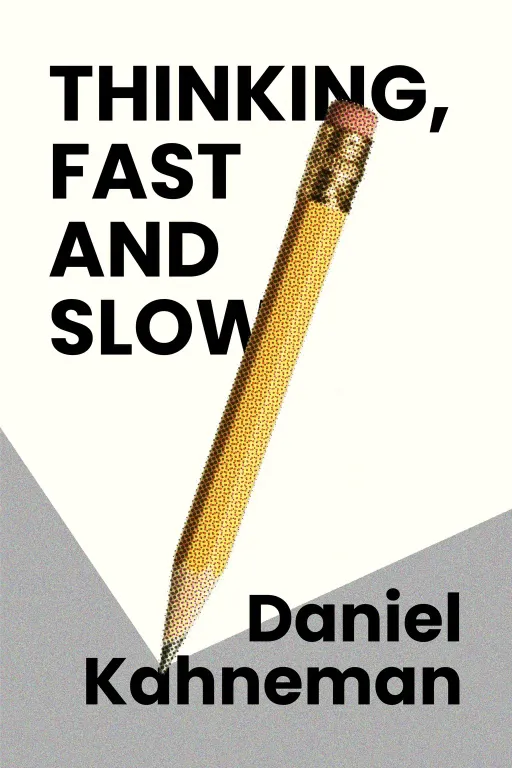
Nova: Exactly! And that's why we’re turning to three giants of critical thinking. First, the Nobel laureate Daniel Kahneman, whose groundbreaking work, "Thinking, Fast and Slow," fundamentally changed how we understand human decision-making by blending psychology and economics. Then, we have the brilliant Hans Rosling, a Swedish physician and statistician who, in "Factfulness," used animated data to shatter common misconceptions about global progress, often with a mischievous twinkle in his eye.
Atlas: Oh, Rosling! I remember seeing some of his TED Talks; he was phenomenal at making complex data actually to look at.
Nova: Absolutely. And tying it all together, we’ll weave in the wisdom of the beloved astronomer and science communicator, Carl Sagan, whose poignant "The Demon-Haunted World" was almost a final testament, a fervent plea for scientific thinking and skepticism in a world increasingly susceptible to fantastical claims. It’s a powerful call to arms for intellectual rigor.
Atlas: That’s a powerful lineup. So, the core of our podcast today is really an exploration of how to upgrade our mental operating systems to navigate the overwhelming information landscape of the modern world with clarity and confidence. Today we'll dive deep into this from two perspectives. First, we'll explore the hidden biases and mental shortcuts that often lead us astray, then we'll discuss how to cultivate a fact-based, skeptical mindset to cut through the noise.
Understanding Our Biases and Dual Thinking Systems
SECTION
Nova: Let's start with Kahneman, because his work really lays the groundwork for understanding ourselves. He introduces us to two distinct systems of thinking. Imagine you're driving on a familiar road, maybe your commute. You're barely paying attention, humming a song, thinking about your day. That’s System 1 at work: fast, intuitive, automatic, emotional. It’s the part of your brain that instantly recognizes a friend’s face or reacts to a sudden loud noise.
Atlas: Right, like that time a squirrel darted in front of my car, and I slammed on the brakes without even consciously deciding to. Pure instinct.
Nova: Exactly! It’s brilliant for survival and efficiency, but System 1 is also prone to systematic errors, or cognitive biases. It loves shortcuts. Now, imagine you're trying to park that same car in a tiny, tricky spot, parallel parking with a crowd watching. You're slow, deliberate, focused, probably breaking a sweat. That’s System 2: slower, more effortful, logical, reflective. It’s what you use for complex math problems or deeply analyzing a problem.
Atlas: Okay, so System 1 is the autopilot, and System 2 is the manual override. I can definitely relate to having my autopilot make some questionable decisions. Can you give me an example where my System 1 thinking might lead me astray in a really common scenario? For someone trying to make informed decisions daily, this is like having an internal editor who's sometimes asleep at the wheel.
Nova: Oh, absolutely. Think about something like the "availability heuristic." System 1 tends to overestimate the likelihood of events that are easily recalled or vivid in our memory. For instance, after a highly publicized plane crash, people often become irrationally afraid of flying, even though statistically, driving is far more dangerous. The image of the crash is so vivid, so "available" in their minds, that System 1 inflates its probability.
Atlas: So, it’s not necessarily about the actual risk, but about how easily I can picture the bad outcome. That’s actually really powerful, and a bit scary, how our emotions can warp our perception of reality. I imagine a lot of our listeners feel this when they're scrolling through sensational headlines. That’s why that "Tiny Step" from the content resonated with me: "Before believing a sensational headline, pause and ask: 'What is the evidence?' and 'What data contradicts this claim?'" It's basically forcing System 2 to wake up, isn't it?
Nova: Precisely. System 2 is often a bit lazy. It prefers to defer to System 1 if it can. It takes conscious effort to engage System 2, to pause and ask those critical questions. Another common bias System 1 falls victim to is "confirmation bias." We tend to seek out, interpret, and remember information that confirms our existing beliefs. If you believe a certain stock will perform well, you'll naturally pay more attention to positive news about it and dismiss negative indicators.
Atlas: That’s a classic! I’ve seen that play out in everything from investment decisions to political debates. It makes me wonder, how do we even begin to trust our own judgment if our brains are wired for these shortcuts? It feels like we're fighting an internal battle just to see things clearly.
Nova: We are, but it's a battle we can win by understanding the terrain. Kahneman's key insight isn't that System 1 is bad; it's that we need to be aware of its tendencies and learn when to engage System 2. It's about recognizing that first, intuitive flash and then asking, "Is this truly accurate, or is my brain just trying to save energy?"
Cultivating a Fact-Based, Skeptical Mindset
SECTION
Nova: Now, understanding our internal biases is just one piece of the puzzle. What about the external world, which often feeds those biases with misinformation and dramatic narratives? This is where Hans Rosling, with his book "Factfulness," comes in to shake us awake.
Atlas: I imagine a lot of our listeners feel like the world is constantly getting worse. Every news cycle seems to bring more doom and gloom. Is Rosling saying that's just a bias? Because it feels pretty real sometimes.
Nova: He absolutely challenges that perception, Atlas. Rosling argued that most people carry around a dramatically biased, outdated view of the world, often believing things are far worse than they actually are. He called it the "gap instinct" or the "negativity instinct." Our brains are wired to focus on problems and dramatic events, which System 1 loves. But when you look at the data, objectively, many global metrics have been steadily improving for decades.
Atlas: That’s a bit counter-intuitive because our feeds are constantly showing us crises. Can you give me an example of what Rosling pointed to? Because it’s hard to believe things are getting better when it feels like everything's on fire.
Nova: He had countless examples, but one of his most famous was about child mortality. Most people, when asked, believe child mortality is either staying the same or getting worse. But the data shows a dramatic decline globally. In 1950, 1 in 5 children died before their fifth birthday. Today, it's 1 in 25. That's a massive, incredible improvement, but it doesn't make for a dramatic headline. Rosling also showed how extreme poverty has plummeted, access to education has soared, and even global literacy rates are at an all-time high.
Atlas: Wow, that’s actually really inspiring. It makes me wonder, if the data is so clear, why do we collectively miss it? And more importantly, how do we verify this? My social media feed tells a very different story. How do we become this "savvy thinker" the book talks about, the one who doesn't just fall for the dramatic narrative? Because the "Deep Question" asks how we can apply System 2 thinking to make more informed decisions daily.
Nova: That's where Carl Sagan becomes our guiding star. In "The Demon-Haunted World," he essentially gives us a "baloney detection kit" for navigating information. He argues for scientific thinking, which at its heart is skepticism. It’s not about being cynical, but about being rigorously curious and demanding evidence. He famously said, "Extraordinary claims require extraordinary evidence."
Atlas: So it's not about being cynical, it's about being rigorously curious and demanding evidence? Like, if someone tells me they saw a UFO, I don't immediately dismiss it, but I also don't immediately believe it. I ask for proof.
Nova: Precisely. Sagan's skepticism encourages us to ask: What is the evidence? Is the source credible? Has this claim been tested and replicated? Can it be falsified? He gives a wonderful thought experiment about a dragon in his garage. You claim there’s an invisible, weightless, heatless dragon in your garage. I can’t see it, touch it, or detect it. You can keep adding caveats to explain why I can’t detect it, but at some point, the burden of proof is on you to show me the dragon, not on me to disprove its existence.
Atlas: That’s a great analogy! It highlights that without observable evidence, a claim is just that: a claim. So, the practical tool here is to always question, to always look for the data, and to always be aware of our own internal biases. It’s like a mental checklist before we accept something as truth.
Nova: It is. It’s about cultivating a mindset where you actively seek out contradictions, where you're comfortable with uncertainty, and where you prioritize empirical evidence over gut feelings or dramatic narratives. It’s the ultimate System 2 workout.
Synthesis & Takeaways
SECTION
Nova: So, bringing it all together, Kahneman shows us the internal workings of our mind, the shortcuts and biases. Rosling then reveals how those biases are exploited by the external world, leading us to often misinterpret global realities. And Sagan hands us the tools, the "baloney detection kit," to fight back against both.
Atlas: This is actually really empowering. It reminds me that critical thinking isn't just an academic exercise; it's a vital skill for navigating our daily lives, from what news we consume to how we make personal decisions. It makes me wonder, what's the one thing listeners can do today to start sharpening these cognitive tools? What's the most impactful first step?
Nova: I think it comes back to that "Tiny Step" we mentioned earlier, but with a deeper understanding of it's so important. Before you share that sensational article, before you fully buy into that dramatic narrative, just pause. Engage your System 2. Ask yourself: "What is the evidence here? Is this a System 1 reaction? And what data, or what credible opposing viewpoint, might contradict this claim?" It's a simple act of intellectual humility that can make all the difference.
Atlas: That’s a fantastic, actionable takeaway. It’s not about becoming a cynic, but about becoming a more discerning, more grounded individual in a world that constantly tries to pull us into its drama. It’s about taking responsibility for our own understanding.
Nova: Exactly. It's about building a better, clearer picture of reality, one thoughtful question at a time. It's a continuous journey of intellectual growth.
Atlas: I love that. Thank you for illuminating such a vital topic, Nova.
Nova: My pleasure, Atlas. This is Aibrary. Congratulations on your growth!