

The Silent Language of Bodies: How to Read Beyond Words in Healthcare
Golden Hook & Introduction
SECTION
Nova: I can tell what you're thinking right now, just by the way you're holding your breath. No, seriously! Our bodies are constantly broadcasting messages, often louder and truer than any words we speak.
Atlas: Whoa, Nova, are you reading my mind or just my slightly slumped posture right now? That's a bold claim, especially when we rely so heavily on what people.
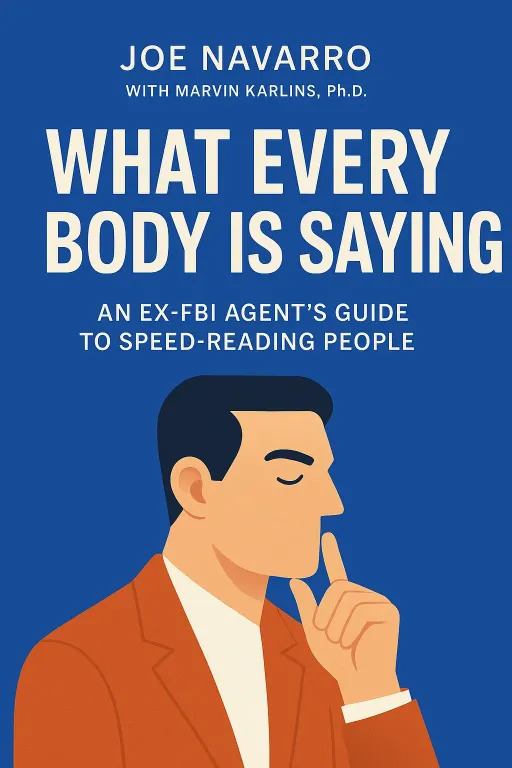
Nova: It’s not mind-reading, Atlas, but it’s pretty close. And that's precisely what we're dissecting today, drawing heavily from the incredible insights of Joe Navarro, a former FBI counterintelligence officer, who literally wrote the book on deciphering these silent signals. His book, "What Every BODY is Saying," pulls back the curtain on this hidden world.
Atlas: An FBI agent teaching us about body language? That immediately screams "high stakes." I mean, in healthcare, we're constantly trying to understand our patients, often when they're at their most vulnerable or distressed. Sometimes what they say, and what their body, feels like two different conversations entirely.
Nova: Exactly. And that's our blind spot. We're often so focused on the spoken word, on the diagnosis, on the prescription, that we completely miss the rich, nuanced information our bodies are constantly conveying. It’s like trying to navigate a complex medical diagnosis with half the chart missing.
Decoding the Unspoken: The Universal Language of Body Cues
SECTION
Atlas: So, you're saying there's a universal language out there that we're just not trained to speak or understand? What are we actually looking for? Is it just a gut feeling, or are there specific, reliable tells?
Nova: It's far more reliable than a gut feeling. Navarro, with his FBI background, meticulously breaks down "universal non-verbal signals." Think about it: when someone is genuinely uncomfortable or anxious, their body often goes rigid, their shoulders might hunch, their feet might point towards the exit. Or consider a patient in pain who tries to tough it out with a smile. Their words say "I'm fine," but their tight jaw, shallow breathing, or fidgeting hands tell a completely different story.
Atlas: That makes sense. I’ve definitely seen that in the clinic. A patient might say they understand everything, but their brow is furrowed, and they’re avoiding eye contact. I always assumed it was confusion, but it could be so much more.
Nova: Precisely. It could be fear, or embarrassment about asking for clarification, or even unspoken disagreement. The key is to notice these "tells," as Navarro calls them. He talks about pacifying behaviors – things like touching your neck, rubbing your arms, or fidgeting with jewelry. These are often unconscious ways we try to soothe ourselves when stressed.
Atlas: So, if I see a patient doing that, it's a signal to dig a little deeper, maybe rephrase my questions, or just offer a moment of quiet reassurance?
Nova: Absolutely. It’s an invitation to pause and explore. Another classic is the "turtle effect" – pulling the head down, shoulders rising. It’s a very primal, universal response to feeling threatened or insecure. In a healthcare setting, that could mean a patient feels overwhelmed by information, judged, or simply vulnerable to a procedure.
Atlas: That’s a powerful image, the "turtle effect." I'm curious, though, are these signals truly universal across cultures? Or could I misinterpret someone's non-verbal cues because of cultural differences?
Nova: That’s a really important distinction, Atlas. While many of Navarro's observations lean into universal physiological responses to stress or comfort – like the pacifying behaviors – cultural nuances definitely exist. For instance, direct eye contact can be a sign of respect in one culture and aggression in another. The Peases, in "The Definitive Book of Body Language," delve more into those cultural variations. The trick is to observe clusters of behaviors, not just one isolated gesture, and always consider the individual's baseline. Is this behavior typical for them, or is it a deviation?
Atlas: So it’s about context and looking for a pattern, not just a single "tell." That's a helpful clarification. It means we can't just apply a checklist, but need to be truly present and observant.
Building Rapport Beyond Words: Practical Application in Healthcare
SECTION
Nova: And that naturally leads us to the second key idea we need to talk about: how we can actively use this silent language, not just to decode, but to rapport and trust, especially in those critical healthcare interactions. This is where Allan Pease and Barbara Pease's work truly shines.
Atlas: That sounds incredibly practical. We're always looking for ways to connect better with patients, to make them feel heard and understood. It's not just about conveying information; it's about building a therapeutic relationship.
Nova: Exactly. Think about how you enter a patient's room. Are you rushing in, clipboard in hand, already mentally on to the next task? Or do you take a moment to establish eye contact, offer a genuine, open posture – maybe even subtly mirror their relaxed stance if they're comfortable?
Atlas: Hold on, "mirroring"? Are you saying I should subtly copy their movements? That sounds a bit… manipulative, almost.
Nova: Not at all! It's about unconscious alignment, a natural human tendency when we feel connected. If a patient is leaning forward, you might subtly lean forward too. If they speak softly, you might lower your voice slightly. It's not about overt mimicry, but about conveying, non-verbally, "I'm with you. I understand." It creates a sense of shared space and understanding.
Atlas: So, it's more about empathy expressed through action. I can see how that could be powerful. What about eye contact? Sometimes I struggle with knowing how much is too much, especially when discussing sensitive topics.
Nova: That's a great point. Too little eye contact can convey disinterest or dishonesty, but too much can feel aggressive or intrusive. The sweet spot is often around 60-70% of the time, breaking eye contact naturally to look at notes or reflect. It's about creating a comfortable, engaged presence. And crucially, maintaining open body language yourself – uncrossed arms, facing the patient directly – signals openness and receptivity.
Atlas: That sounds great in theory, but when you're rushing between patients, constantly under pressure, how do you actually that? It feels like another thing to add to an already overflowing mental checklist.
Nova: It’s true, the clinical environment is demanding. But it's not about performing a checklist; it's about shifting your mindset to and. Start small. Maybe for your first three patients tomorrow, you consciously focus on their feet and hands. What are they doing? Are they restless? Still? Then, try to notice your own posture. Are you conveying approachability?
Atlas: So it's about intentional practice, integrating it into our active listening skills, which is a huge goal for me. But what if we misinterpret? What if I think a patient is anxious, and they're just cold?
Nova: That's the beauty of it not being a definitive diagnosis, but a. If you observe signs of anxiety, you don't jump to conclusions. You might simply ask, "You seem a little quiet today, is everything okay?" or "Is there anything you're worried about?" It opens the door for the patient to share more, without you having to be a perfect mind-reader. It transforms your interaction from transactional to truly therapeutic. It's about perceiving those unspoken needs.
Synthesis & Takeaways
SECTION
Nova: So, what we've really been exploring today is that the human body is a vast, often untapped, reservoir of information. By learning to read its silent language, we move beyond just treating symptoms to truly understanding the person in front of us.
Atlas: It's incredibly powerful to think that neglecting this silent language means missing vital information. It could lead to misdiagnoses, or patients not adhering to treatment because we haven't truly addressed their underlying anxieties. It's not just about what patients, but what their about their true needs and anxieties.
Nova: Precisely. It’s about cultivating a deeper empathy, a more holistic approach to care. It's about seeing the whole person, not just the medical chart.
Atlas: This has been incredibly insightful, Nova. I'm definitely going to be paying more attention to those subtle cues. Next time you speak with someone, try to notice their body language before their words. What new insights do you gain?
Nova: And we’d love to hear your observations. Share your thoughts and experiences with us on social media. We're always keen to hear how these insights resonate with you.
Atlas: This is Aibrary. Congratulations on your growth!