

The Silent Language: Decoding Nonverbal Cues for Deeper Connection
Golden Hook & Introduction
SECTION
Nova: You know, Atlas, most people walk around thinking they're pretty good communicators. They can articulate their thoughts, they can have conversations. But what if I told you that 70, 80, even 90 percent of what we communicate has nothing to do with the words we say?
Atlas: Whoa. Really? I mean, I’ve heard the stats, but ninety percent? That feels… almost unsettling. It's like we're all walking around with a secret language no one taught us in school. So, are you saying most of us are just broadcasting our true thoughts and feelings without even realizing it?
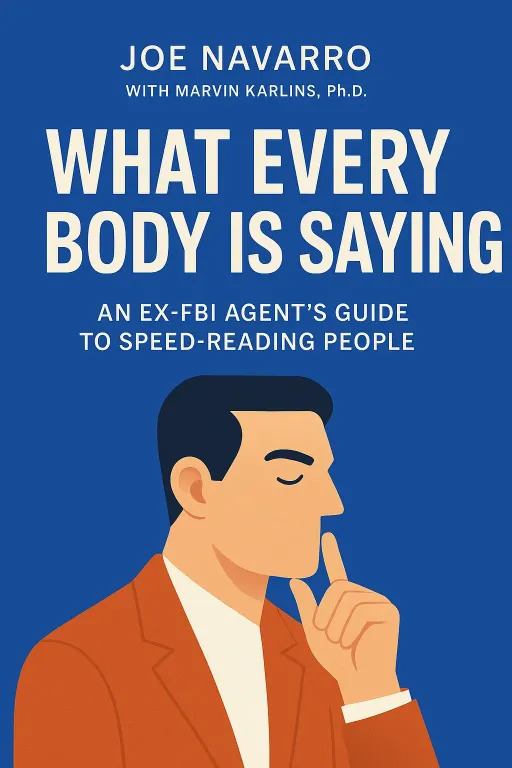
Nova: Absolutely. And that's precisely why we're diving into the silent, powerful world of nonverbal communication today, primarily through the lens of two foundational texts. First, "What Every BODY Is Saying" by Joe Navarro, an absolute master of reading people.
Atlas: Navarro! Isn't he the ex-FBI agent? That instantly gives it a whole different weight. This isn't just academic theory; this is about high-stakes observation.
Nova: Precisely. His background grounds this complex topic in real-world, often life-or-death, scenarios. And then we have the comprehensive guide, "The Definitive Book of Body Language" by Allan Pease and Barbara Pease, which broadens our understanding to cultural nuances and everyday applications. For anyone who's ever felt a disconnect, or missed an opportunity because they just couldn't quite put their finger on, this episode is for you.
Atlas: Okay, so we're talking about unlocking a deeper layer of human interaction. For our listeners who are constantly trying to build robust systems and vibrant communities, I can already see how crucial this could be. Let's start with those silent signals. How do we even begin to decode what our bodies are constantly broadcasting?
The Silent Signals: Decoding Hidden Intentions and Emotions
SECTION
Nova: It all begins with understanding nonverbal leakage. This is the phenomenon where our bodies, often unconsciously, reveal our true thoughts, feelings, and intentions, even when our words are trying to convey something else. Navarro breaks it down into practical, observable cues, literally from head to toe.
Atlas: Okay, so it’s like our internal monologue has an external, physical soundtrack that we’re not even aware of. But how do you even these subtle cues? I’m imagining someone trying to spot a tiny twitch in an eyebrow during a high-pressure meeting. That sounds exhausting.
Nova: It’s not about spotting a single twitch, Atlas, it’s about clusters and patterns. Think of it this way: if someone tells you they're thrilled about a new project, but their shoulders are hunched, their lips are pursed, and their feet are pointed towards the door, which message are you going to trust?
Atlas: The feet, every time. That makes me wonder, though. For listeners who are deeply analytical, perhaps focusing on data and logic, how often do we miss these crucial, often subtle, signals?
Nova: Far too often. Let me give you a classic Navarro-esque scenario. Imagine a business negotiation. You're talking terms, and one party verbally agrees, shaking hands, saying all the right things. But throughout the conversation, you notice a recurring behavior: they keep touching their neck, or rubbing their hands together under the table. And when the conversation shifts to commitment, their feet, despite their torso facing you, subtly pivot towards the exit.
Atlas: Okay, I can picture that. Verbally, they’re in, but their body is screaming, "Get me out of here." So, the cause is internal discomfort or perhaps even deception. The process is these unconscious pacifying behaviors and directional cues. And the outcome? You might walk away thinking you have a deal, only to find out later they were never fully committed.
Nova: Exactly. That's a missed opportunity for authentic connection and a potential misunderstanding that could derail an entire project. For someone trying to build lasting value, overlooking these 'silent signals' means you're operating with incomplete, or even false, information about what truly motivates the other person. You're building on shaky ground.
Atlas: That’s actually really insightful. It highlights how much we rely on the verbal, especially in professional contexts, and how much we might be missing. So, these signals aren't just about catching someone in a lie, then. They're about understanding someone's comfort level, their engagement, their underlying intentions. It’s like having a superpower, but for empathy.
Nova: Precisely. It’s about building a more complete picture of human interaction. And what's even more interesting is how universal many of these signals are, transcending language and culture, though the Peases dive deeper into cultural variations.
From Observation to Influence: Leveraging Body Language for Authentic Connection
SECTION
Nova: Which naturally leads us to the second key idea: moving beyond just observing these signals to actually leveraging them for authentic connection and positive influence. It’s not about manipulation; it’s about conscious, empathetic communication.
Atlas: That’s a critical distinction. For someone who prioritizes building vibrant communities and sustainable growth, the idea of "manipulation" would be a complete non-starter. How do we translate this understanding into genuinely stronger relationships?
Nova: Consider the concept of mirroring, which the Peases discuss. When two people are genuinely connecting, they often unconsciously mirror each other's posture, gestures, and expressions. It’s a natural sign of rapport. But you can also consciously, subtly, initiate this.
Atlas: So, you’re saying if someone is leaning forward, I might subtly lean forward too? Or if they speak slowly, I match their pace? But wouldn’t that feel forced or obvious?
Nova: Not if it’s done with genuine intent and subtlety. It’s about being present and tuning into the other person, not mimicking them like a robot. Imagine a leader, an 'Architect' in their field, trying to rally their team around a new, challenging vision. They walk into the meeting, consciously adopting an open posture – shoulders back, hands visible, making eye contact. Their voice is calm and confident. As they speak, they might subtly mirror the engaged postures of their team members, creating a subconscious sense of unity.
Atlas: Okay, I can see how that cultivates a stronger environment. The leader's open posture signals trustworthiness, and the subtle mirroring builds rapport. The cause is the leader's conscious nonverbal actions. The process is the team feeling a deeper, subconscious connection and trust. And the outcome? A more cohesive, motivated team, and a greater buy-in for that new vision. It sounds like a foundational element for fostering genuine collaboration.
Nova: Exactly. It's about aligning your internal message with your external presentation. It enhances your ability to influence, not through coercion, but through authentic presence and understanding. It allows you to build that trust more effectively.
Atlas: That makes me wonder about the "Tiny Step" from the book content: observing hands and feet. How does something seemingly so small contribute to building connection rather than just detecting deception?
Nova: Hands and feet are often the most honest parts of our body because we're less conscious of them. Observing relaxed, open hands can signal comfort and honesty. Feet pointing towards you often indicate engagement. If someone's hands are constantly fidgeting, or their feet are tucked under their chair, it might signal discomfort, even if they're smiling. Understanding this allows you to adjust your approach, to ask clarifying questions, or to create a more comfortable environment, fostering a deeper connection. It's about empathy, not judgment.
Atlas: So, it’s not just about "reading" them, but about responding to what their nonverbal cues are telling you they need. That’s a really powerful reframing. It’s about being more present and intuitive in our interactions.
Synthesis & Takeaways
SECTION
Nova: Ultimately, decoding nonverbal cues isn't just a party trick or a way to catch someone lying. It’s about unlocking a deeper, richer understanding of human interaction. It's a powerful tool for empathy, for building authentic connections, and for ensuring your own messages are received as intended.
Atlas: So, for someone who's constantly building – whether it's software, teams, or entire communities – this isn't just a soft skill, it's a foundational element for resilience and sustainable growth. It's about trusting your intuition, not just your data, and having the tools to back that intuition up with observation.
Nova: Absolutely. Your inner compass guides your vision, and these silent signals are like additional sensors for that compass. They tell you where the true north of human connection lies.
Atlas: I love that. And for our listeners, the "Tiny Step" from today's discussion is a perfect place to start. During your next conversation, take a moment to observe the other person's hands and feet. What subtle messages are they conveying? Then, dedicate 15 minutes daily to reflective journaling. Process those observations, connect them to your intuition, and see how it deepens your understanding.
Nova: It's about consciously engaging with that silent language.
Atlas: It truly is. This is Aibrary. Congratulations on your growth!