

Charting Your Course: Strategic Career Design
Golden Hook & Introduction
SECTION
Nova: Atlas, quick game: I’ll say a common career platitude, you give me the honest, slightly cynical, real-world reaction. Ready?
Atlas: Oh, I like that. Hit me. My cynicism is well-oiled today.
Nova: Alright, first one: "Follow your passion, and you'll never work a day in your life."
Atlas: Yeah, and then you discover your passion doesn’t pay the rent, and suddenly it feels like the work, multiplied by existential dread. Next.
Nova: Perfect! How about this gem: "The early bird catches the worm – specialize early, succeed faster."
Atlas: Oh, that one. That’s the classic trap, isn’t it? You get so good at catching that when the worm market crashes, you’re left with very sharp, but very useless, worm-catching skills.
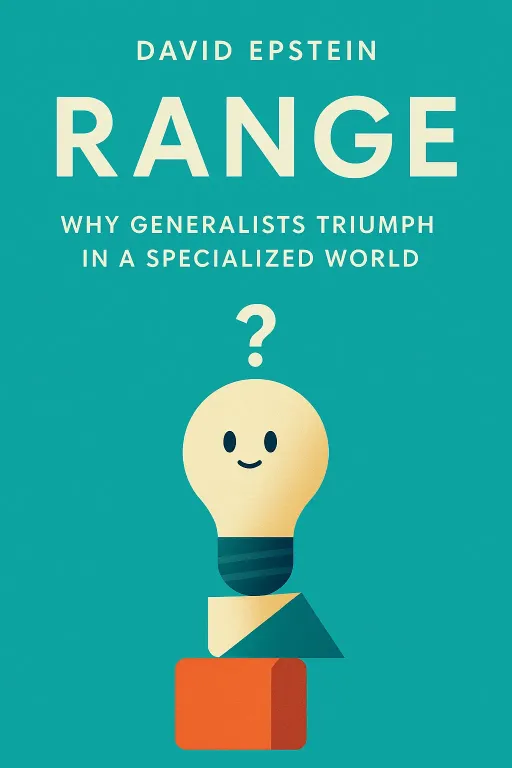
Nova: Exactly! And that cynical, yet deeply resonant observation, is actually the perfect springboard for today’s conversation. We’re diving into a fascinating pair of books that completely reframe how we think about career development and strategic life choices. Specifically, we’re looking at David Epstein’s widely acclaimed book,, which has sparked significant debate for challenging the 10,000-hour rule, and Meg Jay’s powerful call to action,.
Atlas: Ooh, I’m listening. Because honestly, Nova, for anyone feeling that pressure to pick a lane, to specialize, to have it all figured out by… well, yesterday, these ideas sound like a breath of fresh air. It feels like we’re always told to narrow down, but then the world keeps getting broader. It’s like being told to pack light for a trip to the Arctic, the desert, and a rainforest all at once.
Nova: It’s exactly that feeling of navigating an increasingly unpredictable landscape. And what Epstein really digs into, which is so counter-intuitive to our modern narrative, is that sometimes, the best way to thrive in that unpredictable world isn't to dig deeper into one narrow trench, but to cultivate a wider perspective. He really makes a compelling case for the generalist.
Atlas: So you’re saying my perpetually unfinished side projects and my diverse, seemingly unrelated interests might actually be an asset? Because my LinkedIn profile looks like a mid-life crisis in bullet points right now.
Nova: Potentially! And that’s the beauty of it. Epstein’s work, which by the way, comes from a journalist who himself pivoted from science writing to investigative journalism, then to sports, really embodies this idea of range. He uses incredible stories to illustrate how people who excel often have what he calls a ‘sampling period’ – they dabble, they experiment, they even fail, across many different domains before finding their true calling, or even creating a new one.
The Power of Range: Generalists vs. Specialists
SECTION
Nova: Think about Roger Federer versus Tiger Woods. Woods was famously specialized from childhood, groomed for golf from the moment he could walk. Federer, on the other hand, played a multitude of sports – soccer, skiing, swimming, badminton – before settling on tennis relatively late. And even then, he was known for his all-court game, his adaptability. Epstein argues that in complex, unpredictable domains, like tennis or many modern careers, that broad, varied experience fosters adaptability and creativity that specialists often lack.
Atlas: That’s fascinating. I imagine a lot of our listeners, especially those who feel a deep need for independence and are driven to find their own way, have felt that internal tug-of-war. They’re told to specialize to stand out, but their curiosity pulls them in a thousand directions. So, what’s the real advantage of this 'range'? Is it just about being flexible, or is there something deeper?
Nova: It's much deeper. One of the core ideas is about analogical thinking. When you have a wider range of experiences, you have more mental models, more diverse tools, to draw upon. When faced with a novel problem, a specialist might only have a hammer, seeing every problem as a nail. A generalist, with their varied toolkit, can see connections, transfer solutions from one domain to another, and innovate in ways the specialist might miss. Epstein gives the example of Kepler, who solved the problem of planetary orbits by drawing analogies not from astronomy, but from magnetism and the flow of water.
Atlas: Wow, that’s a perfect example. So basically you’re saying that the more diverse your experiences, the richer your mental database for problem-solving becomes. It’s like having a mind that’s a well-stocked library, not just a single, incredibly detailed textbook.
Nova: Exactly! He also talks about the concept of 'kind' versus 'wicked' learning environments. In a 'kind' environment, like chess or golf, rules are stable, feedback is immediate, and patterns repeat. Specialization works there. But most modern careers operate in 'wicked' environments – rules change, feedback is delayed or misleading, and problems are novel. Think about a startup trying to innovate in a new market. There’s no playbook. In these wicked environments, generalists, with their ability to adapt and connect disparate ideas, are the true innovators.
Atlas: Okay, but isn't there a risk of being a 'jack of all trades, master of none'? Because I still struggle with that myself. It feels like you need some level of mastery to be valuable. What’s the balance?
Nova: That’s a critical question. Epstein isn't arguing against depth entirely. He’s saying that depth a period of broad exploration is often more robust and innovative. It’s about delaying specialization, not avoiding it. The sampling period allows you to find your 'match quality' – where your skills and interests truly align with a field. And when you do specialize, you bring a richer, more flexible perspective to that specialization. He points to research showing that even Nobel laureates are significantly more likely than average scientists to have avocations outside their field, like being amateur actors or musicians. Their breadth fuels their depth.
Atlas: That’s actually really inspiring. It means that the path isn't a straight line, it’s more like a winding river that eventually carves a deeper channel. It gives me chills to think that those 'unrelated' hobbies, those moments of curiosity that pull you away from your main thing, are actually building blocks. So, if range is about breadth and adaptability, what's next? Because knowing all of this is great, but how do we actually it, especially when we’re young and feeling the pressure to get ahead?
The Criticality of Your Twenties: Intentional Exploration and Action
SECTION
Nova: That’s where Meg Jay steps in with. If Epstein gives us permission to explore broadly, Jay gives us the urgency and the roadmap for to do that exploration intentionally, especially in our twenties. Her core argument is that your twenties are not a throwaway decade, a time for aimless wandering or an extended adolescence, but a crucial developmental period that shapes the rest of your life.
Atlas: I can see how that would be a bit controversial. I mean, culturally, we’re often told that your twenties are for finding yourself, for making mistakes, for not taking things too seriously. So, what’s her big pushback against that?
Nova: Her big pushback is that while self-discovery is important, it needs to be intentional. She argues that delaying major life decisions – career, relationships, identity – until your thirties or forties can have significant, often negative, consequences. She emphasizes what she calls 'identity capital' – the collection of personal investments we make, the experiences we have, the skills we acquire, that build who we are. These are the assets that help us get the next job, the next opportunity, the next relationship.
Atlas: So it’s not about having it all figured out, but about actively those assets, those experiences, even if they seem disparate at the time? Because that sounds like it ties into Epstein’s 'sampling period' beautifully.
Nova: Absolutely. Jay would say that the sampling period isn't passive. It's an active, intentional exploration. She shares stories of clients who spent their twenties waiting for life to begin, only to find themselves adrift in their thirties. Conversely, she highlights those who proactively pursued internships, informational interviews, diverse projects, and even took 'side hustles' that seemed unrelated but built valuable skills and connections. One example she gives is the 'unthought knowns' – the things we know about ourselves but haven't articulated. Our twenties are the time to articulate them through action.
Atlas: That’s a great way to put it. Because for anyone who feels that inner drive to build something meaningful, but is also seeking clarity on to build, this is huge. It’s about translating that innate curiosity into tangible steps, even if they initially feel small. So, what’s the most impactful advice she offers for someone in their twenties who wants to make the most of this 'defining decade'?
Nova: Her most impactful advice boils down to three areas: getting identity capital, leveraging weak ties, and making your chosen family intentional. On identity capital, she urges young adults to stop just "hanging out" and instead "hang out with a purpose." Take that internship, even if it's unpaid. Learn that skill. Travel with a specific goal in mind. These aren't just experiences; they are investments in your future self.
Atlas: So it's about actively seeking out those different fields she talks about, those diverse experiences, even if they don't immediately click or seem like 'the one'?
Nova: Precisely. And when it comes to 'weak ties,' she argues that your strongest career opportunities often come not from your closest friends, but from acquaintances – the people you meet at conferences, through friends of friends, or former colleagues. These weak ties expose you to new networks and possibilities that your inner circle might not. It’s about expanding your range of human connection, which feeds into Epstein’s idea of broad exposure.
Atlas: That makes perfect sense. Because if you’re looking to chart your own course and find independence, you need a diverse set of perspectives and opportunities, not just an echo chamber. And making your chosen family intentional? What does that mean in the context of career?
Nova: It means being deliberate about the people you surround yourself with. Your friends, your mentors, your romantic partners – these relationships significantly impact your career trajectory and overall well-being. Jay advises choosing partners and friends who support your ambitions and challenge you positively, rather than those who enable stagnation. It's about building a solid support system that propels you forward, not holds you back. It's about taking ownership of your social environment just as much as your professional one.
Synthesis & Takeaways
SECTION
Atlas: Wow, that’s so powerful when you put these two together. Epstein gives us permission to explore broadly, to embrace the zig-zag, and Jay gives us the urgency and the practical steps to make that exploration intentional, especially in a critical decade. It’s like, don't rush to specialize, but don't waste time aimlessly either. Actively seek your range.
Nova: Exactly. The synthesis is clear: intentional career exploration benefits from both broad exposure to different fields – that 'range' – and a focused approach to making the most of pivotal life stages, particularly your twenties. It’s a powerful antidote to the anxiety of feeling like you need to have it all figured out, while also providing a framework for proactive growth. It’s about understanding that finding your purpose isn't a single "aha!" moment, but a continuous process of informed experimentation.
Atlas: That’s actually really inspiring. Because for anyone who feels like they’re still searching, still curious, still building, this gives a real sense of validation. It’s not just okay to explore; it’s actually a strategic advantage. It reminds me of a thought experiment: if you were to design your ideal future self, what one tiny step could you take today to move towards that, even if it feels completely unrelated to your current path?
Nova: That’s such a great question to leave our listeners with. Because that tiny step, that 15 minutes of research into a completely different field, might just be the seed of your next great range-fueled adventure. It's about acknowledging that drive for independence, and then gently shifting focus to what you can control – that one small, curious action.
Atlas: Absolutely. It’s about taking control of the narrative, one curious step at a time. This is Aibrary. Congratulations on your growth!









