

The Sovereign Identity Framework
Golden Hook & Introduction
SECTION
Nova: We often chase freedom like it's an escape hatch from our responsibilities. We dream of running away, of quitting, of just having.
Atlas: Oh, I know that feeling. The fantasy of just... disappearing from the inbox. It’s a powerful pull.
Nova: Exactly! But what if true freedom isn't about running away, but about consciously choosing what you stand for and what you stand against? What if it's about declaring your own personal sovereignty?
Atlas: That’s a fascinating reframe. It sounds less like a desperate flight and more like a deliberate stand. I like that.
Nova: Today, we’re diving into what we call the "Sovereign Identity Framework," a powerful blend of insights from two incredible thinkers. We’ll explore how to build a life where your actions truly align with your deepest self, and how to reclaim your personal power from the daily grind.
Atlas: So, it’s about getting clear on who you are, and then having the courage to live that out, especially when the world is constantly trying to pull you in a million directions?
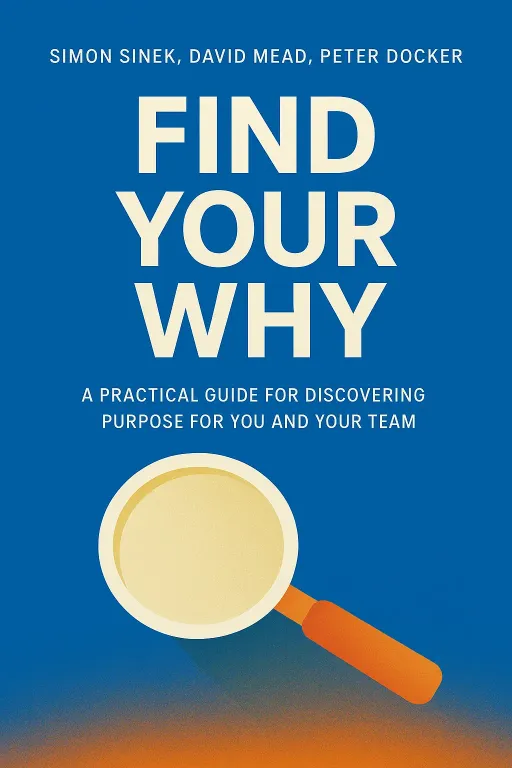
Nova: Precisely. We’re drawing inspiration from Simon Sinek's "Find Your Why" – a book that, building on his incredibly popular TED Talk and leadership work, provides a practical framework for unearthing your core purpose. And then we pair that with Brendon Burchard's "The Declaration of Personal Power," where he, as a renowned high-performance coach, challenges us to consciously break free from external pressures.
Atlas: That makes me wonder, for those of us who value self-growth and are constantly balancing priorities, how do we even begin to untangle our desires from all the external noise? It feels like a fundamental question for anyone seeking more balance and personal peace.
The Golden Circle: Discovering Your Core Identity
SECTION
Nova: That’s the perfect starting point, Atlas. Sinek’s work, particularly his concept of the "Golden Circle," is designed to do just that. He argues that most individuals and organizations communicate from the outside-in: they start with they do, then they do it, and rarely, if ever, get to they do it.
Atlas: So, the typical approach is: "Here's my job title, here are my tasks, and... I guess I do it for the paycheck?"
Nova: Exactly! But Sinek flips that script. He says truly inspiring leaders and companies operate from the inside-out, starting with their. This "why" isn't about profit or results; it's your purpose, cause, or belief. It’s the fundamental reason you exist, the very core of your identity.
Atlas: So, you're saying that if I can articulate my personal "why," it changes everything about how I approach my "what"?
Nova: It absolutely does. Think of it like this: imagine a company that sells high-quality, beautifully designed smartphones. Their "what" is the phone. Their "how" might be innovative engineering and user-friendly design. But their "why" could be "to challenge the status quo and empower individuals to create."
Atlas: Oh, I see. That’s a powerful distinction. It’s not just about the product; it's about the belief behind it.
Nova: Right. And when you, as an individual, discover your personal "why," it acts as an internal compass. It helps you make decisions, choose projects, and even navigate difficult conversations, because you're constantly checking back with your core purpose. It provides clarity in the overwhelm of choice.
Atlas: But how do you that "why" when you're buried in the day-to-day "what" of your job or life? For many of our listeners, the grind is real. They're seeking wisdom, but they're also just trying to keep their head above water.
Nova: Sinek’s framework is quite practical. It often involves looking back at your life, identifying moments of peak fulfillment and deep frustration, and asking those moments felt that way. It's about finding patterns in your passions, your strengths, and your contributions that light you up. It’s not a quick answer, but a deep exploration.
Atlas: That makes sense. It’s like an archaeological dig into your own soul. You're not inventing a "why"; you're uncovering the one that's already there, waiting to be articulated.
Nova: Precisely. And once you articulate it, your professional actions, your personal projects, even your relationships, start to naturally align. You're not just doing things; you're your purpose. It's about finding that deep satisfaction when your external world mirrors your internal truth.
The Declaration of Personal Power: Reclaiming Your Freedom
SECTION
Nova: Now, once you have that internal compass, that clear "why," the next step is often the hardest: protecting it. This is where Brendon Burchard and his "Declaration of Personal Power" come in.
Atlas: That sounds intense. "Declaration of Personal Power." It conjures images of revolutionary acts, not just managing my calendar.
Nova: It intense, and intentionally so! Burchard, with his background as a high-performance coach, recognizes that simply knowing your "why" isn't enough if you're constantly swayed by external expectations, societal pressures, or the demands of others. His core argument is that personal greatness requires a from these external forces and a commitment to what he calls "Personal Freedom."
Atlas: So, it’s not just about knowing your purpose, but actively defending it? Because let's be honest, the world has a way of trying to impose its own "why" on you.
Nova: Absolutely. Burchard challenges us to essentially write our own "Declaration of Independence" from anything that diminishes our power, stifles our creativity, or distracts us from our highest intentions. It's about defining your own terms of engagement with the world.
Atlas: That’s going to resonate with anyone who struggles with feeling overcommitted or constantly pulled in different directions. But wait, isn't "personal freedom" just an excuse to be selfish or irresponsible? How does this help with stressors, for example?
Nova: That’s a critical distinction. Burchard isn't advocating for irresponsibility or isolation. What he means by "Personal Freedom" is the freedom to your response, to your commitments, and to how you define success, rather than letting others define it for you. It's about intentionality, not apathy.
Atlas: So it's less about escaping, and more about drawing a clear line in the sand based on your "why" from Sinek's work. Can you give an example of what this "declaration" might look like in action?
Nova: Certainly. Imagine someone who discovers their "why" is to foster genuine connection and creativity. Yet, their workday is filled with back-to-back, impersonal meetings, leaving no time for deep work or meaningful interaction. A declaration of personal power for them might involve consciously deciding to block out two hours every morning for focused creative work, declining meetings that don't directly align with their "why," or even negotiating a new work arrangement.
Atlas: That takes courage. It’s not just about to do those things, but actually them, even when there's social pressure or an expectation to conform.
Nova: It requires immense courage. Burchard talks about the need to break free from the "shoulds" and "musts" that aren't truly yours. It's about reclaiming your time, your energy, and your focus, aligning them with your authentic self. The "Declaration of Independence" from workday stressors you mentioned earlier – that's precisely what Burchard is getting at. What would you reclaim? Your evenings? Your weekends? Your right to say no to non-essential tasks?
Atlas: That makes me wonder, what would be the first thing someone should 'reclaim' if they're feeling overwhelmed and disconnected? It feels like the first step to finding that balance and peace.
Synthesis & Takeaways
SECTION
Nova: That's the powerful synergy between Sinek and Burchard, Atlas. Sinek gives you the internal compass, the profound clarity of your "why." Burchard then gives you the map and the courage to navigate the external world, to declare your boundaries, and to reclaim your time and energy so you can actually that why.
Atlas: It's like finding your true north, and then building a fortress around it, not to keep others out, but to keep in, aligned with your purpose. This "Sovereign Identity Framework" really is about both self-discovery and self-assertion.
Nova: Exactly. It’s about understanding that deep down, you are driven by a need for balance, for personal peace, and for growth. And that growth isn't just about accumulating knowledge, but about integrating it into how you live.
Atlas: So, for our listeners who are feeling that overwhelm of choice, who are seeking wisdom and balance, the challenge becomes: If you were to write your own "Declaration of Independence" from your current workday stressors, what would be the first three items you reclaim? What would you declare yourself free from, to make space for your true "why"?
Nova: That's the deep question we hope you take with you today. It's about trusting your intuition, taking those 15 minutes daily to reflect, and consistently building momentum towards a life that genuinely feels like.
Atlas: Because true sovereignty isn't given; it's declared and then defended.
Nova: This is Aibrary. Congratulations on your growth!









