

The Alchemy of Anger: Rewriting the Script of Stress and Self-Discovery
Golden Hook & Introduction
SECTION
Shakespeare: What if the anger burning inside you is not a defect to be cured, but a messenger waiting to be heard? When we are caught in the tempest of high-stakes pressure, feeling left behind while the world moves on, our irritability becomes a constant, quiet hum. It is a silent storm, raging against the boundaries of our lives. Today, we unmask this storm. We welcome Büşra Bayıroğlu, an analytical thinker and dietitian navigating the intense crucible of government exam preparation. Büşra, welcome to our stage.
Büşra Bayıroğlu: Thank you, Shakespeare. It is wonderful to be here. You know, when you talk about a silent storm, it really resonates with me. As a dietitian, I often think about the body in terms of homeostasis. When something is off-balance, the body doesn't just fail; it sends signals. A fever, a spike in blood sugar, a sudden fatigue. In the same way, I have started to realize that my recent irritability and anger aren't just random emotional glitches. They are signals that my internal system is under extreme pressure.
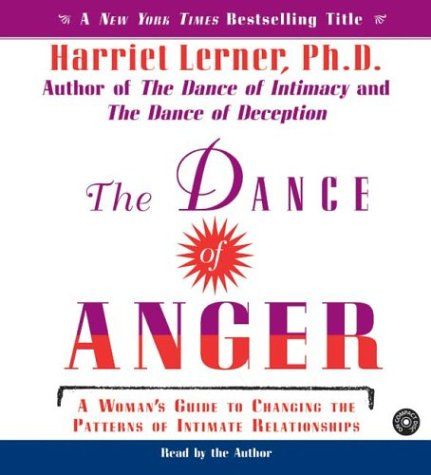
Shakespeare: Ah, a beautiful and profound connection. The body speaks in symptoms, and the soul speaks in sighs and storms. Today, we are diving into Harriet Goldhor Lerner's masterpiece,. We are going to tackle this book from two distinct, powerful angles. First, we will explore anger as a sacred signal, examining why our usual responses—either silencing our voices or engaging in circular, exhausting fights—keep us trapped in a state of chronic stress. Second, we will analyze the choreography of our relationships, learning how to shift our focus from trying to change the external world to defining our own boundaries, even when the system demands that we change back.
Büşra Bayıroğlu: I love that roadmap. As someone who is currently studying five massive subjects for an exam that only happens once every two years, I know what it feels like to feel trapped in a cycle. The competition is fierce, the spots are few, and the pressure is immense. It is easy to let that stress turn into a daily friction with the people around us, or worse, a deep sense of social isolation. I am really eager to look at the science behind this emotional dance.
Deep Dive into Core Topic 1
SECTION
Shakespeare: Then let us begin our first movement. Lerner argues that anger is a tool for self-preservation. Yet, society often teaches us to fear it. We are offered two primary scripts. The first is the Nice Lady syndrome, where we swallow our anger, preserve a fragile harmony, and allow our sense of self to erode. The second is the Fighting Trap, where we vent, complain, and nag, yet nothing actually changes. Büşra, how do these scripts play out when the stakes of life are high?
Büşra Bayıroğlu: It is incredibly easy to fall into both, honestly. When you are unemployed and studying constantly, your self-confidence takes a hit. You feel like you don't have the right to be angry because you are the one who is left behind. So, you try to be the nice lady. You stay quiet, you isolate yourself, and you pretend everything is fine. But internally, that unexpressed anger doesn't just vanish. It turns inward, manifesting as self-doubt and depression. And then, when the pressure cooker gets too hot, you boil over. You snap at a family member or a friend over something tiny. That is the fighting trap. You argue, but it is a circular argument. It doesn't solve the underlying issue of your stress or your need for support. It just leaves you feeling guilty and even more isolated.
Shakespeare: You paint a vivid picture of a soul divided. Lerner illustrates this beautifully through the story of Sandra. Sandra was a woman deeply angry with her husband, Larry. Larry was emotionally distant, leaving Sandra to carry the heavy burden of managing their home and children alone. Sandra did not stay silent; she chose the path of the fighter. She nagged, she yelled, she demanded that Larry change. And what did Larry do? He retreated further into his shell, using her anger as a shield to justify his distance. The more she pursued, the more he distanced. It was a perfect, tragic circle.
Büşra Bayıroğlu: That is a classic feedback loop. In biology, we see this all the time. A positive feedback loop can spin out of control if there is no counter-regulatory mechanism. Sandra thought she was fighting for change, but her method of fighting actually stabilized the very problem she wanted to solve. By focusing entirely on Larry's flaws and screaming at him, she gave him an excuse to ignore the real issue. She was putting all her energy into trying to change him, which is mathematically impossible. You cannot control another variable in the equation; you can only control your own.
Shakespeare: Indeed. She was casting him as the villain in her play, thereby locking herself into the role of the victim. Lerner points out that venting anger does not lead to change if it is circular. It merely preserves the status quo. To break the cycle, Sandra had to stop using her anger to change Larry, and instead use it to clarify her own position. She had to ask herself, what am I willing to do? What are my limits?
Büşra Bayıroğlu: That shift in perspective is huge. It requires a transition from an external locus of control to an internal one. When I look at my own situation, preparing for this government exam, I often feel angry at the system. I feel angry that the exam is only every two years, that the vacancies are so low, that the competition is so brutal. But getting angry at the system is like Sandra yelling at Larry. The system isn't going to change because of my anger. If I just sit here venting about how unfair it is, I am wasting the precious energy I need to actually study and take care of my mental health.
Shakespeare: The tempest of the world will not calm itself for our convenience. We must learn to navigate the vessel ourselves. But tell me, Büşra, how does an analytical mind begin to decode this anger? If anger is a signal, what is it diagnosing?
Büşra Bayıroğlu: I think it is diagnosing a lack of clarity about our own values and boundaries. When I feel easily angered or irritable, it is usually because I am neglecting my own basic needs. I am ignoring my need for rest, my need for social connection, or my need to feel competent. The anger is a flashing red light on the dashboard saying, warning, fuel levels low, engine overheating. Instead of getting mad at the light, I need to open the hood and see what the engine actually needs. Am I studying in a way that is sustainable? Am I allowing myself to have a life outside of this exam? Or am I sacrificing my well-being on the altar of productivity?
Shakespeare: A magnificent diagnosis. We must treat our anger not as an enemy to be vanquished, but as a wise counselor pointing to the areas where we have abandoned ourselves.
Deep Dive into Core Topic 2
SECTION
Shakespeare: This brings us naturally to our second movement: the concept of the circular dance itself, and the terrifying but necessary act of self-definition. Lerner writes that relationships are like a finely choreographed dance. When one person decides to change their steps, the other person, and indeed the whole system, will experience a profound anxiety. They will unconsciously attempt to pull the changer back into the old, comfortable rhythm. They will cry out, change back! How do we resist this siren song of the status quo?
Büşra Bayıroğlu: This concept of the change back reaction is so fascinating to me. In dietetics, we study metabolic adaptation. When a person tries to lose weight by cutting calories, the body doesn't just say, oh, great, let's lose weight! It fights back. It lowers the metabolic rate, increases hunger hormones, and tries to conserve energy to pull the body back to its old weight set-point. It is a survival mechanism. Relationships and social systems do the exact same thing. When you start setting boundaries, when you say, no, I cannot do that, or, I need to focus on my own goals right now, the people around you might get upset. They might try to make you feel guilty, or tell you that you are being selfish. They are trying to restore the old equilibrium.
Shakespeare: What a brilliant parallel. The body defends its fat stores just as the family system defends its familiar dynamics. Let us look at Lerner's case of Barbara and her mother. Barbara was a successful, independent woman in her thirties, yet whenever she spoke to her mother, she found herself reduced to a defensive, angry child. Her mother would offer unsolicited criticisms about Barbara's career, her appearance, her life choices. Barbara would react with intense anger, arguing, defending herself, and trying desperately to get her mother to understand and validate her. This was their dance.
Büşra Bayıroğlu: And let me guess, the mother never changed, right?
Shakespeare: Never. In fact, the more Barbara argued, the more her mother felt justified in treating her like an irresponsible child who couldn't handle criticism. The breakthrough came when Barbara realized she could not change her mother's script. She could only change her own. The next time her mother criticized her, Barbara did not argue. She did not defend. She simply said, Mom, I know you have your opinions on this, but I am confident in my choices, and I don't want to discuss this topic further. If we continue to talk about it, I will have to hang up the phone.
Büşra Bayıroğlu: That is incredibly hard to do. It sounds simple, but the emotional gravity pulling you back into the old argument is immense. What happened when Barbara actually did that?
Shakespeare: Ah, the change back reaction was swift and fierce. Her mother became cold, accused Barbara of being disrespectful, and played the victim. The anxiety of this shift was heavy for Barbara. She felt the urge to call back, to apologize, to explain herself. But she held her ground. She tolerated the discomfort of her mother's anger without reacting in kind. Over time, because Barbara refused to dance the old steps, the dance itself had to change. Her mother eventually accepted the new boundary, and their relationship found a new, healthier equilibrium.
Büşra Bayıroğlu: This is such an important lesson for anyone dealing with interpersonal stress. When we are stressed, we often want the people around us to change so that we can feel better. We want them to be more supportive, less demanding, more understanding. But we cannot force them to change. If we try, we just end up in a circular fight that drains our energy. The only real power we have is to define our own position. For me, that might mean saying to my family, I love you, but I cannot attend every family gathering right now because I need to protect my study time. And then, when they get disappointed or try to make me feel guilty, I have to tolerate that discomfort. I have to allow them to have their feelings without letting those feelings dictate my actions.
Shakespeare: You speak with the wisdom of a seasoned navigator, Büşra. To define oneself is to stand firm on the deck of your own ship, even when the waves of others' expectations crash against you. It requires us to move away from blaming others and toward taking responsibility for our own lives.
Büşra Bayıroğlu: Exactly. Blaming others is actually an easy way out. It is a defense mechanism. As long as I am blaming the difficult exam, the low government quotas, or my family's lack of understanding for my unhappiness, I don't have to take responsibility for my own choices. I don't have to ask myself, what am I doing to contribute to my own isolation? How am I managing my time? How am I talking to myself? Shifting the focus back to myself is terrifying because it means I am the one responsible for my success and my happiness. But it is also incredibly empowering.
Shakespeare: It is the ultimate act of courage. To step off the stage of blame and write your own destiny.
Synthesis & Takeaways
SECTION
Shakespeare: We have journeyed through the tempest, Büşra. We have seen how anger, when welcomed as a sacred signal, can reveal the boundaries we have neglected. We have learned that relationships are dances, and that the only way to change the choreography is to change our own steps, resisting the inevitable cries of change back. As we prepare to lower the curtain on today's dialogue, what are the core truths you will carry forward into your own arena?
Büşra Bayıroğlu: I think the biggest takeaway for me is that my anger and irritability are not signs that I am failing or that I am a weak person. They are simply data. Just like a dietitian looks at lab results to understand what is happening inside a patient's body, I need to look at my anger as data about my emotional state. It is telling me that I need to establish clearer boundaries, both with the external world and with my own expectations of myself. I need to stop trying to fight the system or change the people around me, and instead focus on what I can control: my study habits, my self-care, and my personal boundaries.
Shakespeare: A magnificent synthesis. You are transforming the raw, destructive energy of anger into the refined gold of self-knowledge. And for our listeners who find themselves caught in their own circular dances of stress and frustration, what is one actionable step they can take today?
Büşra Bayıroğlu: I would challenge everyone to identify one circular dance they are currently performing in their lives. It could be an ongoing argument with a partner, a silent resentment toward a colleague, or a constant feeling of anger toward a difficult situation. Once you identify it, stop asking, how can I make the other person or the situation change? Instead, ask yourself, what is my part in this dance? What step can I change today to define my own boundary, and am I prepared to tolerate the anxiety of that change?
Shakespeare: A profound challenge indeed. Let us step out of the old choreography, dear friends. Let us welcome the storm of our anger, listen to its ancient wisdom, and compose a new, more authentic rhythm for our lives. Büşra, thank you for sharing your brilliant mind and your courageous journey with us today.
Büşra Bayıroğlu: Thank you, Shakespeare. This conversation has been a wonderful source of nourishment for my mind and soul.
Shakespeare: And to our listeners, until our next rehearsal on the stage of life, fare thee well.