

Beyond the Headlines: Unearthing Cultural Roots of Innovation
Golden Hook & Introduction
SECTION
Nova: What if I told you that the very idea of 'innovation' you're chasing, the one you think is universally understood, is actually a cultural construct? That your breakthroughs might be invisible to half the world?
Atlas: Whoa, hold on, Nova. That's a pretty bold claim. Invisible breakthroughs? I thought innovation was about universal human needs and brilliant solutions, not… cultural blinders.
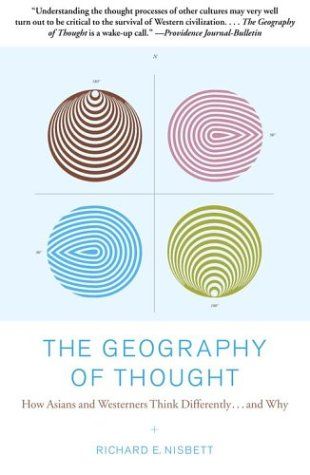
Nova: Exactly the point, Atlas! We often assume our way of seeing the world, our logic, our problem-solving, is the default. But two brilliant minds, Richard E. Nisbett in his groundbreaking book "The Geography of Thought," and Clotaire Rapaille with "The Culture Code," dismantle that assumption, revealing how deeply culture shapes our very cognition. Nisbett, a renowned psychologist, meticulously researched cross-cultural cognition, while Rapaille, a cultural anthropologist, pioneered 'cultural codes' through decades of market research. They show us that culture isn't just a layer on top; it's the operating system.
Atlas: Okay, so they're telling us our default settings are actually… culturally programmed. That's fascinating, but also a little unsettling for anyone trying to build something for a global audience. Where do we even begin to unpack that?
Nova: We begin by recognizing the blind spot itself.
The Cultural Blind Spot in Innovation
SECTION
Nova: Nisbett's work, especially, shines a light on this. He demonstrates how Westerners, influenced by ancient Greek philosophy, tend to focus on individual objects, their attributes, and categories. We see a tree. We analyze its leaves, its bark, its species. We isolate it.
Atlas: Right, that's how I was taught to approach problems: break them down into discrete parts. Analyze each component.
Nova: Precisely. Now, contrast that with East Asian thought, which Nisbett argues is deeply rooted in Confucianism, Taoism, and Buddhism. They tend to see the world in terms of relationships, context, and constant change. For them, that tree isn't just an individual object; it's part of a forest, connected to the soil, influenced by the weather, part of a dynamic system.
Atlas: So, it's not just about what they see, but they see it. The whole frame of reference is different.
Nova: Absolutely. And he proved this with simple, yet profound, experiments. One of the most famous is the 'fish tank experiment.' Participants from Western and East Asian cultures were shown an animated scene of a fish tank. Westerners, when asked to describe what they saw, would typically start by describing the largest, most active fish – its color, its movement.
Atlas: The focal point, the individual.
Nova: Exactly. East Asians, on the other hand, would often begin by describing the background, the water, the rocks, the plants, and how these elements created the environment for the fish. They'd then talk about how the fish interacted with that environment.
Atlas: Wow. So, if I'm designing a new product, let's say a smart home device, and I'm coming from a Western perspective, I might focus on the device's individual features – its processing power, its unique functions. But an East Asian consumer might be more interested in how it integrates seamlessly into the family's daily rituals, how it enhances harmony in the home. I can see how that could lead to a massive disconnect.
Nova: That's a perfect example, Atlas. A Western-centric design team might create a device that's brilliant in its standalone functionality but fails to consider the broader relational context or the impact on the household's dynamic. They've missed the forest for the fish, so to speak. This isn't about one way being better; it's about understanding that different cultures literally process information differently, which then shapes what they value in an innovation.
Atlas: That's a critical insight for any strategist. It means we can't just assume our 'best practices' or 'innovative solutions' will translate universally. We carry our own cultural operating system, and it creates blind spots we don't even realize are there until we bump into them, often in the market.
Decoding Cultural Imprints on Thought
SECTION
Nova: And that naturally leads us to the deeper 'why' behind these blind spots, which Clotaire Rapaille explores so brilliantly in "The Culture Code." While Nisbett shows us the cognitive differences are, Rapaille dives into these differences are imprinted on us, often unconsciously, from a very young age.
Atlas: Okay, 'cultural imprints' and 'codes.' That sounds a bit like an invisible programming language running in the background.
Nova: That's a fantastic analogy! Rapaille argues that every culture imprints a 'code' on us, influencing our unconscious motivations and decisions. These codes aren't about what people they want or think; they're about the deep-seated, often primal, emotional responses that drive behavior. He calls it the 'reptilian brain' at work – the part that makes instant, unconscious decisions.
Atlas: So, it's not just what we're taught, but what's baked into our subconscious through our cultural upbringing? That sounds incredibly powerful, and also incredibly difficult to decipher. How does a strategist even begin to understand these hidden codes?
Nova: Rapaille’s methodology is fascinating. He doesn't just do surveys or focus groups. He conducts in-depth sessions, often over several hours, where he encourages participants to share their earliest memories and associations with a particular concept – say, 'love,' 'money,' or 'cheese.' He's looking for the emotional archetypes, the 'first imprint' that a culture leaves regarding that concept.
Atlas: Wait, cheese? That sounds like a very specific example for such a broad theory. Tell me more about the 'cheese code.'
Nova: It's one of his most famous. Rapaille discovered that the 'code' for cheese in America is "dead." When Americans talk about cheese, they often refer to processed, pre-packaged, pasteurized products. They want it safe, convenient, and predictable. Their earliest memories are often of plastic-wrapped slices or melted on a burger.
Atlas: Yeah, I can see that. That's a very American experience of cheese.
Nova: Exactly. Now, in France, the code for cheese is "alive." French people talk about cheese with reverence – its smell, its texture, its aging process, its connection to terroir and tradition. Their earliest memories might be of a family meal, a cheese plate, or visiting a fromagerie. It's complex, diverse, and often pungent.
Atlas: That's a huge difference! So, if a French cheese company tried to market their artisanal, stinky cheese to American consumers by emphasizing its 'aliveness,' it might completely backfire because the American 'code' is the opposite. They want 'dead' cheese.
Nova: Precisely. And conversely, an American company trying to sell highly processed cheese in France might be met with disdain. Rapaille's work shows that understanding these unconscious codes is key to truly connecting with diverse markets, not just superficially, but at a deep, resonant level. It's about finding the 'cultural unconscious' of your target audience.
Atlas: That makes me wonder about our own cultural assumptions in innovation. We often think of 'disruption' as inherently good, or 'efficiency' as the ultimate goal. But what if those are just our cultural codes, and in another culture, 'harmony' or 'sustainability' holds a more powerful, unconscious sway? That's a profound challenge to entrepreneurial leadership – you have to decode the market before you even start designing.
Nova: You've hit on it perfectly, Atlas. It means truly effective strategic storytelling isn't just about crafting a good narrative; it's about understanding the deep cultural grammar of your audience.
Synthesis & Takeaways
SECTION
Nova: So, what Nisbett and Rapaille ultimately teach us is that culture isn't just interesting facts or surface-level customs. It's the fundamental operating system for how people think, create, and consume. Ignoring these deep-seated cultural differences isn't just a minor oversight; it's a strategic vulnerability.
Atlas: It's like trying to run Windows software on a Mac without a compatibility layer. You're going to have glitches, or it just won't run at all. These books are telling us that cultural humility and deep, almost anthropological, understanding are essential for innovation that truly resonates globally.
Nova: Absolutely. True innovation, the kind that creates lasting impact and connects authentically, requires us to step outside our own cultural frameworks and deeply understand the diverse ways the human mind is coded.
Atlas: So, before you launch your next big idea, before you strategize your next market entry, ask yourself: whose cultural lens are you truly looking through?
Nova: This is Aibrary. Congratulations on your growth!