Beyond the Spark: Engineering Consistent Creativity for Lasting Impact.
Golden Hook & Introduction
SECTION
Nova: We've all heard the whispers, haven't we? That 'genius' strikes like lightning. That 'creativity' is some ethereal gift bestowed upon the chosen few. But what if that whisper is actually a loud, frustrating lie, holding back your biggest breakthroughs?
Atlas: Oh, I know that feeling of waiting for inspiration to hit, usually right before a deadline, only for it to ghost you. It’s infuriating.
Nova: Exactly! That myth, that creativity is a mystical spark, leads to so much frustration and inconsistent output, especially for those in strategic roles requiring constant innovation. Today, we're diving into the core of that problem, drawing insights from a powerful collection of ideas we're calling "Beyond the Spark: Engineering Consistent Creativity for Lasting Impact." It’s an exploration of how to transform that elusive concept of creativity into a reliable, consistent force.
Atlas: So, we're saying creativity isn't a 'gift,' it's... a job? That feels almost sacrilegious to some, like we're stripping away the magic.
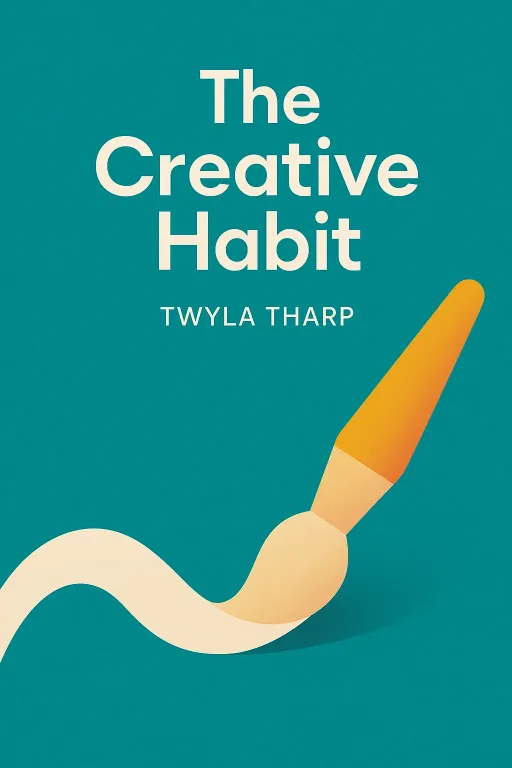
Nova: Well, it's not stripping away the magic; it's revealing the magic of consistent effort. We’re really leaning on two foundational texts here: Twyla Tharp’s seminal work, "The Creative Habit," and Adam Grant’s "Originals." Tharp, a renowned choreographer, is a fascinating example. You'd think dance, being such an art form, would be all about spontaneous expression, but she reveals how even the most exquisite art comes from rigorous discipline. She literally codified creativity into actionable steps.
Atlas: That’s a great way to put it; it’s like training for a marathon versus hoping you'll suddenly be able to run one. So, what does this 'training' actually look like?
Creativity as a Trained Habit
SECTION
Nova: Tharp fundamentally argues that true creativity is a habit, a muscle to be trained, not some lightning bolt to be awaited. She proves that consistent effort, not just raw talent, fuels groundbreaking work. She breaks creativity down into actionable steps, from rituals and routines to preparation and skill acquisition.
Atlas: Okay, but a choreographer... that's different from someone trying to innovate in a tech startup, right? How do these 'rituals' translate for someone who needs to be strategic and build foundations, not just dance?
Nova: That's the beauty of it, Atlas. Tharp's principles are universal. She’s famous for her own daily ritual. Every morning, she’d wake up at 5:30 AM, put on her workout clothes, and hail a taxi to the gym. The ritual wasn't about the workout itself; it was about the of getting in that taxi. That specific action was her creative warm-up, signaling to her mind and body that the day had begun, and with it, the work of creation. It built momentum, not for a dance, but for the of creation. It’s that consistent, deliberate act that cultivates the creative flow.
Atlas: Wow, that’s so interesting. So it's not just about 'waiting for the muse,' it's about actively digging for the muse. Can you give an example of a 'scratching' ritual for a non-artist? Because I imagine a lot of our listeners, especially founders, often feel that pressure to constantly be 'on' creatively, and just "waiting for a taxi" might not cut it.
Nova: Absolutely. Tharp calls it "scratching," like a DJ scratching for the next track. It's about gathering bits and pieces, ideas, observations, even when they seem unrelated. For a strategic builder, this could be dedicating the first 15 minutes of your workday to free-form journaling about a problem, or simply sketching out a process flow, even if it feels messy. It’s about creating a dedicated "idea playground" where you collect data points without judgment. This consistent "scratching" builds a reservoir of ideas and connections that you can draw upon later, rather than staring at a blank page hoping for inspiration.
Atlas: That makes sense. It’s about building a creative infrastructure, not waiting for a muse to show up. It’s a very proactive approach.
Engineering Originality
SECTION
Nova: And that idea of diligent digging leads us perfectly to Adam Grant, who shows us that even the most 'original' ideas aren't born in a vacuum; they're often engineered through a different kind of consistent effort. Grant explores how non-conformists move the world, demonstrating that original ideas often come from diligent effort, strategic procrastination, and seeking critical feedback.
Atlas: Hold on, 'strategic procrastination'? That sounds like a dream excuse for anyone struggling with deadlines. What's the part? Because for 'The Resilient Learner' trying to avoid founder challenges, that sounds risky. I mean, we're taught to tackle things head-on.
Nova: That's a great question, and it's where the "strategic" really matters. Grant isn't endorsing last-minute cramming. He’s talking about allowing an idea to simmer, to incubate, to diverge before you force it to converge. Think of Leonardo da Vinci, who famously took 16 years to finish the Mona Lisa. He didn't just walk away from it; he worked on other projects, let his mind wander, gathered new insights, and then returned to it. Or the founders of Warby Parker, who deliberately delayed launching to gather more feedback and refine their concept. The delay wasn't laziness; it was a period of active research, diverse input collection, and allowing for creative leaps.
Atlas: Ah, so it’s not avoiding the work; it’s optimizing the of the work. It’s letting the subconscious do some heavy lifting. That's a nuanced distinction. What about the "seeking critical feedback" part? Because for a new idea, especially an original one that might challenge the status quo, isn’t harsh criticism just going to kill it?
Nova: Precisely the opposite, according to Grant. He shows that originals often start with doubt and refinement, rather than immediate conviction. The most successful innovators actively harsh criticism to strengthen their concepts. They didn't just present an idea and hope for applause; they offered it up for dissection, asking "What's wrong with this?" or "How could this fail?" This process helps them identify flaws, anticipate objections, and ultimately make their "original" idea more robust and resilient. It’s about building an idea that can withstand the real world.
Atlas: So it's not just generating ideas, it's about building a foundation for them to survive criticism and actually make an impact. That sounds like a holistic approach to creativity, something 'The Strategic Builder' would deeply appreciate for long-term impact. Both Tharp and Grant seem to be saying that consistency and strategic processes are the unsung heroes of true innovation.
Synthesis & Takeaways
SECTION
Nova: Absolutely. Tharp gives us the daily discipline – the creative warm-ups, the consistent "scratching" for ideas. Grant gives us the strategic framing – how to nurture those ideas, when to let them marinate, and how to strengthen them through deliberate challenge. Both fundamentally solve the problem of creative blocks by providing concrete strategies and mindsets to cultivate a robust and reliable creative process in any domain.
Atlas: It sounds like both authors are telling us that mastery in creativity isn't about being inherently gifted, but about building robust systems and trusting the process, even when it feels slow or messy. It’s about taking ownership of your creative output.
Nova: Exactly. True creativity is a habit, a muscle to be trained, not a lightning bolt to be awaited. And the impact of cultivating that habit is not just more, but more ideas that can genuinely move the world.
Atlas: That’s actually really inspiring. So, for our listeners, maybe it's choosing one small, creative ritual you can implement daily this week. Journaling for ten minutes, sketching an idea, or even just taking a specific walk to clear your head. Just one tiny step to start building that muscle.
Nova: One step, consistently taken, can build an entire creative empire. That’s the lasting impact we’re talking about.
Atlas: Love that.
Nova: This is Aibrary. Congratulations on your growth!