

The 'Why' Behind Your Cravings: Understanding Your Body's Deeper Signals.
Golden Hook & Introduction
SECTION
Nova: What if I told you that every time you fight a craving, you're actually making it stronger? That your 'lack of willpower' might just be a profound misunderstanding of your own brain?
Atlas: Whoa, Nova, that's a bold claim! Most of us are taught to just 'power through' or 'resist temptation.' Are you saying that's... wrong? That it's actually counterproductive?
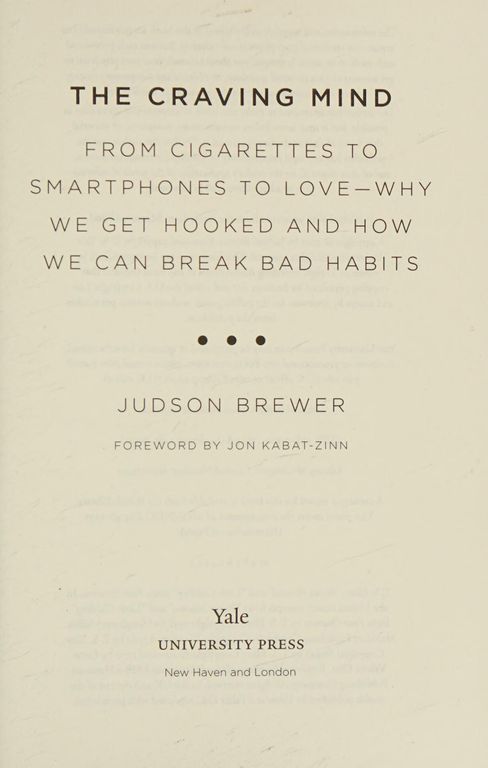
Nova: Exactly, Atlas. It's a profound, almost revolutionary insight from Dr. Judson Brewer, a neuroscientist and addiction psychiatrist, in his groundbreaking book, "The Craving Mind." Brewer’s work isn't just theory; it comes from decades of studying how our brains get hooked on everything from smoking to stress eating, and crucially, how we can un-hook them. He's not just a researcher; he's on the front lines of helping people change.
Atlas: So, the guy who studies addiction says our 'willpower' is a myth? That's definitely turning conventional wisdom on its head. I mean, we're told from childhood to have discipline, to resist. What's the real story then? What's actually going on in our brains when we crave something so intensely?
Nova: The real story is about understanding cravings not as a moral failing, or some personal weakness you just need to "fix," but as complex, often misleading signals from our brain and body, frequently trapped in what he calls 'habit loops.' It's a blind spot we all have.
Cravings as Signals, Not Failings: The Neuroscience of Habit Loops
SECTION
Atlas: A blind spot? Tell me more. Because honestly, when I'm reaching for that third cookie after a tough day, it absolutely feels like a personal failing. Like I just couldn't control myself.
Nova: And that's precisely the perspective Brewer wants us to challenge. He argues that this self-blame only strengthens the craving's hold. Think about it: a craving hits, we feel bad for having it, we try to fight it, we fail, we feel worse, and then we're even more likely to just give in next time. It's a vicious cycle.
Atlas: Right, like a self-fulfilling prophecy of 'I'm weak, so I might as well just eat the cookie.'
Nova: Precisely. Brewer explains that cravings operate through these fundamental habit loops. It starts with a 'trigger' – maybe it's stress, boredom, a certain time of day, or even seeing a specific food. That trigger leads to a 'behavior' – eating the cookie, checking social media, smoking a cigarette. And that behavior provides a 'reward' – a momentary hit of pleasure, a distraction, a sense of relief.
Atlas: Oh, I see. So my brain's actually to crave that extra cookie when I'm stressed. It's connecting the stress to the cookie to the temporary relief. It's literally wiring itself for that response.
Nova: Exactly! And the brain is incredibly efficient. Once it establishes that loop, especially if the reward is immediate and potent, it says, "Hey, that worked! Let's do that again." The problem is, these rewards are often short-lived or come with negative consequences – the sugar crash, the guilt, the wasted time scrolling. But the brain doesn't always register the cost; it's focused on the immediate, perceived benefit.
Atlas: That's fascinating. But it feels so good in the moment. How can something that feels like a reward actually be detrimental? My brain is telling me this is good!
Nova: That's the deceptive part of the habit loop. The brain, in its efficiency, is just seeking survival and comfort. It doesn't differentiate between a truly nourishing reward and a superficial one. Think about early humans: if they found a high-calorie food, the brain said, "Eat more! Remember this feeling!" Now, we have an abundance of highly palatable, processed foods designed to hijack that ancient reward system. The craving isn't a signal of true need; it's a signal of a learned association.
Atlas: So, it's not my body telling me I sugar, it's my brain saying, 'Hey, remember that quick fix for stress? Let's do that again!'
Nova: You've got it. That's the shift. It's moving from "I'm a failure for wanting this" to "My brain is just efficiently running a program it learned." And this applies to anything from emotional eating to procrastination, even to compulsive phone checking. Our brains are constantly creating these loops to conserve energy, to make things automatic.
Atlas: That makes so much sense. It takes away the self-blame, which is a huge relief. But if fighting it strengthens it, and my brain is just running a program, how do I actually the program? Or at least, rewrite it?
Mindful Curiosity: Disarming the Habit Loop
SECTION
Nova: And here's where Brewer's insight truly shines, Atlas. Once we understand the habit loop, we can actually disarm it. And the secret isn't fighting, it's... curiosity.
Atlas: Curiosity? That sounds too simple. My brain is screaming for chocolate! How is observing it going to make it go away? I feel like I'd just be sitting there, staring at the chocolate, and then eating it anyway!
Nova: That's a common initial reaction, and it highlights our deeply ingrained impulse to something about the craving. But Brewer's approach is radically different. Instead of reacting, you pause. You become genuinely curious about the craving itself. What does it like? Where is it in your body? Is it a tightness in your chest? A tingling in your hands? A pressure behind your eyes? How does it change over time? Does it get stronger, or does it ebb and flow?
Atlas: So, the next time I have that urge to scroll endlessly, or to reach for the junk food, I should just... feel the urge? Like, really pay attention to it? That feels incredibly counterintuitive.
Nova: It absolutely is. And that's why it's so powerful. Because what happens when you bring curiosity to something you usually react to automatically? You create a space. You break the automatic link between the trigger and the behavior. You're essentially telling your brain, "Hold on, this isn't an emergency. Let's gather some more data."
Atlas: What kind of data? What am I looking for?
Nova: You're observing the sensations, the thoughts, the emotions that arise with the craving. And here's the kicker: you'll often discover that the craving itself isn't as solid or as unbearable as you thought. It's often just a bundle of sensations that you to act, but they aren't you. And as you observe them, they often start to dissipate, or at least become less overwhelming. Brewer talks about how people who mindfully observe their smoking cravings often report that the cravings feel like "mild body sensations" rather than an irresistible urge. They literally see the unpleasantness of the craving, and the perceived 'reward' of smoking diminishes.
Atlas: So, it's not about making the craving disappear, but about changing my with it. Instead of being a puppet to it, I become an observer. And by observing, I realize it's just... a sensation, not a command.
Nova: Exactly! You're updating your brain's reward value. If you mindfully notice that eating the cookie actually leads to a stomach ache, or that endless scrolling leaves you feeling emptier, your brain starts to learn, "Hey, maybe that 'reward' isn't so rewarding after all." This is how you literally start to unravel those deeply entrenched habit loops. It’s not about fighting the craving with willpower; it’s about examining it with curiosity and seeing it for what it truly is – a fleeting experience that often leads to a disappointing outcome.
Atlas: That's actually really inspiring. It means I'm not inherently flawed; I just need to re-educate my brain. It's a more compassionate approach to self-improvement, moving from self-blame to self-understanding, which resonates with building resilience.
Nova: And it’s incredibly effective. Brewer's research has shown significant success rates in helping people overcome addictions and unhealthy habits using this very method. It’s about building a foundation for sustainable change, not just temporary fixes. It’s a holistic approach to self-mastery, understanding the 'why' behind our actions, and then building new, healthier responses.
Synthesis & Takeaways
SECTION
Atlas: I love that. So, it's not about white-knuckling it through a craving. It's about pausing, observing, and letting that curiosity be the lever that disarms the habit. It’s a complete paradigm shift from seeing cravings as an enemy to seeing them as a messenger, albeit sometimes a confusing one.
Nova: Absolutely, Atlas. This insight fundamentally shifts how you approach cravings, moving from self-blame to compassionate curiosity. It empowers you to respond wisely, not react impulsively, and that's where true, long-term change and freedom begin. It's about deeply understanding the signals your body and brain are sending, so you can build a more conscious, intentional life.
Atlas: And that's a powerful tool for anyone looking to build a better version of themselves, whether it's in business, personal growth, or just daily habits. It's about gaining mastery over your internal landscape. So, for all our listeners, the next time a craving strikes, can you pause for a moment and simply observe it, asking yourself, 'What does this craving truly feel like, and what might it be trying to tell me?'
Nova: Give it a try. You might be surprised by what you discover. We'll catch you next time.
Atlas: This is Aibrary. Congratulations on your growth!