

How to Build Unshakeable Confidence Without Faking It
Golden Hook & Introduction
SECTION
Nova: Atlas, rapid-fire word association. I say a word, you give me the first thing that pops into your head. Ready?
Atlas: Oh man, you know I love a challenge. Lay it on me.
Nova: Okay. "Public speaking."
Atlas: Sweaty palms, forgetting my name, probably a bad joke.
Nova: "Networking event."
Atlas: Awkward small talk, pretending to be busy on my phone, definitely that one really loud person.
Nova: "Asking for a raise."
Atlas: Imposter syndrome, feeling like I don't deserve it, maybe a full-body cringe.
Nova: Wow, those are incredibly relatable. And they all circle back to one core feeling, don't they? That nagging sense of "not good enough."
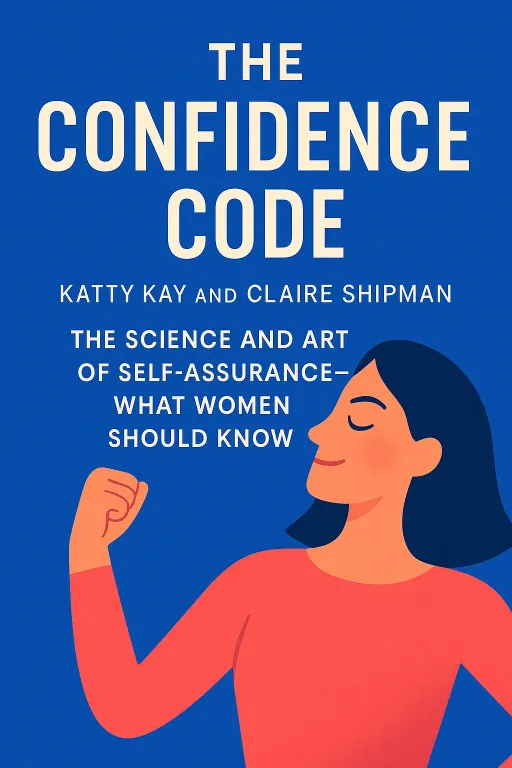
Nova: Today, we're diving into how to build unshakeable confidence without faking it, drawing powerful insights from two groundbreaking books: "The Confidence Code" by Katty Kay and Claire Shipman, and "Mindset" by the brilliant Carol S. Dweck.
Atlas: Oh, I like that. "Unshakeable confidence without faking it." Because honestly, Nova, it often feels like confidence is something you either have or you don't. Like some people are just born with that swagger, and the rest of us are left trying to mimic it.
Nova: Exactly! And that, Atlas, is "The Blind Spot" we need to talk about. "The Confidence Code" authors, two seasoned journalists, dug into this very idea. They interviewed neuroscientists, psychologists, even generals, discovering that this belief—that confidence is an innate trait—is precisely what stops most people from even trying to grow it. It’s a fundamental misunderstanding that acts as the first barrier to genuine self-assurance.
Atlas: So it's not some magical genie you either possess or don't? That's actually really inspiring, because if it's a skill, that means it can be learned.
Confidence as a Skill, Not a Trait
SECTION
Nova: Absolutely. They found that confidence is often less about inherent ability and more about the willingness to act. It's about taking risks and learning from outcomes, not waiting until you feel perfectly ready. Think of it like a muscle. The more you use it, the stronger it becomes, regardless of how you initially feel.
Atlas: That's counterintuitive for many. Because my brain always tells me, "Wait until you're ready. Wait until you feel competent, then you can act confidently." But you're saying it's the other way around? The action actually sparks the confidence?
Nova: Precisely. Let me give you an example. Imagine Dr. Elena, a brilliant research scientist. She's got groundbreaking data, but the thought of presenting it at a major conference fills her with dread. She knows her stuff inside out, but the fear of judgment, of not being "good enough" on stage, paralyzes her. She keeps delaying, refining her slides, convincing herself she needs to feel more prepared, more charismatic, more... confident.
Atlas: Oh, I know that feeling. That internal monologue of "just one more tweak, I'm not quite there yet." It's a classic trap, especially if you're trying to put yourself out there, whether it's giving a presentation or even just trying to be a funnier person in a social setting.
Nova: Right? And the longer she waits, the more opportunities she misses, and the more her belief that she "lacks confidence" solidifies. Her colleagues, who might be less brilliant but more willing to simply, get ahead. Dr. Elena is stuck in this loop, believing confidence is an elusive feeling she needs to catch before she can act.
Atlas: So, what's the shift? How does she break out of that cycle if she doesn't 'feel' it? Does she just… fake it?
Nova: Not fake it, no. The insight from "The Confidence Code" is that she needs to "do it afraid." Instead of waiting for the feeling, she takes a small, manageable action. Maybe she volunteers to present her research to her small lab team first, or even just practices delivering a key section to a trusted mentor. The outcome might not be perfect; she might stumble over a few words, or her slides might not transition perfectly.
Atlas: But the point is she it.
Nova: Exactly. And that act of doing, even with imperfections, creates a tiny crack in that "I'm not good enough" belief. She survived. She learned something from the experience. Perhaps she realized her team was supportive, or that a stumble isn't the end of the world. That small, messy action, not the feeling of readiness, is what builds a sliver of genuine confidence. It's the repeated small actions that strengthen the muscle.
Atlas: So the feeling follows the action, not the other way around? That’s incredibly powerful. It means you don't have to wait for some magical switch to flip inside you. You just have to… start.
The Growth Mindset and Action Imperative
SECTION
Nova: You got it! And that perfectly leads us to the second crucial piece of this puzzle, which Carol Dweck masterfully unpacks in "Mindset" – the power of a growth mindset. Dr. Dweck, a Stanford psychologist, has spent decades researching how our fundamental beliefs about our abilities profoundly shape our lives.
Atlas: Okay, so "growth mindset" versus "fixed mindset." I've heard the terms, but what does a 'growth mindset' actually sound like in someone's head? Give me an internal monologue example for someone trying to build confidence.
Nova: Good question. In a fixed mindset, someone might think, "I bombed that presentation. I'm just not a confident speaker. I'm not good at this." They see their abilities as static, unchangeable. Failure is a definitive judgment of their inherent worth.
Nova: But with a growth mindset, that same person would reframe it: "Okay, that presentation didn't go as planned. What did I learn? What could I try differently next time? How can I improve my delivery? This is valuable feedback to help me get better." They believe their abilities can develop through dedication and hard work. Failure isn't an indictment; it's data.
Atlas: That’s a huge mental shift. For our listeners who want to be more confident and maybe even funnier, this is huge. It’s not about being born witty or charismatic; it's about practicing, learning, and adapting. But how does someone this, especially if they're stuck in that 'fear of not good enough' loop?
Nova: Let's consider a young comedian we'll call Alex. He dreams of being a stand-up, but his first few open mic nights are… brutal. Crickets. Awkward silence. He initially feels like a complete failure, ready to give up. This is the fixed mindset talking: "I'm just not funny."
Atlas: That sounds rough, but totally relatable. The fear of bombing is real for anyone putting themselves out there.
Nova: It is. But then Alex stumbles upon Dweck's work. He starts reframing each "bomb" not as a sign he's inherently unfunny, but as an experiment. He analyzes what jokes landed, what didn't, why. He observes other comedians, tries new delivery styles, and even explicitly asks trusted friends for feedback on specific bits.
Atlas: So he's not just "trying harder." He's trying, and learning from the outcome.
Nova: Exactly. He's applying that growth mindset. And crucially, he's taking continuous "small actions" – getting back on stage, night after night, even when his stomach is churning with nerves. He doesn't wait until he funny; he acts, learns, adjusts, and through that iterative process, his confidence grows. He becomes funnier, not because he was born that way, but because he built the skill.
Atlas: Wow. So the skill of confidence is built by taking a small step, even when you're scared, and then viewing the outcome, whatever it is, as a chance to learn and adapt, not as a judgment of your inherent worth. That’s incredibly powerful. It’s like confidence is the byproduct of courage and curiosity.
Synthesis & Takeaways
SECTION
Nova: Beautifully put, Atlas. Confidence isn't about faking it 'til you make it. It's about doing it 'til you become it. It's the muscle memory of courage, fueled by a belief that you can always learn and improve.
Atlas: That makes me wonder about the deeper question from the book content: What small action have you been avoiding purely out of a fear of not being good enough? For someone who wants to be more confident in talking to people, that could be as simple as initiating one conversation, or telling one joke, even if it falls flat.
Nova: Precisely. If you've been avoiding asking a question in a meeting, starting a new project, or even just striking up a conversation with someone new because you fear not being good enough, our challenge to you is simple: take that small action. Don't wait for the feeling of readiness. Just do it, observe the outcome without judgment, and learn. That act alone is a win for your confidence.
Atlas: Because even if it "fails" in the conventional sense, you've gained data, and you've proven to yourself that you're capable of stepping up. It’s about building a track record of action, not just waiting for inspiration.
Nova: It's about transforming that internal narrative from "I can't" to "I haven't learned how to yet." And that, my friends, is the bedrock of unshakeable confidence.
Atlas: That gives me chills. So, if you're out there and you've been putting something off because you don't feel ready, we want to hear about it. What's that one small action you're going to take this week? Share it with us using #AibraryConfidence on social media. We'd love to cheer you on.
Nova: And remember, every small step forward is a giant leap for your confidence.
Atlas: This is Aibrary. Congratulations on your growth!









