

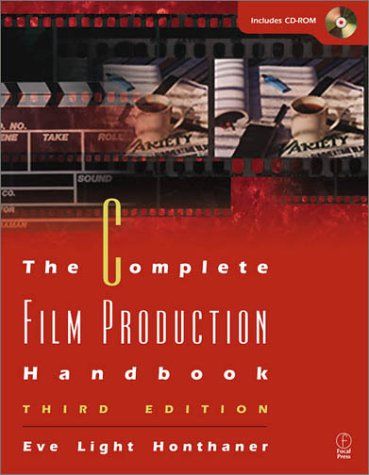
The complete film production handbook
Introduction
Nova: Imagine you are on a massive movie set. There are hundreds of people running around, cameras the size of small cars, and explosions going off in the background. It looks like absolute chaos, right? But behind that chaos is a stack of paperwork so precise it would make a NASA engineer blush. Today, we are diving into the book that basically keeps Hollywood from imploding: The Complete Film Production Handbook by Eve Light Honthaner.
Nova: It absolutely is. Think of it this way: if the Director is the dreamer and the Cinematographer is the artist, the Production Manager is the architect making sure the building doesn't fall down. Eve Light Honthaner is a legend in this space. She has worked at DreamWorks, Universal, and Imagine Entertainment. She has seen it all, from the biggest blockbusters to the scrappiest indies.
Nova: Because it doesn't just tell you what to do; it gives you the actual tools to do it. We are talking about the forms, the checklists, and the legal minefields that most film schools barely touch on. It is the ultimate guide to the un-glamorous side of show business that actually makes the show possible.
Key Insight 1
The Production Office: The Brain of the Beast
Nova: Most people think a movie starts when the camera rolls, but Honthaner makes it clear: the movie starts in a boring office with a lot of phones and a very fast internet connection. This is the Production Office. It is the central nervous system of the entire project.
Nova: Far from it. Honthaner breaks down the setup of a production office like a military operation. You have to find a space, get the furniture, set up the network, and most importantly, create the Production Manual. This is a massive binder that contains every piece of information anyone could possibly need, from emergency contacts to the nearest hardware store.
Nova: She does. And for a good reason. If the phones go down on a forty-million-dollar movie, you are losing thousands of dollars every minute. She emphasizes that the Production Coordinator is the unsung hero here. They are the ones managing the flow of information. If a script change happens at 2:00 AM, the Coordinator ensures that every single department head has the new pages by 6:00 AM.
Nova: It is the checklist. Honthaner is the queen of checklists. She provides lists for everything: office supplies, insurance requirements, even a list of questions to ask when you are scouting for a production office. She argues that in the heat of production, your brain will fail you, but a checklist never will.
Nova: That leads into the relationship between the Production Manager and the Accounting department. Honthaner explains that the office isn't just a place to work; it is a vault. Every receipt, every deal memo, and every purchase order has to be tracked. If it isn't on paper, it didn't happen. That is a mantra she repeats throughout the book.
Nova: Exactly. In the world of film production, paper is the only thing that is real. Everything else is just light and shadow.
Key Insight 2
The Paperwork Trail: DOODs and Call Sheets
Nova: Now we get into the real nitty-gritty. The stuff that makes the industry run. Have you ever heard of a DOOD, Leo?
Nova: Not quite. It stands for Day Out of Days. It is a grid that shows exactly which actors are working on which days. It sounds simple, but it is one of the most complex puzzles in production. If you have a star who is only available for three weeks, but your shoot is ten weeks long, the DOOD is how you figure out how to cram all their scenes into that window.
Nova: If you mess up the DOOD, you might find yourself with a crew of a hundred people standing around waiting for an actor who isn't scheduled to arrive for another two days. You are burning money. Honthaner explains that the DOOD is the foundation of the budget. You can't know how much the movie costs until you know exactly how many days every person is working.
Nova: That is the Call Sheet. Honthaner spends a lot of time on this because it is the most important document on a film set. It tells you the weather, the nearest hospital, what scenes are being shot, who needs to be in makeup at what time, and even what is for lunch.
Nova: It is a language of its own. Honthaner breaks down how to read and write them. For example, she explains the importance of the 'Advance' section, which tells the crew what is happening tomorrow so they can prepare. She also highlights the 'Production Report,' which is the document created at the end of the day. It records exactly what was shot, how much film or digital storage was used, and if there were any delays.
Nova: Never. And that is where the drama happens. Honthaner points out that if the Production Report shows you are falling behind, the studio or the bond company starts calling. It is a constant cycle of planning, executing, and then accounting for why the plan went sideways.
Nova: That is a perfect analogy. And like any factory, you need standardized forms. Honthaner’s book is famous because it includes templates for all of this. You don't have to reinvent the wheel; you just have to fill in the blanks.
Key Insight 3
The Legal Minefield: Clearances and Unions
Nova: Let's talk about the stuff that keeps producers up at night: legal issues. Honthaner has a whole section on clearances. Did you know that if a character in a movie is wearing a t-shirt with a logo on it, you might need permission from that company to show it?
Nova: Especially then. It is called 'Greeking.' If you can't get the clearance, you have to cover the logo with tape or blur it out. Honthaner explains that everything you see on screen—the posters on the wall, the music playing on a radio, even the art in a character's house—has to be cleared legally. If you don't, the lawyers will come for you, and they might even block the release of the movie.
Nova: It is! It is the job of the Clearances Coordinator. And it is not just logos. It is people, too. You need 'Talent Releases' for every single person who appears on camera, even the extras in the back of a crowded restaurant scene.
Nova: She provides a deep dive into the 'alphabet soup' of Hollywood unions: SAG-AFTRA for actors, the DGA for directors, the IATSE for crew, and the Teamsters for drivers. Each one has its own set of rules, pay scales, and fringe benefits. If you violate a union rule—like not giving the crew a proper lunch break—you get hit with 'meal penalties,' which can cost a fortune.
Nova: Honthaner’s advice is to build relationships with the union reps. Don't treat them as the enemy; treat them as partners in keeping the set safe and fair. She also emphasizes the importance of 'Safety Meetings.' Every morning, the Assistant Director has to stand in front of the crew and explain the risks of the day—whether it is a stunt, a wild animal, or just a slippery floor.
Nova: And part psychologist. Honthaner mentions that managing personalities is just as important as managing paperwork. You have to keep the crew motivated when they are working their fourteenth hour in the rain. She says that a good production office is the one that makes everyone feel taken care of, so they can focus on their jobs.
Key Insight 4
The Wrap: Finishing the Job
Nova: The most dangerous part of a movie isn't the stunts; it is the 'Wrap.' This is the period after filming ends when you have to close everything down. Honthaner warns that many productions fall apart here because everyone is exhausted and wants to go home.
Nova: Because if you don't wrap properly, you can't get your tax incentives. Many states and countries offer huge rebates to film there, but to get that money, you have to provide a perfectly audited set of books. Honthaner explains that the 'Wrap Folder' is the final product of the production office. It contains every contract, every invoice, and every clearance.
Nova: Exactly. You have to return the equipment, close out the locations, and make sure every single person has been paid. She also talks about 'Post-Production' handoffs. The production office has to deliver the 'Script Supervisor's' notes to the editor so they know which takes the director liked best.
Nova: In the newer editions, yes. She covers digital asset management—how you store the terabytes of footage so they don't get lost or corrupted. It is a far cry from the days of physical film cans, but the principle is the same: organization is everything.
Nova: It is her emphasis on 'Professionalism.' She says that your reputation in this industry is built on how you handle the small things. If you are the person who always has the paperwork ready, who stays calm during a crisis, and who treats the lowest-paid intern with respect, you will never be out of work. The handbook is a guide to being a professional in a world that often feels very unprofessional.
Conclusion
Nova: We have covered a lot of ground today. From the chaos of setting up a production office to the intricate dance of the Day Out of Days, and the legal hurdles of clearances and unions. The Complete Film Production Handbook by Eve Light Honthaner really is the map for the maze of filmmaking.
Nova: That is the beauty of it. When the system works, the audience never sees the paperwork. They just see the story. But for the people behind the scenes, that paperwork is the safety net that allows the story to take flight. If you are even remotely interested in the business of show business, this book is your starting point.
Nova: Hey, if it works for a Spielberg movie, it can probably handle your meal prep. Just remember: if it isn't on paper, it didn't happen!
Nova: Thank you for joining us on this deep dive into the world of Eve Light Honthaner. Whether you are an aspiring producer or just a fan of the silver screen, there is always more to learn about how the magic is made.
Nova: This is Aibrary. Congratulations on your growth!