Decoding the Foundations of Economic and Legal Systems
Golden Hook & Introduction
SECTION
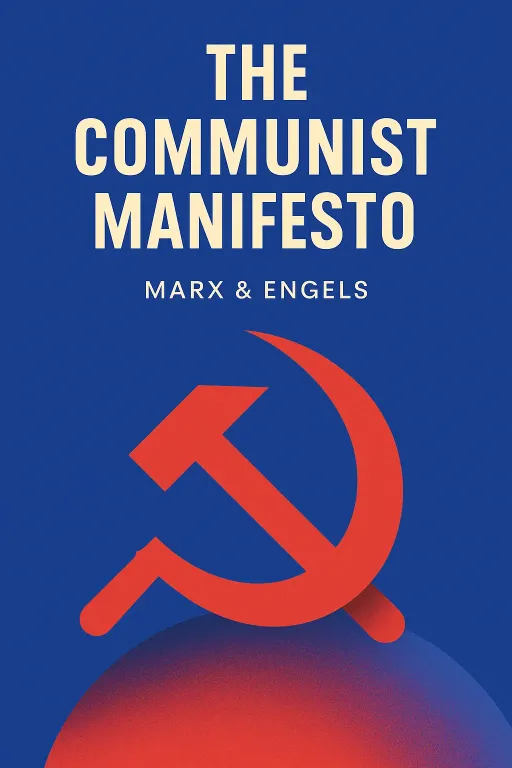
Nova: Most people read The Communist Manifesto as a revolutionary playbook. If you are a negotiator, you should read it as a forensic analysis of how the other side thinks.
Atlas: That is a sharp pivot. I usually associate Marx and Engels with fiery speeches, not corporate strategy. But I see your point. If you strip away the polemics, you are left with a raw breakdown of how power and incentives move through a system.
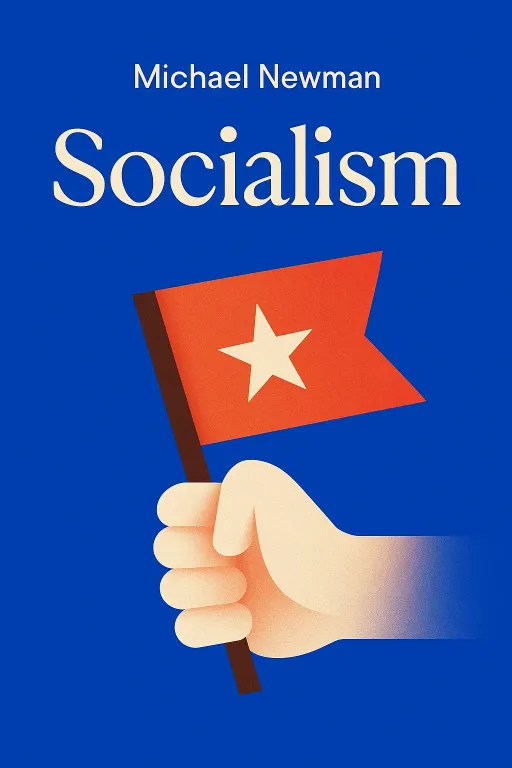
Nova: Exactly. And that is why we are pairing that foundational text with Michael Newman’s book, Socialism. While Marx and Engels laid out the diagnosis of the industrial era, Newman provides a critical, objective map of the diverse evolution of those ideas. For someone who builds systems or negotiates high-stakes deals, these books aren't just history. They are a masterclass in understanding the invisible architecture of the market.
Atlas: I am intrigued. I often find that when we are in the middle of a negotiation, we are so focused on the immediate terms that we miss the structural forces pushing the other party to act the way they do. We think they are being difficult, when they might just be responding to the incentives of their position.
Nova: That is the core of our discussion today. We are looking at the historical tensions between collective welfare and individual wealth creation, and how those tensions dictate the regulatory frameworks you navigate every single day.
The Forensic Analysis of Class Struggle
SECTION
Atlas: Okay, let’s start with the diagnostic side. Marx and Engels wrote The Communist Manifesto in 1848, right in the thick of the industrial revolution. It was a time of massive upheaval. But how does that 19th-century view of class struggle apply to a modern professional? It feels like we have moved past that binary of owner versus worker.
Nova: It is tempting to think that, but look at the underlying mechanics. When Marx and Engels broke down society into classes, they weren't just talking about wealth levels. They were analyzing the alignment of interests. The core idea is that your position in the economic structure dictates your strategy. A shareholder has a different set of incentives than a middle manager, who has a different set than a frontline employee.
Atlas: That makes sense. It is like the principal-agent problem in economics. The person at the top has a different risk profile than the person executing the task.
Nova: Precisely. And that is where the tension lies. Marx argued that these structures create friction that is often structural, not personal. If you are a negotiator, understanding this is a massive advantage. When you are sitting across the table, you aren't just dealing with a person. You are dealing with their structural position. What are their KPIs? What is their legacy? What are they afraid of losing?
Atlas: So you are saying that if I can identify the class-like structure of the person I am negotiating with, I can predict their behavior?
Nova: You can anticipate the pressures they are under. The tension between collective welfare and individual wealth creation—the central theme in these texts—shows up in almost every corporate negotiation. Think about ESG mandates versus quarterly profit targets. That is the modern version of the struggle Marx was describing. One side is pushing for long-term systemic stability, and the other is optimized for short-term capital accumulation.
Atlas: That changes how I view those boardroom clashes. I usually see them as personal disagreements or lack of vision. But if I reframe it as a structural conflict—where both parties are actually acting rationally according to their own incentives—it becomes a puzzle to solve rather than a fight to win.
Nova: That is the shift. The Strategic Architect doesn't get frustrated by the system; they map it. They recognize that the person across the table is trapped in a specific set of incentives. The goal is to find the common ground where the structural requirements of both parties can be satisfied.
The Evolution of Regulatory Frameworks
SECTION
Atlas: Okay, I am with you on the diagnostic side. Understanding the structure gives me leverage. But what about the regulatory side? That is where Michael Newman’s book, Socialism, comes in, right? It sounds like that book traces how we actually built the guardrails we have now.
Nova: That is exactly right. Newman’s work is brilliant because it moves away from the shouting matches and looks at the evolution of socialist thought as a series of experiments. He traces how different societies took the ideas of collective welfare and tried to bake them into the actual law.
Atlas: I suspect a lot of people think of socialism as a static set of rules. But Newman suggests it is more of a spectrum of regulatory approaches.
Nova: It absolutely is. Newman’s analysis shows that what we call modern economic models are actually hybrids. We have taken the raw, volatile energy of free-market capitalism and layered it with regulatory frameworks that were born out of socialist critiques. Think about labor rights, environmental protections, or anti-trust laws. These were not just "nice to have" ideas; they were direct responses to the systemic failures that Marx and Engels first identified.
Atlas: It makes me think of the workplace regulations I deal with. When we talk about employee retention or workplace safety, we are essentially talking about the legacy of these historical debates. It is the attempt to balance individual profit with the collective health of the workforce.
Nova: That is the perfect way to phrase it. Newman’s book is invaluable because it reminds us that these regulations are not static. They are constantly being renegotiated. When you look at the history of these frameworks, you realize that the "rules" of the game are actually living documents. They change based on which side of the tension has more political or economic leverage at the moment.
Atlas: I find that fascinating. It implies that as a professional, I am not just a bystander to these regulations. I am part of the system that is constantly renegotiating them. Whether I am drafting a contract, setting a company policy, or negotiating a merger, I am participating in the current iteration of this historical tug-of-war.
Nova: Yes, and that is a powerful realization. It moves you from being a passive follower of rules to an active architect of the environment you work in. When you understand that these laws and policies are the result of centuries of debate between collective welfare and individual wealth, you stop seeing them as obstacles. You start seeing them as the current settlement of a long-running argument.
Atlas: That gives me a different level of respect for the regulatory environment. It is not just red tape. It is the outcome of a massive, ongoing negotiation about what kind of society we want to live in.
Nova: And that is the key takeaway for anyone interested in high-stakes negotiation or strategy. If you understand the history of the argument, you can better navigate the current dispute. You can see the patterns. You can anticipate where the pressure points are going to be.
Synthesis & Takeaways
SECTION
Atlas: This has been a complete shift in perspective for me. I started this conversation thinking we were going to talk about abstract political theory. But you have mapped this directly onto the daily realities of the Strategic Architect.
Nova: It is all about the lens you use. If you view history as a series of disconnected events, it is just trivia. If you view it as a series of structural experiments, it becomes a blueprint.
Atlas: So, for the listener who is trying to master their own career or build a legacy, the actionable takeaway here is to start looking at their own work environment through this lens.
Nova: Exactly. Start asking yourself: What are the structural incentives at play here? Where is the friction between the collective goals of the organization and the individual goals of the stakeholders? When you identify those, you aren't just a participant anymore. You are a strategist.
Atlas: It is about seeing the game board before you move the pieces. Whether you are dealing with a contract, a team conflict, or a massive regulatory hurdle, you are standing in the middle of a historical stream of ideas.
Nova: And once you recognize that, you can stop fighting the current and start using it to your advantage. You can craft solutions that acknowledge the reality of the tension. That is where true influence comes from. It is not about forcing your will on the system; it is about understanding how to move the system in the direction you want it to go.
Atlas: I love that. It’s about becoming a master of the environment, not just a victim of it.
Nova: And that is the hallmark of professional mastery. It is the ability to hold the complexity of these systemic forces in your head and still act with clarity and purpose.
Atlas: This has been eye-opening. I feel like I have a new set of tools for my next negotiation. Thank you for walking me through this, Nova.
Nova: It was a pleasure, Atlas. And to all our listeners, remember: the structures you navigate are built by history, but they are defined by your actions today. Use that insight to build your legacy.
Atlas: Absolutely. This is Aibrary. Congratulations on your growth!