

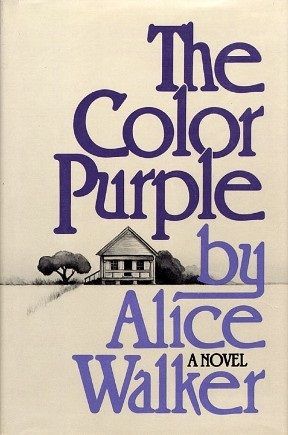
The Color Purple
Introduction
Nova: Welcome back to Aibrary. Today we're opening a book that begins with one of the most devastating first lines in American literature: "You better not never tell nobody but God. It'd kill your mammy." That's the voice of Celie, a fourteen-year-old Black girl in rural Georgia, writing a letter to God because she has no one else to turn to. And from that moment, Alice Walker's The Color Purple grabs you and doesn't let go.
Nova: : That opening line is haunting. It immediately tells you this is a story about silence, about secrets, about a voice that's been stolen. And yet the whole book is about reclaiming that voice, isn't it?
Nova: Exactly. Published in 1982, The Color Purple went on to win both the Pulitzer Prize for Fiction and the National Book Award in 1983, making Alice Walker the first Black woman to win the Pulitzer for fiction. It's an epistolary novel, told entirely through letters, mostly written by Celie. Over the course of about thirty years, we watch her transform from a silenced, abused girl into a woman who discovers her own worth, her own voice, and her own capacity for love.
Nova: : And this book has had quite the journey since its publication. It's been celebrated, adapted into an Oscar-nominated film, a Tony-winning Broadway musical, and just recently a new film adaptation of that musical. But it's also been one of the most frequently banned and challenged books in American schools and libraries.
Nova: Right. The controversy and the acclaim both come from the same place: Walker's unflinching honesty about racism, sexism, sexual violence, and the interior lives of Black women in the early twentieth-century South. Today we're going to explore why this novel remains so powerful more than forty years after its publication. I'm Nova.
Nova: : And I'm. This is The Color Purple on Aibrary.
The Epistolary Form and Celie's Voice
A Story Told in Letters
Nova: Let's start with the form of the novel itself, because it's essential to understanding why The Color Purple works the way it does. The entire book is composed of letters. The first half is Celie writing to God. Then, later, we get letters from her sister Nettie, who's in Africa as a missionary. And eventually Celie stops addressing God and starts writing directly to Nettie.
Nova: : Why letters? What does that form give Walker that a traditional narrative wouldn't?
Nova: It gives us unfiltered access to Celie's consciousness. She's writing these letters with no expectation that anyone else will ever read them. There's no performance, no self-censorship beyond what she's already internalized. And her language reflects her reality. She writes in Black Southern vernacular, with spellings that match her speech: "us" for "us," "ast" for "asked." It's not a gimmick. It's Walker insisting that Celie's voice, exactly as it is, deserves to be the center of a great American novel.
Nova: : And that voice changes over the course of the book, doesn't it? As Celie grows, her language grows too.
Nova: Beautifully so. Early letters are short, fragmented, full of pain she can barely articulate. She describes her stepfather raping her with the simple words: "He push his thing inside my pussy. It hurt." There's no metaphor, no analysis, just raw experience. But by the end of the novel, her letters are longer, more reflective, more confident. She's writing about her business, her relationships, her sense of self. The form itself tracks her liberation.
Nova: : And then there's the shift in addressee. She stops writing to God after she discovers that her husband, whom she calls Mister, has been hiding Nettie's letters from her for years. She writes: "Dear Nettie, I don't write to God no more, I write to you." That's a huge moment.
Nova: It's a theological crisis and a declaration of independence rolled into one. Celie has been told her whole life that she's nothing, that she's ugly, that she's worthless. She's been praying to a God she imagines as an old white man with a long beard, and that God hasn't answered. When Shug Avery tells her that God is inside her, that God is in the color purple in a field, that God wants admiration and pleasure, not obedience and suffering, Celie's entire spiritual framework shifts. She stops writing to a distant patriarchal God and starts writing to the person she loves most in the world: her sister.
Nova: : That's such a radical reimagining of spirituality. And it's woven so naturally into the story.
Sisterhood, Survival, and Self-Discovery
The Women Who Shape Celie
Nova: If the letters are the skeleton of the novel, the relationships between women are its beating heart. Celie's transformation doesn't happen in isolation. It happens through her connections with other women, each of whom gives her a different model of what it means to be alive.
Nova: : Let's talk about those women. Start with Nettie.
Nova: Nettie is Celie's younger sister, and she's the first person who truly loves Celie. When their stepfather turns his attention from Celie to Nettie, Celie essentially sacrifices herself to protect her sister. Nettie escapes and ends up traveling to Africa as a missionary with a couple named Samuel and Corrine. Her letters from Africa form the second major thread of the novel, and they're written in standard English, which creates this fascinating contrast with Celie's vernacular voice.
Nova: : Nettie's letters also expand the novel's scope dramatically. Suddenly we're not just in rural Georgia. We're in a village in West Africa, learning about the Olinka people, about colonialism, about a different kind of patriarchy. It connects the oppression of Black women in America to a global story.
Nova: Right. And then there's Sofia, who might be one of the most unforgettable characters in American fiction. Sofia is the wife of Mister's son Harpo, and she refuses to be beaten down by anyone. When Harpo tries to hit her because his father tells him that's how you control a wife, Sofia fights back and wins. She's physically strong, emotionally fierce, and she tells Celie: "All my life I had to fight. I had to fight my daddy. I had to fight my brothers. I had to fight my cousins and my uncles. A girl child ain't safe in a family of men."
Nova: : But Sofia's story also shows the limits of that kind of resistance in a racist society. She ends up in prison for talking back to the white mayor's wife, and she's beaten so badly she's nearly killed. She emerges a different person, diminished but not destroyed.
Nova: And then, of course, there's Shug Avery. Shug is a glamorous blues singer, Mister's longtime lover, and the woman who becomes the great love of Celie's life. When Shug first appears, she's sick and dismissive of Celie. But as Celie nurses her back to health, a profound bond forms between them. Shug is the first person who tells Celie she's beautiful. She teaches Celie about her own body, about pleasure, about the idea that she deserves to be loved.
Nova: : The relationship between Celie and Shug is a romantic and sexual one, and that was hugely controversial when the book came out. It still is, honestly. But Walker presents it as the most healing, redemptive relationship in the entire novel.
Nova: Yes. And it's important to understand that Walker doesn't frame this as Celie "becoming" a lesbian. She frames it as Celie discovering that love can be gentle, that intimacy can be mutual, that her body can be a source of joy rather than pain. Shug says to her: "I think it pisses God off if you walk by the color purple in a field somewhere and don't notice it." That line gives the book its title, and it's essentially a call to pay attention to beauty, to pleasure, to the divine in the ordinary. Celie's love for Shug is part of her learning to notice.
Patriarchy, Racism, and the Possibility of Change
The Men and the System
Nova: Now, we can't talk about The Color Purple without talking about the men, because the novel has often been criticized for its portrayal of Black men. Some critics, particularly when the book and the film came out, argued that Walker depicted Black men as uniformly brutal and abusive.
Nova: : That was a major point of controversy, especially around the 1985 film. I remember there were protests, op-eds, heated debates. Was Walker being unfair?
Nova: It's a complicated question. The men in Celie's early life are indeed monstrous. Her stepfather rapes her repeatedly and takes her children away. Mister, the man she's essentially sold to as a wife, beats her, works her like a servant, and hides her sister's letters for decades. These are not subtle villains. But Walker also gives us male characters who are more nuanced. Harpo, Mister's son, genuinely loves Sofia but doesn't know how to be a husband without dominating her. And then there's Mister himself.
Nova: : Mister's transformation is one of the most surprising things in the book. After Celie finally leaves him, delivering that incredible curse: "Until you do right by me, everything you touch will crumble," he actually begins to change.
Nova: Yes. And this is where the novel resists easy categorization. Mister doesn't just stay a villain. Over time, he starts doing his own work. He listens. He learns. He carves Celie a purple frog as a gesture of reconciliation. By the end of the novel, they're sitting on the porch together, sewing, talking. It's not forgiveness in a simple sense. Celie doesn't forget what he did. But they arrive at something like mutual recognition. He tells her: "I'm satisfied this the first time I ever lived on Earth as a natural man."
Nova: : That line hits hard. It suggests that the system of patriarchy doesn't just harm women. It deforms men too. It prevents them from being "natural."
Nova: Exactly. And Walker extends this analysis to racism as well. The mayor's wife, Miss Millie, treats Sofia with a kind of patronizing affection that's almost more chilling than outright hatred. She wants Sofia to be her maid, and when Sofia refuses, the entire weight of the Jim Crow legal system comes down on her. The novel shows how racism and sexism are interlocking systems. Celie is at the bottom of both hierarchies: she's Black and she's a woman. The only people she can initially dominate are even more powerless than she is, which is why her early advice to Harpo to beat Sofia is such a painful moment. She's internalized the logic of her own oppression.
Nova: : And that moment is important because it shows Celie isn't a saint. She's a human being who's been so damaged that she momentarily becomes complicit in the very system that's destroying her.
The Cultural Life of a Classic
From Page to Stage to Screen
Nova: The Color Purple didn't stay on the page for long. In 1985, Steven Spielberg directed the film adaptation, starring Whoopi Goldberg as Celie, Danny Glover as Mister, and Oprah Winfrey in her film debut as Sofia. The film was nominated for eleven Academy Awards, including Best Picture.
Nova: : Eleven nominations and zero wins. That's still a record for the most nominations without a single Oscar. There was a lot of controversy about that too.
Nova: There was. Many people felt the Academy snubbed the film because of discomfort with its subject matter, particularly the lesbian relationship between Celie and Shug, which the film significantly downplayed compared to the book. Spielberg, for all his talents, was criticized for softening the novel's edges, for making it more palatable to a mainstream audience.
Nova: : And then in 2005, the story found new life as a Broadway musical, with a book by Marsha Norman and music and lyrics by Brenda Russell, Allee Willis, and Stephen Bray. It was produced by Oprah Winfrey and went on to earn eleven Tony nominations.
Nova: The 2015 Broadway revival was even more successful, winning the Tony for Best Revival of a Musical, with Cynthia Erivo winning Best Actress for her portrayal of Celie. And then just recently, in 2023, we got a new film adaptation, this time of the musical, directed by Blitz Bazawule, with Fantasia Barrino as Celie, Danielle Brooks as Sofia, and Taraji P. Henson as Shug.
Nova: : Each adaptation has brought something different to the story. The 1985 film emphasized the emotional sweep and the visual beauty of the rural South. The musical added the power of song, giving Celie's interior journey an external, soaring expression. And the 2023 film blended the two, creating something that honored both the book's grit and the musical's transcendence.
Nova: What's remarkable is that the story keeps finding new audiences. Each generation discovers The Color Purple and finds something relevant in it. The book has sold over five million copies and has been translated into more than two dozen languages. It's taught in high schools and colleges, it's the subject of countless academic papers, and it remains a touchstone in conversations about race, gender, and American literature.
Nova: : And yet it's also consistently on the American Library Association's list of most challenged books. Parents and school boards have objected to its depictions of rape, violence, homosexuality, and its portrayal of Christianity. The irony is that the very things that make people want to ban it are the things that make it so necessary.
Alice Walker's Enduring Vision
Womanism and the Legacy
Nova: To understand The Color Purple fully, you have to understand the concept of womanism, a term Alice Walker herself coined. In her 1983 collection In Search of Our Mothers' Gardens, she defined a womanist as "a Black feminist or feminist of color." But she gave it more texture than that. A womanist, she wrote, is "committed to survival and wholeness of entire people, male and female." She's "not a separatist." She "loves music. Loves dance. Loves the moon. Loves the Spirit. Loves love and food and roundness. Loves struggle. Loves the Folk. Loves herself. Regardless."
Nova: : That definition feels like it could be describing Celie's journey. She moves from survival to wholeness. She learns to love herself regardless. And she doesn't end up hating men or separating from community. She ends up on that porch with Mister, sewing.
Nova: Exactly. Womanism is Walker's alternative to mainstream feminism, which she felt often centered the experiences of white, middle-class women and didn't adequately address the particular oppressions faced by Black women. The Color Purple is, in many ways, a womanist novel. It insists that Celie's liberation can't just be about escaping Mister. It has to be about economic independence, which she achieves through her sewing business making pants. It has to be about spiritual independence, which she achieves through her reimagined relationship with God. It has to be about reclaiming her body, her sexuality, her family, her voice.
Nova: : And the pants are such a great symbol. Celie starts making pants for herself, then for Shug, then for other people, and eventually it becomes her livelihood. Pants were traditionally men's clothing, and here's Celie, who's been beaten down by men her whole life, literally wearing the pants and making a living from them.
Nova: Walker has said that the novel was, in part, an attempt to honor her own ancestors, particularly her great-grandmother who was enslaved and whose story was largely lost. The dedication of the book reads: "To the Spirit: Without whose assistance neither this book nor I would have been written." There's a sense throughout the novel that Celie is not just an individual character but a representative of countless Black women whose voices were silenced, whose stories were never told.
Nova: : That's what gives the ending such power. After everything, Celie is reunited with Nettie and with the children she thought she'd lost forever. The final letter begins: "Dear God. Dear stars, dear trees, dear sky, dear peoples. Dear Everything. Dear God." She's come full circle, but now she's addressing not just God but everything. She's expanded. She contains multitudes.
Nova: And the last line of the novel is simply: "Amen." After all those letters, all that suffering and growth, Celie closes with a word that means "so be it" or "truly." It's an affirmation. She's no longer asking. She's declaring.
Conclusion
Nova: So what makes The Color Purple endure? I think it's the radical proposition at the heart of the book: that a poor, uneducated, abused Black girl in the early twentieth-century South has an inner life worth documenting in exquisite detail. That her voice, in her own language, is literature. That her journey from silence to self-expression is as epic and meaningful as any hero's quest.
Nova: : And Walker doesn't cheat. She doesn't give Celie an easy path. The abuse is graphic. The racism is brutal. The setbacks are real. But she also doesn't give us a tragedy. She gives us a story about the possibility of transformation, not just for Celie but for the people around her, even the people who've hurt her most.
Nova: If you're picking up The Color Purple for the first time, a few things to keep in mind. First, give yourself time to adjust to Celie's voice. The vernacular can be challenging at first, but it becomes musical, rhythmic, unforgettable. Second, pay attention to what's not said as much as what is. Celie's silences, her omissions, are as revealing as her words. Third, notice the color purple itself. It appears in the novel as a sign of beauty that demands to be seen, a flash of the divine in the ordinary world.
Nova: : And if you've read it before, it's worth revisiting. The book reads differently at different stages of life. What you notice at twenty is different from what you notice at forty or sixty. That's the mark of a true classic.
Nova: Alice Walker once wrote: "The most common way people give up their power is by thinking they don't have any." The Color Purple is, above all, a novel about claiming power: the power to speak, to love, to create, to define your own relationship with the divine. It's about learning to notice the color purple in a field and understanding that noticing it, celebrating it, is a sacred act.
Nova: : Thank you for joining us on this journey through one of the most important American novels of the twentieth century. If this episode moved you, share it with someone who might need to hear Celie's story.
Nova: This is Aibrary. Congratulations on your growth!