

The Design of Life: Engineering Biology for Impact
Golden Hook & Introduction
SECTION
Nova: What if the biggest breakthroughs in health aren't always about saving lives, but sometimes about selling a dangerous dream?
Atlas: Oh, I love that. That's a gut punch of a question right out of the gate. Are we talking about snake oil salesmen, or something a bit more... sophisticated?
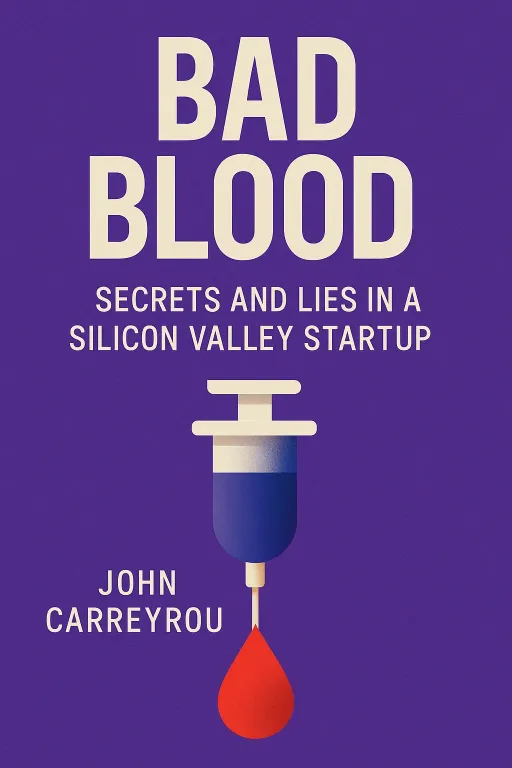
Nova: Much more sophisticated, Atlas. Today, we're diving into the thrilling, often terrifying, world of biomedical engineering and innovation. We’re doing this through two incredibly illuminating books: "Bad Blood" by John Carreyrou, and "The Code Breaker" by Walter Isaacson.
Atlas: Walter Isaacson! The biographer of giants like Steve Jobs and Einstein. That immediately tells me we're not just getting science, we're getting the human story behind it.
Nova: Exactly! Isaacson has this incredible knack for connecting scientific genius with its broader human and societal impact. His choice to chronicle Jennifer Doudna and CRISPR isn't just about the discovery; it's about what that discovery means for all of us. And on the flip side, Carreyrou’s "Bad Blood" gives us a stark reminder of what happens when that 'human story' veers off course.
Atlas: So basically, we're exploring the highest highs and the lowest lows of trying to engineer life itself. That’s a journey for any curious investigator, especially those of us who care deeply about health and ethics.
Nova: Precisely. We're going to start by dissecting a cautionary tale of ambition gone horribly wrong in the health tech world, and then we'll pivot to the awe-inspiring, yet ethically complex realm of gene editing. It’s a full spectrum look at the biological frontier.
The Perils of Unchecked Biomedical Innovation: Lessons from Theranos
SECTION
Nova: Let's kick off with "Bad Blood." This book is John Carreyrou's gripping investigative account of Theranos, and it reads more like a thriller than a non-fiction book about a blood-testing startup.
Atlas: It sounds rough. I mean, how can a company promising to revolutionize healthcare go so wrong?
Nova: Well, it began with a truly audacious vision from Elizabeth Holmes: a device that could run hundreds of blood tests from just a single drop of blood, all done quickly, cheaply, and conveniently. The promise was immense – imagine health monitoring accessible to everyone, no more painful venipunctures.
Atlas: That’s a genuinely compelling vision. It taps into a real need, especially for people who might be nervous about needles or live far from traditional labs.
Nova: Absolutely. And that vision, combined with Holmes's charisma, attracted billions in investment and an incredibly prestigious board. The problem? The technology didn't work. Not really.
Atlas: Hold on, so they were selling something that was essentially… smoke and mirrors? How did they get away with it for so long, especially in a field as critical as healthcare?
Nova: That's the core of the story. Carreyrou meticulously uncovers how Theranos operated under extreme secrecy, with a culture of fear and intimidation. They faked demos, they used commercial machines for tests they claimed their proprietary device, the Edison, was performing, and they actively suppressed any internal dissent. Scientists and employees who raised concerns were silenced or fired.
Atlas: That sounds like a terrifying environment. For anyone in a high-stakes tech environment, where innovation is pushed so hard, this story feels like a constant warning. The pressure to deliver must have been immense, but at what cost?
Nova: The cost was real patient lives. Inaccurate test results could lead to misdiagnoses, delayed treatment, or unnecessary interventions. Carreyrou’s reporting highlighted instances where patients received dangerously misleading information. It wasn't just financial fraud; it was a profound ethical breach with direct health consequences.
Atlas: Wow, that’s kind of heartbreaking. It makes you wonder about the ethical implications for patients and investors, and how critical thinking could have averted disaster. It really exposes systemic vulnerabilities, doesn't it?
Nova: It absolutely does. The book is a masterclass in how a lack of scientific rigor, combined with corporate hubris and a thirst for venture capital, can undermine public trust and put lives at risk. It's a stark reminder that in biomedical engineering, "move fast and break things" can have devastating consequences.
Atlas: So basically you're saying that the story of Theranos is not just about one bad actor, but about the critical need for robust ethical oversight and rigorous scientific validation in health tech. It’s a cautionary tale for anyone dreaming of making an impact in healthcare.
The Ethical Frontier of Gene Editing: The Promise and Responsibility of CRISPR
SECTION
Nova: From the darkness of Theranos, let's pivot to a technology that truly holds immense promise, but with its own profound ethical landscape. And that brings us to "The Code Breaker" and the incredible story of Jennifer Doudna and CRISPR gene editing.
Atlas: I've heard the name CRISPR tossed around, but I'm not entirely sure what it actually. Is it really as revolutionary as people say?
Nova: It's arguably one of the most significant scientific breakthroughs of our generation. Imagine, Atlas, having biological scissors that can precisely cut and edit DNA, the very code of life itself. That’s essentially what CRISPR allows us to do.
Atlas: So you’re saying it’s like a find-and-replace function for genes? We can literally rewrite the instructions for life?
Nova: Exactly! It originated from a bacterial immune system, a defense mechanism against viruses. Doudna and her collaborator Emmanuelle Charpentier figured out how to harness this natural system to target and modify specific genes in any organism. The potential is staggering: curing genetic diseases like cystic fibrosis, sickle cell anemia, or Huntington's disease. Even potentially developing new crops or fighting viruses.
Atlas: That’s incredible. The idea of curing inherited diseases… that’s truly revolutionary. But immediately, my "ethical explorer" alarm bells are going off. If we can rewrite the code for life, where do we draw the line? What are the real-world implications beyond the lab? This feels like playing God, doesn't it?
Nova: That’s precisely the ethical frontier Isaacson explores. While the therapeutic potential is immense, the ability to edit the human germline – meaning changes passed down to future generations – opens up a Pandora's Box of questions. The "designer baby" debate is very real. Should we enhance human traits beyond merely correcting diseases? What about unforeseen consequences to the human gene pool or even to ecosystems if we start editing species in the wild?
Atlas: That’s a huge weight of responsibility. For someone interested in public health policy or biomedical engineering, this is the ultimate challenge. How do we ensure this power is used for good, especially when the potential for misuse or unintended consequences is so high?
Nova: Isaacson really delves into the scientific community's struggle with these questions. There's a strong call for caution and global collaboration, for developing robust ethical frameworks before the technology outpaces our ability to govern it. It's about balancing scientific ambition with profound moral responsibility.
Atlas: It makes me wonder, given the Theranos story, how do we build trust and ensure transparency when dealing with something as foundational as our genetic code? It’s not just about the science; it's about the societal contract.
Synthesis & Takeaways
SECTION
Nova: So, when we look at "Bad Blood" and "The Code Breaker" side-by-side, we see two sides of the same coin: human ingenuity at the biological frontier. One story is a cautionary tale of what happens when ambition overrides ethics and scientific integrity. The other is a testament to groundbreaking discovery, but one that demands profound ethical consideration and integrated thinking.
Atlas: It really underscores that trust is the ultimate currency, whether it's in a diagnostic test or a gene therapy. And for anyone looking to make an impact in health, like those in biomedical engineering or neuroscience, understanding these dual narratives is non-negotiable. It’s about being a curious investigator who also champions ethical exploration.
Nova: Exactly. Both books highlight that innovation isn't just about what be done, but what be done, and how it’s done. The ethical explorer within us needs to be just as sharp as the integrated thinker. We need to connect the science to the human impact, the policy to the lived experience.
Atlas: It’s a powerful reminder that our broad interests in systems, health, and well-being aren't distractions; they're our unique strength in navigating these complex futures.
Nova: As we engineer life, what guardrails must we collectively build to ensure our innovations truly serve humanity, rather than just our ambition or our bottom line? It’s a question that resonates far beyond the lab.
Atlas: And one that demands constant vigilance and thoughtful engagement from all of us.
Nova: This is Aibrary. Congratulations on your growth!