

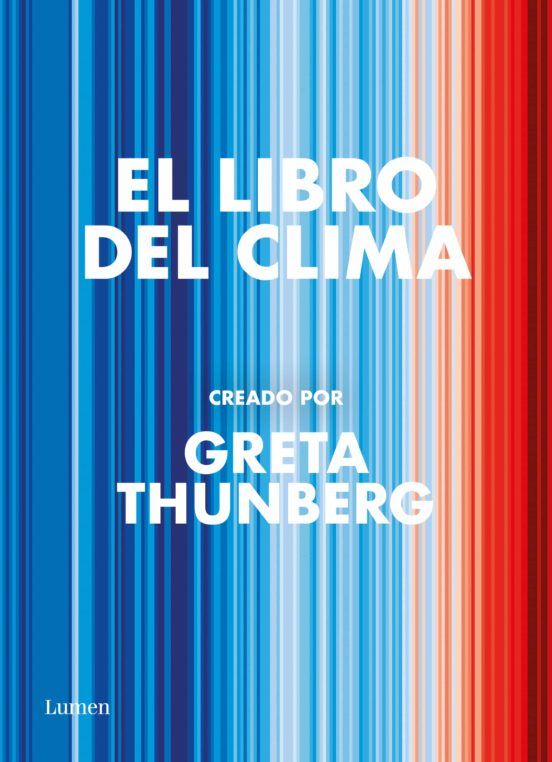
The Climate Book
The Facts and the Solutions
Introduction
Nova: Imagine this: Sweden tells the world it emits 50 million tons of greenhouse gases a year. The real number? 150 million tons. And Sweden is one of the countries actually trying. Welcome to Aibrary. I'm Nova.
Nova: : And I'm Kai. So wait — Sweden, the country with the progressive climate reputation, is underreporting its emissions by a factor of three? How is that even possible?
Nova: That is exactly the kind of uncomfortable question that Greta Thunberg's The Climate Book forces us to confront. Published in October 2022, this is not just another book about climate change. It's a 446-page collaborative manifesto — a chorus of over 100 voices, from Nobel-winning economists to Indigenous leaders, from atmospheric scientists to novelists like Margaret Atwood.
Nova: : That sounds massive. But after everything Thunberg has already said in her speeches, at Davos, at the UN — why a book? Why now?
Nova: Because, as Thunberg herself writes, we have been greenwashed out of our senses. The book is her answer to a world where governments make promises they don't keep, where emissions accounting is riddled with loopholes older than the internet, and where media outlets have spent decades giving climate deniers equal airtime with climate scientists. She calls it a new type of activism, and honestly, it might be her most powerful one yet.
Nova: : A new type of activism — I'm intrigued. Walk me through what makes this book different from the thousand other climate books out there.
The Book's Architecture and Ambition
A Chorus of a Hundred Voices
Nova: Let's start with the sheer scale. The Climate Book contains 90 short essays, each just one to nine pages long, written by over 100 contributors. We're talking geophysicists, oceanographers, meteorologists, engineers, economists, historians, and activists. And then there's Thunberg herself, who wrote 18 short essays that thread through the entire collection — introducing each section, highlighting takeaways, and calling readers to action.
Nova: : So it's an anthology, but with Thunberg as the unifying voice. Who are some of the big names?
Nova: The roster is stunning. You have Johan Rockström on tipping points and feedback loops. Katharine Hayhoe on how our planet is changing. Economist Thomas Piketty and Lucas Chancel making the case for redistribution and reparations. Michael Mann, the scientist who gave us the hockey stick graph. Naomi Klein. Bill McKibben. Robin Wall Kimmerer, the Indigenous botanist and author of Braiding Sweetgrass. Even Tedros Adhanom Ghebreyesus, the head of the World Health Organization, contributed on health impacts.
Nova: : That is a lineup. But does it hold together, or does it feel like a scattered collection?
Nova: It's structured into five major parts that take you on a journey. Part one: How Climate Works — the fundamental science. Part two: How Our Planet Is Changing — what's already happening. Part three: How It Affects Us — the human toll. Part four: What We've Done About It — which, spoiler alert, is devastatingly little. And part five: What We Must Do Now. Each part has subsections that group related essays together. It reads less like a textbook and more like a guided tour through the climate emergency, with Thunberg as your fiercely honest guide.
Nova: : I love that framing — a guided tour. But you mentioned earlier that Sweden's emissions are triple what they report. That seems like a good place to go next.
Nova: It really is. Because that one statistic opens up a whole hidden world of accounting deception that the book exposes in devastating detail.
How Countries Hide Their Real Emissions
The Great Accounting Deception
Nova: So here's the Swedish story in full. Journalist Alexandra Urisman Otto investigated Sweden's climate policy and its much-celebrated net-zero target for 2045. She discovered the official number — 50 million tons of CO2 per year — excluded two enormous categories: emissions from consumption of imported goods, and emissions from burning biomass.
Nova: : Break that down for me. Why would consumption emissions be excluded?
Nova: Because under UN accounting rules established 30 years ago, emissions are counted where goods are produced, not where they're consumed. So when Sweden buys products manufactured in China or Bangladesh, those emissions appear on China's or Bangladesh's ledger. John Barrett and Alice Garvey from the University of Leeds explain in their essay that if climate justice were front and center, the consumer country would take responsibility.
Nova: : And the biomass piece?
Nova: Even more troubling. Karl-Heinz Erb and Simone Gingrich, two social ecology professors from Vienna, explain that burning wood for energy actually produces more emissions per unit of energy than fossil fuels. But the UN accounting rules assume only unusable wood waste is burned. In reality, healthy forests — including American forests — are being clear-cut to produce wood pellets for power plants, and those emissions vanish from the books.
Nova: : So countries are essentially using accounting loopholes to look virtuous while emissions keep climbing.
Nova: Exactly. And Kevin Anderson, a professor of energy and climate change, delivers perhaps the book's most blunt assessment. He writes that wealthy nations must eliminate fossil fuels by around 2030 for a likely chance of staying below 1.5 degrees Celsius — extending only to 2035 or 2040 for 2 degrees. Then he drops this line: we are where we are precisely because for 30 years we have favored make-believe over real mitigation.
Nova: : Make-believe. That stings. And there's another loophole, isn't there? Something about planes and ships?
Nova: Yes. Alice Larkin from the University of Manchester points out that international aviation and shipping are not typically included in any national emission targets, policies, or carbon budgets. These sectors are massive emitters, and they simply float outside the accounting framework entirely. Add everything up, and the book makes a compelling case that the official picture of global climate progress is, to put it mildly, a fantasy.
Nova: : So what you're telling me is that even the numbers we use to track the crisis are fundamentally broken. That's terrifying, but also weirdly clarifying.
Climate Justice and the Human Toll
We Are Not All in the Same Boat
Nova: That clarity is exactly what the book aims for, especially when it turns to who suffers most. One subsection is called We Are Not All in the Same Boat, and it brings the point home with devastating precision. Saleemul Huq, director of an international climate change center in Bangladesh, writes that the communities most devastated by climate change are overwhelmingly poor people of color.
Nova: : Bangladesh comes up a lot in climate discussions. What does Huq say about it?
Nova: He describes something remarkable. He says Bangladeshi citizens shouldn't be seen as passive victims. Communities there work together to prepare for disasters in ways rarely seen in the global north. He gives this specific example: an elderly widow living alone will have two children from the local high school assigned to go pick her up in case of a hurricane or other emergency. That's community resilience born of necessity.
Nova: : Meanwhile in the wealthiest nations, we're arguing about paper straws.
Nova: That contrast is exactly what Thunberg wants us to feel. The book includes voices from every corner of the global south — Hindou Oumarou Ibrahim on the Sahel, Sônia Guajajara on fighting for the Amazon forest, Elin Anna Labba on winter in Sápmi. The cumulative message is that climate change is not a future problem for distant people. It is a present crisis that is already reshaping lives, and it is profoundly shaped by the legacy of colonialism and ongoing economic exploitation.
Nova: : And the book connects this to health impacts too, right?
Nova: Deeply. Tedros Adhanom Ghebreyesus from the WHO contributed. Samuel Myers from Harvard wrote about climate change's impact on nutrition. Multiple essays detail how air pollution, disease spread, antibiotic resistance, and extreme heat are already killing people — and will kill vastly more. Joëlle Gergis, a climate scientist, reports that the 2019 to 2020 Australian wildfires released more carbon in six months than the entire country emits in a year. That's the kind of feedback loop that makes the problem accelerate beyond our control.
Nova: : And speaking of feedback loops — the book covers tipping points, doesn't it?
Nova: Yes, and this is where the science becomes genuinely frightening. Johan Rockström's essay on tipping points and feedback loops explains that elements of Earth's life-sustaining systems have thresholds. Once crossed, there is no reversing the damage. Less ice coverage means more heat absorption, which means less ice coverage. The Amazon could flip from carbon sink to carbon emitter. Methane could pour out of thawing permafrost. And the book argues we are racing toward these tipping points with our eyes wide open.
From Diagnosis to Prescription
The Media, the Myths, and What Must Change
Nova: So after all this grim diagnosis, what does the book say we should actually do? Part four is brilliantly titled What We've Done About It, and the answer, as Thunberg makes clear, is almost nothing meaningful. But part five, What We Must Do Now, offers a roadmap.
Nova: : Before we get to hope, let me guess — the media doesn't come off well.
Nova: It does not. George Monbiot, in his essay, calls the media the engine of persuasion that allows our Earth-destroying system to persist. Thunberg herself writes that no entity other than the media has the opportunity to create the necessary transformation of our global society. The book argues that for decades, outlets gave climate deniers equal or greater airtime than scientists, ran ads encouraging overconsumption, and treated climate as a niche issue rather than the central story of our time.
Nova: : But there are exceptions, right?
Nova: Yes, and the book names them. The Guardian, Al Jazeera, El País, along with independent outlets like Mongabay and Democracy Now. The point is that media reform is not optional — it is foundational. Without a truthful information environment, no political movement can succeed.
Nova: : So what about the solutions? Does the book actually tell us what to do, or is it just a 446-page warning?
Nova: It absolutely offers solutions, but they're not the comfortable ones. Several essays swiftly discredit magic bullet technologies — carbon capture and storage, biofuels, geoengineering, and notably, recycling. Nina Schrank from Greenpeace writes that even the 9 percent of plastic that does get recycled ends up, after one or two cycles, dumped or burned. She calls recycling perhaps the greatest example of greenwashing on the planet today.
Nova: : That's a gut punch. So what does work?
Nova: Proven technologies like wind and solar, yes. But more importantly, the book argues for systemic behavioral change. Thunberg has given up flying entirely, and she writes that frequent flying is by far the most climate-destructive individual activity you can engage in. The book calls for plant-based diets, protecting forests and oceans and mangroves, and fundamentally rethinking our economic system. Economist Kate Raworth contributes on doughnut economics. Thomas Piketty and Lucas Chancel make the case for redistribution. The argument is that we cannot solve the climate crisis without also addressing inequality.
Nova: : But can we actually get there? I mean, politically, this seems impossible.
Nova: Here's where the book offers a surprising note of grounded hope. Political scientist Erica Chenoweth contributed an essay showing that a determined minority — just 25 percent of the population — can be enough to tip a society toward change. And here's the remarkable thing: about 33 percent of the US population already polls as alarmed about climate change. So the numbers are there. What's needed is focus, determination, and honest communication.
Nova: : So the determined minority already exists. It just needs to act like it.
Conclusion
Nova: And that might be the single most important message of The Climate Book. It is not a book of despair. It is a book of clarity. Thunberg closes with these words: You must take it from here and carry on connecting the dots yourself because, right there, between the lines, you will find the answers. And when the time comes for you to share them, simply tell it like it is.
Nova: : Tell it like it is. That's a phrase that echoes through the entire conversation we've had. The accounting tricks. The biomass loophole. The excluded aviation emissions. The myth of recycling. The media's complicity. All of it comes down to a world that has systematically chosen make-believe over reality.
Nova: Exactly. And The Climate Book is an attempt to shatter that make-believe with the combined force of the world's best scientific minds. Michael Oppenheimer, the atmospheric scientist from Princeton who contributed a chapter, said something revealing when asked why he agreed to participate. He said he turns down 90 percent of requests to write things, but this one he thought was worth doing because he believed it would have an impact.
Nova: : That says something, doesn't it? When scientists who have spent decades watching the world ignore their warnings still believe this book can break through.
Nova: It does. The Climate Book is not a comfortable read. At 446 pages, the Yale Climate Connections review called it the most ambitious, wide-ranging, and hard-hitting collection they have ever encountered. But its ambition is matched by its moral clarity. It argues that climate justice must be at the center of everything — that rich nations must not only cut emissions but make reparations, that the global south cannot be asked to sacrifice development that the north enjoyed for centuries, and that we still, against all odds, have time to change the world.
Nova: : But only if we act with urgency and honesty. Only if we stop pretending that tweaking the edges of the status quo will save us.
Nova: Thunberg puts it plainly: If we do not see anyone else behaving as if we are in a crisis, then very few will understand that we actually are in a crisis. The Climate Book is her invitation to stop waiting for someone else to go first.
Nova: : This is Aibrary. Congratulations on your growth!