The Unseen Hand: How Culture Shapes Political Systems
Golden Hook & Introduction
SECTION
Nova: What if the biggest blind spot in understanding politics isn't about laws or power, but about something far more invisible, yet utterly pervasive? Something that shapes our world, not from the top down, but from the inside out.
Atlas: Whoa, that's a bold claim right out of the gate. Wait, are we saying all those political science textbooks missed the memo on the fundamentals?
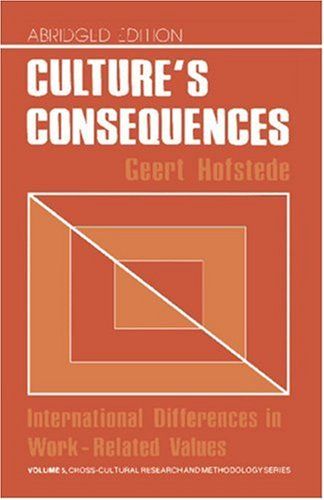
Nova: Well, not missed the memo entirely, but certainly underplayed a significant chapter. Today, we're diving into that very idea, exploring what we're calling 'The Unseen Hand: How Culture Shapes Political Systems.' Our guides for this journey are two foundational works: Geert Hofstede's "Culture's Consequences" and Samuel P. Huntington's "The Clash of Civilizations and the Remaking of World Order."
Atlas: So, for anyone trying to dissect global systems, this is essentially saying we've been looking at the engine without understanding the operating system? That's a pretty critical oversight.
Nova: Exactly! And what's fascinating about Hofstede, in particular, is his background. He wasn't just an academic theorizing in an ivory tower. He was a social psychologist working at IBM in the 1970s. That gave him unparalleled access to survey data from tens of thousands of employees across over 70 countries. He essentially had a real-world lab to quantify culture, to make it something measurable and empirically observed, not just a vague concept.
Atlas: Oh, I like that. That kind of empirical grounding is exactly what an analyst craves. It takes something that feels nebulous and gives it structure. So, where do we begin to unpack this unseen hand?
Deep Dive into Hofstede's Cultural Dimensions – The Internal Operating System
SECTION
Nova: We start with Hofstede's groundbreaking concept: cultural dimensions. He identified several, but let's zoom in on 'Power Distance.' It's essentially how a society handles inequality, the degree to which less powerful members of organizations and institutions accept and expect that power is distributed unequally.
Atlas: Okay, so you're saying it's about the comfort level with hierarchy? Like, how much people are okay with bosses being way up there, and everyone else being way down here?
Nova: Precisely. Imagine two countries. In Country A, which has a very high power distance, challenging authority is rare. Decisions flow top-down, and subordinates typically don't question their leaders, even if they disagree. Now, picture Country B, with low power distance. Here, there's an expectation that power is shared, leaders are accessible, and subordinates are encouraged to voice opinions, even challenge decisions.
Atlas: That makes sense. I can see how that would influence workplace dynamics. But how does something as abstract as 'power distance' actually influence, say, a country's judicial system, or its response to a public health crisis? I imagine for listeners who are strategists, they're thinking, 'How do I actually see this at play?'
Nova: Great question! Let's take that public health crisis. In a high power distance culture, if the government issues a strict mandate—say, a lockdown—there's a much higher likelihood of immediate, unquestioning compliance. The populace trusts or is conditioned to obey authority. The messaging from the top is often seen as absolute.
Atlas: So, less debate, more adherence, at least initially.
Nova: Exactly. Now, in a low power distance culture, that same mandate might be met with significant public debate, protests, and demands for transparency and justification. Citizens feel more entitled to question decisions, and leaders are expected to consult widely and explain their rationale. The of implementing policy becomes entirely different, even if the policy itself is identical. The judicial system might also see more challenges to authority, more public scrutiny of judges, and a greater emphasis on individual rights versus state power.
Atlas: That's actually really profound. It means you can have the exact same law on the books, but the cultural operating system completely dictates its real-world impact. It's not just about what the law says, but how a society is wired to react to it.
Nova: Exactly! It's like trying to run the same software program on two completely different operating systems. The results will vary wildly, not because of the software, but because of the underlying architecture.
Broadening the Lens to Global Dynamics with Huntington – The Clash of Civilizations
SECTION
Nova: And that brings us to another giant in this field, Samuel P. Huntington, who took this idea of cultural influence from internal governance to the global stage with "The Clash of Civilizations." He essentially said, 'Forget ideologies, forget economic systems; the next big conflicts will be about culture.'
Atlas: Whoa, that sounds pretty stark. For global citizens, that's almost counter-intuitive to the idea of a melting pot or increasing convergence. What was his core argument there?
Nova: He argued that after the Cold War, the primary source of conflict would no longer be ideological or economic, but rather cultural. He identified several major civilizations—Western, Sinic, Islamic, Hindu, Orthodox, Japanese, Latin American, and African—each with distinct values, beliefs, and traditions. He posited that interactions along the fault lines between these civilizations would be the flashpoints of future global conflict.
Atlas: So, he’s saying that these deep cultural currents are so powerful, they'll inevitably lead to friction, not just misunderstanding? It sounds like he's almost predicting the un-comparable nature of certain systems.
Nova: Not necessarily conflict, but heightened tension and misunderstanding. Think of it this way: if two nations from different civilizational blocs attempt to form a deep political or economic alliance, they might share strategic interests, but their fundamental worldview, their approach to human rights, democracy, or the role of the state, could be radically different. These differences, rooted in centuries of cultural development, can create friction that goes far beyond mere policy disagreements.
Atlas: Give me an example. How would this play out in a real-world scenario?
Nova: Consider diplomatic negotiations between nations from a Western civilization and an Eastern one. A Western diplomat might prioritize direct communication, legalistic frameworks, and individual freedoms, viewing these as universal. An Eastern diplomat, coming from a culture with higher power distance and collectivism, might prioritize indirect communication, long-term relationships, and group harmony, seeing the Western approach as blunt or disrespectful. This isn't about one being right or wrong; it's about fundamentally different cultural lenses through which they perceive the world and conduct diplomacy.
Atlas: That's a crucial distinction. It means understanding these 'unseen hands' isn't just academic; it's a survival guide for global stability. It’s like knowing the sub-surface currents before you navigate a ship. If you only look at the surface, you're going to hit an iceberg.
Nova: Exactly. Huntington was saying that these cultural identities are so deeply ingrained that they become the primary source of cohesion within groups and differentiation between them. It scales up Hofstede's micro-level cultural dimensions to a macro-level global dynamic, showing how cultural differences don't just shape individual behavior, but entire geopolitical landscapes.
Synthesis & Takeaways
SECTION
Nova: So, whether we're talking about how a local government makes decisions or why international relations are so complex, culture isn't just a backdrop; it's the fundamental operating system. Hofstede gives us the internal wiring diagram, while Huntington shows us how those different wirings interact on the global grid.
Atlas: So for anyone who seeks understanding, who dissects systems, this isn't just about reading a book; it's about radically re-calibrating our entire lens for political analysis. It’s about recognizing that the 'why' behind political choices often lies far deeper than policy documents or economic incentives. It lies in the collective consciousness of a people.
Nova: And ignoring that leaves a massive blind spot. You end up with policies that fail because they don't resonate culturally, or with international strategies that backfire because they misinterpret fundamental values. It's the difference between trying to fix a machine by only looking at the paint job versus understanding its core mechanics.
Atlas: It makes me wonder, how many 'rational' political failures were actually just cultural misfires? And for our listeners, the challenge is to look beyond the headlines and ask: what cultural currents are truly driving this? What unseen forces are shaping this narrative?
Nova: Absolutely. Take a moment this week to observe a political decision, a societal trend, or an international headline, and ask yourself: what cultural dimensions might be at play here? Is it power distance influencing a leader's decision? Is it individualism versus collectivism shaping a public response?
Atlas: It's about seeing the world with new eyes, understanding that the most profound influences are often those we can't immediately see.
Nova: This is Aibrary. Congratulations on your growth!