

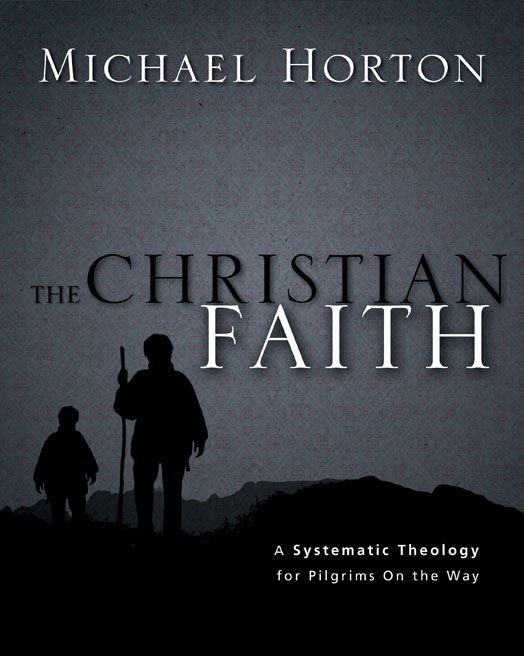
The Christian Faith
A Systematic Theology for Pilgrims on the Way
Introduction
Nova: Picture a teenager so frustrated by the Bible that he literally throws it across the room. That teenager grew up to write what one scholar called 'the most significant single-volume systematic theology to be written in decades.' Welcome to the story behind Michael Horton's The Christian Faith. Orion: Wait, throw his Bible across the room? That's not the origin story I expected for a theology professor. Nova: I know, right? But it's true. Horton was raised in an Arminian Baptist church, and in high school he hit Romans chapter nine, with all its talk of election and God's sovereignty, and it wrecked him. He couldn't reconcile what he was reading with what he'd been taught. That moment of wrestling set him on a lifelong path to understand the big story of Scripture. Orion: So this is personal for him. It's not just an academic exercise. Nova: Exactly, and that's what makes this book so interesting. The Christian Faith is his magnum opus, a nearly thousand-page systematic theology published in 2011. But here's the twist: it's written for what he calls 'pilgrims on the way,' not just scholars locked in a library. Orion: A thousand pages for pilgrims? That sounds like a contradiction. I want to understand how he pulls that off. Nova: Then let's walk through it together. We'll look at who Horton is, the big idea that organizes the whole book, and why he thinks good theology might be the most practical thing a Christian can learn.
Key Insight 1
The Man Behind the Magnum Opus
Nova: So let's start with the author himself. Michael Scott Horton is the J. Gresham Machen Professor of Systematic Theology and Apologetics at Westminster Seminary California. He earned his doctorate through Wycliffe Hall at Oxford and did a research fellowship at Yale Divinity School. Orion: And he's not just a professor tucked away somewhere, right? I keep hearing his name connected to a radio show. Nova: You're thinking of the White Horse Inn. Horton founded Sola Media, which produces that radio broadcast and podcast, plus Modern Reformation magazine and a ministry called Core Christianity. He's written or edited more than forty books. Back in 1996, Christianity Today put him on their list of fifty evangelical leaders under forty. Orion: Forty books. That's a lot. But why should someone read this one specifically instead of, say, Berkhof or Calvin? Nova: Here's the context. Before writing The Christian Faith, Horton published a four-volume dogmatic series, one volume each on Christology, salvation, the church, and eschatology. Those were dense and academic. This book condenses all that research into one accessible volume for pastors, students, and serious laypeople. Orion: So it's the distilled version. Nova: Yes, and the reception was huge. Ligonier Ministries called it the most important systematic theology since Louis Berkhof's in 1932. Zondervan's marketing even invoked Karl Barth's Church Dogmatics. Todd Billings of Western Theological Seminary said it was 'the most significant single-volume systematic theology to be written in decades.' Orion: Those are enormous claims. I'm skeptical, to be honest. A lot of theology books get hyped. What actually makes this one different? Nova: Fair question, and I think the answer is in how he structures the whole thing. Horton doesn't start with abstract philosophy or a list of doctrines in alphabetical order. He starts with a story, a drama, and he builds everything else out of that. Let's dig into that.
Key Insight 2
Four Ds: Drama, Doctrine, Doxology, Discipleship
Nova: Horton frames all of Christian truth around four words that start with D: drama, doctrine, doxology, and discipleship. Orion: Four Ds. Sounds catchy, but what does it actually mean? Nova: The drama is the story of Scripture itself, creation, fall, redemption, and consummation. God actually does things in history. Then doctrine flows out of that drama. Doctrine is the stable nouns, as Horton puts it, that help us understand what happened. Then that doctrine fills us with gratitude and praise, which is doxology. And finally, that worship produces a life of love and good works, which is discipleship. Orion: Okay, so it's a chain reaction: story leads to belief, belief leads to worship, worship leads to action. Nova: Exactly. And here's the key quote: Horton writes that 'the drama determines the big questions as well as the answers.' The doctrines are convictions that arise in light of the drama. He's pushing back against a classic mistake. Orion: What mistake is that? Nova: Treating theology as a set of timeless, abstract ideas that float above the messy story of the Bible. Horton says the Greek philosophers treated the myths of the gods as 'just a story,' a disposable husk hiding a kernel of timeless truth. But the prophets and apostles saw it very differently. Orion: How so? Nova: Horton writes that they didn't believe God's mighty acts in history were dispensable myths pointing to universal truths. For them, the big story didn't point to something beyond it; it was itself the point. Orion: Interesting. So he's saying the events themselves, the Exodus, the cross, the resurrection, those aren't illustrations of a bigger idea. They ARE the thing. Nova: Right. In fact, Horton deliberately avoids the word 'metanarrative' because postmodern thinkers had hijacked it to mean 'just another story.' He prefers 'meganarrative,' a mega-story that is true and carries its own weight. Orion: That reframes everything. It means if you want to know what a doctrine means, you have to trace it back to the story. Nova: That's exactly the method. Horton also describes the task of systematic theology in three parts: grammar, teaching the vocabulary of Christianity; logic, checking its inner consistency; and rhetoric, defending the faith in a compelling and gentle way. And that third part is why the subtitle says this is for 'pilgrims on the way.' Doctrine is for the journey, not for winning arguments.
Key Insight 3
Covenant: The Thread Holding It All Together
Nova: If the drama is the engine, then covenant is the thread that stitches every doctrine together. Horton doesn't treat covenant as just one topic among many, like a chapter you'd skip. It's the governing model woven through the entire book. Orion: What do you mean by covenant here? Just a contract between God and people? Nova: More than a contract. It's a relationship with binding promises. Horton studied under the great biblical theologian Meredith Kline, and that influence is everywhere. Horton argues there can be no covenant without a canon, no canon without a covenant. In fact, he says the covenant is the canon and vice versa. Orion: That's a strong statement. Spell it out for me. Nova: Think of it this way. Scripture is the written rule of the relationship, and each new covenant God makes, with Noah, Abraham, Moses, David, reveals more of that rule. So even the doctrine of the Bible itself is covenantally shaped. Horton actually titles his chapter on Scripture 'Covenant Canon.' Orion: And how does that ripple into other doctrines? Nova: Everywhere. The Trinity's plan of salvation is the covenant of redemption. Common grace is a promise of the Noahic covenant. Sin becomes the violation of the covenant of creation. Justification and adoption highlight both the legal and the relational sides of covenant. Even his argument for a particular form of church government is tied to covenant. Orion: So one idea, covenant, lights up everything from creation to the end times. Nova: That's the design. The Themelios review noted this is arguably the only modern systematic theology that makes covenant the most emphasized structural framework. And there's another distinction that runs through the whole book too. Orion: Which is? Nova: Law and gospel. Horton uses it everywhere, from prolegomena to eschatology. It keeps him from collapsing God's commands into God's promises. The law shows us our need; the gospel announces what God has done. If you read the book, you'll bump into that rhythm constantly. Orion: So covenant and the law-gospel distinction are like two lenses he keeps switching between. Nova: Yes, and they create an uncommon coherence. The review praised how interconnected the whole thousand pages feel. It reads like one book, not a stack of separate doctrinal essays.
Key Insight 4
Six Parts and a Trinitarian Method
Nova: Let's talk about how the book is actually laid out, because it reveals his method. Orion: Six parts, right? I remember seeing that somewhere. Nova: Yes, and every part points to God. Part one is 'Knowing God,' which covers how theology works and the doctrine of Scripture. Part two is 'God Who Lives,' covering God's being. Part three is 'God Who Creates,' covering his works and human nature. Part four is 'God Who Rescues,' which is Christology. Orion: And five and six? Nova: Part five is 'God Who Reigns in Grace,' which covers salvation and the church. Part six is 'God Who Reigns in Glory,' which is eschatology. Notice the shape, it mirrors creation, fall, redemption, and consummation. It's God-centered from start to finish. Orion: So even the table of contents tells the story. Nova: Exactly. And Horton's method is what he calls 'top-down.' He starts not with human speculation rising up to God, but with God descending to us in revelation. Orion: What does top-down look like in practice? Nova: He grounds it in the incarnation. 'The Word became flesh,' that's where we begin. And when he talks about how the Bible is inspired, he insists on a Trinitarian view. Orion: Trinitarian inspiration. That sounds complicated. Nova: It's actually a helpful correction. Horton warns that if you only emphasize the Father speaking, you can fall into a mechanical, dictation-style view. If you only emphasize the Son as the content, you risk a 'canon within the canon,' where only the parts that preach Christ count as Scripture. If you only emphasize the Spirit, you can separate the Spirit from the written Word and drift into what he calls 'enthusiasm.' Orion: So he's balancing all three persons working together. Nova: Right, the Father speaks in the Son by the Spirit. That Trinitarian frame keeps inspiration both personal and textually grounded. And he also engages a wide range of voices, both historical and modern. Orion: Like who? Nova: He interacts critically with Avery Dulles on revelation, George Lindbeck on doctrine, Karl Barth on the order of decrees, and Jürgen Moltmann on eschatology. He also engages the Catholic and Orthodox traditions, not just Protestants, which makes it an ecumenical conversation partner rather than a closed system. Orion: That sounds refreshing, honestly. A lot of theology books only talk to people who already agree. Nova: That's a big reason critics praised it. Horton is trying to be historically rooted, biblically driven, and in conversation with the wider Christian world all at once.
Key Insight 5
Soul Doctors and the Practical Stakes
Nova: So why does any of this matter for a normal person on a Tuesday? Horton's answer is blunt. Orion: I've been waiting for this. Give me the practical payoff. Nova: He calls pastors 'soul doctors.' He points out that medical doctors spend years in training and keep learning their whole career, and we'd never want a doctor with good bedside manner but no medical expertise. He applies the same logic to the church. Orion: That's a great analogy, actually. Nova: And he backs it with a stat from the Pew Research Center. At the time, evangelical Christians trailed atheists and Mormons in understanding basic Bible knowledge and Christian doctrine. He saw a false choice being offered between doctrine and life, creeds and deeds, knowing and doing. Orion: So his argument is that bad theology is actually dangerous. Nova: His exact words: 'bad theology can be deadly.' He insists you can't have a personal relationship with someone if you don't know what that person is like. Knowing God and studying God go hand in hand. Orion: That reframes theology as an act of love, not an intellectual hobby. Nova: And you see that in the way he talks about the church. He pushes back on the idea that the church is first of all a mission force that goes out. He says if the church is not first the place where Christians are made, gathering to receive grace through preaching and the sacraments, then it can't be a community of witnesses and servants. Orion: Receive before you give. That's a real tension with a lot of contemporary church talk. Nova: It is. And he has this beautiful line about preaching, that God's Word coming through faltering human lips is 'the most powerful thing on earth.' The book is full of those doxological moments, which is fitting, given his framework. Orion: Now, be honest with me. No book is perfect. What are the criticisms? Nova: Good instinct. One reviewer called it a 'tweener,' sitting between a truly academic work and a popular one, so it can feel too dense for beginners but not deep enough for specialists. Others note it's thin on the person of the Holy Spirit, something Horton himself later addressed in a separate book called Rediscovering the Holy Spirit. Orion: Interesting that he went back and filled that gap. Nova: There's also a fair critique that he assumes covenant theology rather than fully defending it, and a few areas get only a paragraph or two, like some eschatological details. But the overwhelming consensus is that it's a landmark work, readable, devotional, and narratively structured. Orion: So even the critiques confirm the book has a distinct point of view. It's not pretending to be neutral.
Conclusion
Nova: So let's pull it all together. Michael Horton's The Christian Faith is a thousand-page systematic theology, but it's organized around a simple insight: Christianity is first a story God is telling in history, and doctrine only makes sense inside that story. Orion: And the path he traces is unforgettable: the drama of creation, fall, redemption, and consummation leads to doctrine, which leads to doxology, praise, which leads to discipleship. Four Ds, one journey. Nova: He weaves covenant through every doctrine, keeps the law-gospel distinction front and center, and builds a Trinitarian, top-down method that starts with God coming down to us. Orion: And the practical stakes couldn't be higher. He thinks pastors are soul doctors, and that evangelicals knowing less Bible than atheists and Mormons was a crisis worth a thousand pages of careful, loving theology. Nova: The book has its critiques, the reading level sits in a middle zone, and it assumes a Reformed covenant framework. But the praise from voices like R. C. Sproul, John Webster, and Kevin Vanhoozer tells you it landed as a landmark. Orion: My favorite line from the whole research might be Vanhoozer's. He just said, 'take up this book, read, and walk.' Nova: And that's the invitation. Theology isn't a spectator sport, and it's not a wall you build around yourself. It's food for the road. Whether you're a professor, a pastor, or an armchair theologian, Horton wants you to know the story well enough to live it. Orion: So maybe next time you pick up the Bible, ask not just what the verse means in isolation, but where it sits in the great drama of what God has done, and what it should make you praise. Nova: That's the heartbeat of this book. Know the drama, grow in doctrine, overflow in praise, and walk in love. This is Aibrary. Congratulations on your growth!