

Stop Overthinking, Start Speaking: The Guide to Conversational Confidence
Golden Hook & Introduction
SECTION
Nova: You know, it's funny, Atlas. We often talk about confidence as this elusive trait, something you either have or you don't. Like it's a genetic lottery you either win or lose.
Atlas: Right? Like some people just walk into a room and naturally command attention, while others, well, they feel like they're wearing an invisibility cloak.
Nova: Exactly! But what if I told you that the most charismatic, seemingly effortlessly confident people you know aren't inherently special? What if they've simply mastered a set of learnable skills, skills that anyone, including our listeners, can acquire?
Atlas: Oh man, that's a bold claim. So you're saying that whole "born leader" thing is a myth? Because I imagine a lot of our listeners, especially those who struggle with speaking up, might feel a bit defeated by that idea.
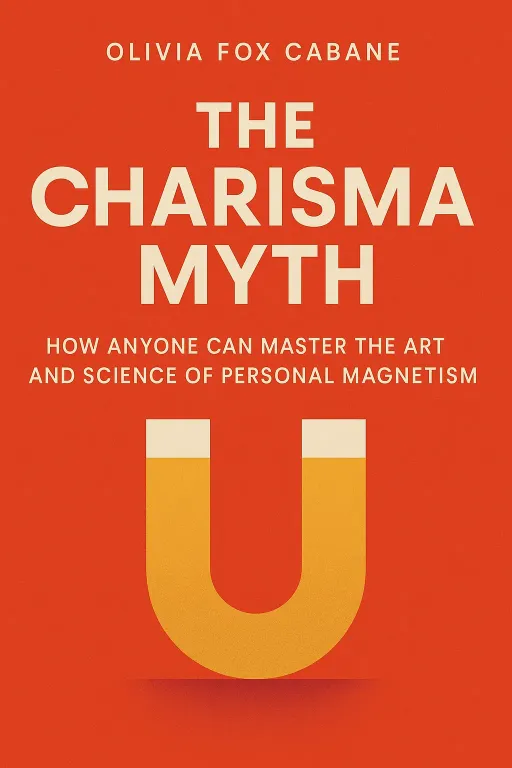
Nova: Absolutely a myth, or at least a highly exaggerated one! Today, we're pulling insights from two incredible books that shatter that illusion and give us the tools to build that confidence. First up, we have Olivia Fox Cabane's "The Charisma Myth." Cabane, a former Stanford lecturer, spent years demystifying charisma, proving it's a science, not some magical, innate quality.
Atlas: A Stanford lecturer dissecting charisma? That's fascinating. I always thought it was just... a "vibe."
Nova: Well, she literally wrote the playbook for understanding that "vibe." And then, we're pairing that with "Crucial Conversations: Tools for Talking When Stakes Are High" by Kerry Patterson, Joseph Grenny, Ron McMillan, and Al Switzler. This team of social scientists and business consultants gave us the frameworks to navigate those tough, high-pressure discussions.
Atlas: Okay, so we're talking about going from feeling tongue-tied and maybe a bit invisible, to not just owning the room, but also mastering those difficult conversations when the stakes are sky-high? For someone trying to build bridges and make their voice heard, this sounds like gold.
Nova: Precisely. It's about transforming that internal hesitation into externally confident, clear, and influential communication. And it all starts by understanding that charisma isn't a mystical quality.
Charisma as a Learnable Skill: The Art of Presence, Power, and Warmth
SECTION
Nova: Cabane's big revelation is that charisma boils down to three core components: Presence, Power, and Warmth. And you can practice them. Let's start with Presence.
Atlas: Okay, Presence. Like, just being in the room? Doesn’t everyone have that?
Nova: Not quite! Think of it this way: how many times have you been in a conversation where the other person is there, but their eyes are darting around, or their phone is buzzing, or you can just tell their mind is a million miles away? That's the opposite of presence. True presence is about being fully, unequivocally in the moment with the person you're speaking to.
Atlas: Oh, I've been there. Both as the person whose mind is wandering, and the person talking to the wandering mind. It feels... dismissive.
Nova: It does! Cabane shares a compelling example of a CEO, let's call her Eleanor, who was renowned for her incredible charisma. People would walk out of a ten-minute meeting with Eleanor feeling like they were the most important person in the company, or even on the planet. Her secret? When you were with Eleanor, her phone was off, her laptop closed, her gaze unwavering. She listened with every fiber of her being, not just waiting for her turn to speak, but truly absorbing. She'd ask follow-up questions that showed she’d processed every word.
Atlas: So, it's not just about looking at someone, it's about them. It’s about making them feel genuinely heard. That’s actually really inspiring. I can see how that builds immense rapport and trust.
Nova: Exactly. That focused, dedicated attention charisma. It's a skill you build by intentionally practicing active listening, by putting away distractions, and by truly engaging with the person in front of you. It makes people feel valued, and that connection is magnetic.
Atlas: So, if Presence is about being fully engaged, what about Power? Because that sounds like something you either have or you don't, based on your job title or position.
Nova: That's a common misconception. Cabane clarifies that projecting power isn't about being aggressive or having the biggest title. It’s about conveying competence and influence through your demeanor, your voice, your body language. Think of a junior employee, Mark, who consistently commands respect in meetings. He's not the loudest, nor does he interrupt. Instead, he speaks clearly, his posture is open and confident, and his voice is steady. He makes eye contact, and when he presents an idea, he does so with conviction, backing it up with calm authority.
Atlas: So you're saying even someone who might feel totally insecure inside can project power? How do they do that without it feeling fake?
Nova: It's about shifting your internal state. Cabane suggests simple practices like adopting a "power pose" before a difficult conversation, or consciously slowing down your speech. These physical shifts actually influence your internal chemistry, reducing cortisol and increasing testosterone, making you more powerful and, in turn, it more authentically. It’s not about faking it until you make it, it's about using your body to change your mind.
Atlas: That's a great way to put it. I imagine a lot of our listeners who feel their ideas get overlooked could totally benefit from that. Okay, so we have Presence for connection, Power for influence. What's the third leg of this charismatic stool?
Nova: Warmth. This is about conveying goodwill, empathy, and genuine care. It’s often misunderstood as just "being nice," but it’s much deeper. It’s about making people feel safe and liked. Imagine a challenging negotiation. One party, despite firm positions, genuinely acknowledges the other's concerns, uses empathetic language, and searches for common ground, not just for their own gain, but for a mutually acceptable solution. This disarms tension.
Atlas: So, how do you balance power with warmth without seeming weak or, conversely, too aggressive? That seems like a tightrope walk.
Nova: It is, and that's the art. The most charismatic individuals master this balance. Power without warmth can make you seem arrogant or cold. Warmth without power can make you seem ineffective. But when combined, you project both strength and approachability. Think of a mentor who is incredibly competent and respected, yet also deeply cares about your growth. That combination is irresistible. It’s about showing you’re capable, you’re on their side.
Navigating High-Stakes Conversations: Clarity, Respect, and Understanding
SECTION
Nova: Now that we've got our internal game strong, building that foundation of presence, power, and warmth, what happens when the conversation itself is a minefield? When emotions are running high, and the stakes are significant? This is where "Crucial Conversations" steps in.
Atlas: Oh, I’ve been there. Those conversations where you know you need to say something, but you're dreading it. Or you say it, and it just blows up. So, how do we navigate those without just avoiding them altogether?
Nova: The authors of "Crucial Conversations" provide a brilliant framework, starting with "Start with Heart." This principle asks you to clarify what you want out of the conversation. Not just for yourself, but for the other person, and for the relationship as a whole.
Atlas: Okay, "Start with Heart" sounds great in theory, but when you're fuming, or you're nervous about delivering bad news, how do you actually that? It feels almost impossible to get to that calm, centered place.
Nova: It requires conscious effort. Imagine a manager, Sarah, who needs to give difficult performance feedback to an employee, Tom. Her initial impulse might be frustration, wanting to just tell him what he's doing wrong. But if she "Starts with Heart," she pauses and asks herself: "What do I want? I want Tom to improve, I want our team to succeed, and I want to maintain a respectful working relationship." This shift in focus changes everything. Instead of an accusatory tone, she approaches Tom with a genuine desire to help him grow, making the conversation about solutions, not just problems.
Atlas: So, it's about reframing your own intention before you even open your mouth. That makes so much sense. It shifts from a confrontational mindset to a collaborative one.
Nova: Exactly. And once you've started with heart, the next crucial step is to "Make it Safe." This means creating psychological safety for open dialogue, especially when opinions differ or emotions are high. People shut down when they feel threatened.
Atlas: But isn't "making it safe" just sugar-coating the truth sometimes? Like, avoiding the real issue so no one gets upset?
Nova: Not at all. It’s about ensuring that people feel respected and believe you care about their well-being, even when discussing tough topics. The authors share a case of a highly contentious team meeting. People were holding back, fearing reprisal. The team leader, sensing this, paused and explicitly stated, "Look, we're all here because we care about this project. My goal isn't to be right, but to find the best solution, and for that, I need everyone's honest input. If you have concerns, I promise to listen with an open mind, even if I disagree." This act of explicitly stating common purpose and mutual respect immediately lowered defenses and opened the floodgates for valuable, honest feedback.
Atlas: Wow, that's such a practical way to reset the environment. It's like saying, "We're on the same team, even if we see things differently right now."
Nova: Precisely. And the third crucial piece is "Master My Stories." This is about recognizing that we often tell ourselves stories about why people do what they do, and these stories, usually negative, drive our emotional reactions.
Atlas: So you're saying my initial interpretation is almost never the full picture? That sounds like a lot of self-reflection before I even open my mouth!
Nova: It is, but it's incredibly powerful. Imagine a colleague, Alex, misses a deadline. Your immediate "story" might be, "Alex is lazy and unreliable." This story makes you angry. "Crucial Conversations" teaches us to question that story. Could there be another explanation? Maybe Alex is overwhelmed, dealing with a personal crisis, or misunderstood the deadline. By considering other possibilities, you approach Alex with curiosity rather than accusation.
Atlas: That's a huge shift. It moves you from judgment to genuine inquiry. And I can see how that would totally change the outcome of the conversation. It creates space for understanding instead of immediate conflict.
Nova: It truly does. Combining these skills—the internal projection of charisma with the external frameworks for difficult dialogue—allows us to speak authentically and effectively. It’s the difference between being heard and being truly understood, between hesitation and influence.
Synthesis & Takeaways
SECTION
Nova: So, bringing it all together, we've talked about transforming that fear of speaking into confident, clear communication. It's not about being someone you're not. It's about recognizing that charisma is a skill built on presence, power, and warmth. And then, when the rubber meets the road in those crucial, high-stakes conversations, it's about starting with heart, making the environment safe, and mastering your own internal narratives.
Atlas: That makes so much sense. It’s not just about getting your ideas out there, but about ensuring they land, that they're heard with respect and understood with clarity. It’s about building those bridges you talked about, not just talking at people.
Nova: Exactly. And the beautiful thing is, these are all skills you can practice. It's not a switch you flip; it's a muscle you build. So, for our listeners, here’s a tiny step you can take tomorrow: intentionally start a conversation with someone new. Focus on active listening, really being present. Ask open-ended questions. Just for a few minutes.
Atlas: That's a fantastic, low-pressure way to start flexing those conversational muscles. And who knows, you might even discover a new connection.
Nova: Or simply feel that spark of confidence, knowing you actively engaged. It's about turning anxiety into influence, one conversation at a time.
Atlas: Absolutely. We hope this has given you some powerful tools to start speaking up and connecting more deeply.
Nova: This is Aibrary. Congratulations on your growth!









