

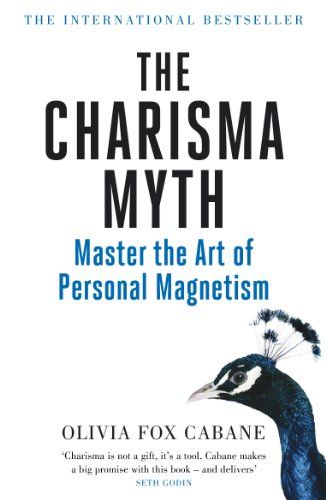
The charisma myth
Introduction
Nova: Imagine you are standing on a crowded New York City subway platform next to a woman in a plain coat, her hair pulled back, looking like just another commuter. No one notices her. Then, she turns to you and asks, Do you want to see her? Suddenly, she lets her hair down, shifts her posture, and changes the look in her eyes. Within seconds, the entire platform is staring. People are rushing over for autographs. That woman was Marilyn Monroe, and she just proved that charisma isn't something you are born with. It is a switch you can flip.
Nova: Exactly. That is the core premise of Olivia Fox Cabane's book, The Charisma Myth. She argues that charisma is not some magical, innate gift. It is actually a set of specific behaviors that anyone can learn and practice. It is more like a muscle than a birthright.
Nova: Precisely. They might have learned those techniques early in life, so it looks effortless, but it is still a skill. Today, we are going to break down Cabane's framework for how anyone can master that personal magnetism, from the three pillars of charisma to the mental hacks that stop self-doubt from killing your vibe.
Key Insight 1
The Three Pillars of Charisma
Nova: To understand how charisma works, Cabane breaks it down into three essential components: Presence, Power, and Warmth. Think of these as the three legs of a stool. If one is missing, the whole thing falls over.
Nova: You hit the nail on the head. Presence is simply being fully in the moment. It is the ability to give the person you are with your undivided attention. Cabane points out that our brains are wired to notice when someone's mind wanders. If your eyes glaze over for even a second because you are thinking about an email, the other person feels it. They feel unimportant.
Nova: She has a great trick for that. If you feel your mind drifting, focus on a physical sensation in your body. Feel your toes in your shoes or the sensation of your breath. It grounds you instantly and brings you back to the room. It is a micro-meditation that makes you look incredibly engaged.
Nova: They are the balancing forces. Power is your perceived ability to affect the world around you. It could be through wealth, physical strength, social status, or even just high intelligence. It is the sense that you can get things done.
Nova: Exactly. Warmth is the perception that you will use whatever power you have for the benefit of the other person. Here is the kicker: you need both. If you have Power without Warmth, you come across as arrogant, cold, or even threatening. But if you have Warmth without Power, you come across as a pushover or someone who is over-eager to please.
Key Insight 2
The Mental Game
Nova: One of the most surprising parts of the book is that charisma starts inside your head. Cabane says that your body language is a direct reflection of your internal state. You can't just fake a smile if you are feeling anxious or resentful because your micro-expressions will give you away.
Nova: Yes, because the human brain can process facial expressions in milliseconds. If there is a conflict between what you are saying and what your body is doing, people trust the body every time. This is why Cabane focuses so much on overcoming internal obstacles like anxiety and self-criticism.
Nova: She suggests a technique called cognitive reappraisal. It is basically reframing the situation. If you are stuck in traffic and getting angry, which kills your charisma, you tell yourself a story. Maybe the person who cut you off is rushing to the hospital. Your brain can't tell the difference between a real story and a made-up one, so your body relaxes.
Nova: Cabane is very big on de-stigmatizing those feelings. She says the first step is to realize that everyone, even the most successful CEOs, feels like a fraud sometimes. Once you realize it is just a standard human software glitch, it loses its power over you. She even suggests a visualization exercise where you imagine yourself as a giant, powerful figure, or you imagine a guardian angel lifting the burden off your shoulders.
Nova: That is exactly what it is. She actually calls it method acting for charisma. If you can get your internal state into a place of warmth and confidence, the charisma happens automatically. You don't have to think about where to put your hands or how to tilt your head because your body already knows what to do when it feels powerful and kind.
Key Insight 3
Choosing Your Charisma Style
Nova: Now, charisma isn't one-size-fits-all. Cabane identifies four distinct styles of charisma, and the key is knowing which one to use depending on your personality and the situation.
Nova: They are Focus, Visionary, Kindness, and Authority. Focus charisma is all about making the other person feel like they are the only person in the world. Think of Oprah Winfrey. It is based entirely on presence.
Nova: Visionary charisma is about inspiring people. It is what Steve Jobs was famous for. It requires a bold vision and a lot of confidence. You aren't necessarily making the other person feel special; you are making them feel inspired by your big idea.
Nova: Kindness charisma is all about warmth. Think of the Dalai Lama. It creates an incredible sense of emotional safety and acceptance. People feel completely seen and supported around this style. It is great for building deep rapport and diffusing conflict.
Nova: Exactly. Authority charisma is based on power and status. Think of a high-ranking military officer or a powerful judge. It is projected through body language that takes up space and a voice that is calm and controlled. You don't necessarily need to be liked, but you do need to be respected.
Nova: Absolutely. In fact, the most effective people adapt their style to the context. If you are trying to lead a startup through a crisis, you might need Visionary charisma. If you are comforting a friend, you need Kindness. The danger is using the wrong style at the wrong time. Being an Authority charismatic at a casual birthday party just makes you look like a jerk.
Key Insight 4
The First Impression and Body Language
Nova: We have to talk about the practical side of this, because even with the right mindset, there are physical things you can do to boost your charisma instantly. Especially during first impressions.
Nova: Not managing their physical comfort. It sounds silly, but if you are wearing shoes that pinch or you are standing in a drafty room, your brain registers that discomfort. That discomfort then shows up on your face as a micro-expression of tension. The other person sees that tension and thinks you are reacting negatively to them.
Nova: It is! Cabane says your first priority in any social situation should be your own physical comfort. If you are comfortable, you will naturally project more warmth and presence. Beyond that, she talks about the power of the pause. Charismatic people don't rush to speak. They wait a full second or two after someone finishes talking before they respond.
Nova: It feels long to you, but to the other person, it makes them feel like you are actually processing what they said. It projects massive amounts of power and presence. It shows you aren't anxious to fill the silence.
Nova: The trick is to have soft eye contact. Cabane suggests looking at the person's eyes and imagining their pupils are expanding. This naturally softens your facial muscles and makes your gaze feel warm rather than piercing. Also, when you smile, make sure it reaches your eyes. A real smile, a Duchenne smile, involves the muscles around the eyes. If those don't move, the brain flags the smile as fake.
Conclusion
Nova: We have covered a lot today. From the three pillars of Presence, Power, and Warmth to the four styles of charisma and the mental hacks to keep your internal state in check. The biggest takeaway from Olivia Fox Cabane is that charisma is a choice. It is a set of behaviors you can turn on by managing your mind and your body.
Nova: Exactly. It is about being intentional. Whether you are using the power of the pause or visualizing a successful meeting before you walk in, these are tools that anyone can use to increase their influence and make the people around them feel better.
Nova: Good call. Remember, charisma isn't about being the loudest person in the room; it is about how you make other people feel. When you master these skills, you don't just become more successful; you become someone people genuinely want to be around.
Nova: That is the goal. Use these tools, practice them, and watch how the world responds to you. This is Aibrary. Congratulations on your growth!