Beyond Borders: A Tech Analyst's Playbook for Global Success
Golden Hook & Introduction
SECTION
Nova: Imagine this: You’ve just landed in a new country. New apartment, new phone number, and tomorrow, you start a new job as a Business Analyst in a fast-paced tech company. It's exciting, but also... terrifying. You're not just the new guy; you're the foreign new guy. How do you not just survive, but actually build a launchpad for an amazing career?
Yingchi Xu: That hits very close to home, Nova. It’s a feeling of pure potential mixed with a healthy dose of 'what have I gotten myself into?'
Nova: I can only imagine! And that's exactly what we're exploring today with our guest, Yingchi Xu, who is living this experience right now. We're so glad you could join us.
Yingchi Xu: Thanks for having me. I'm hoping to get some clarity myself!
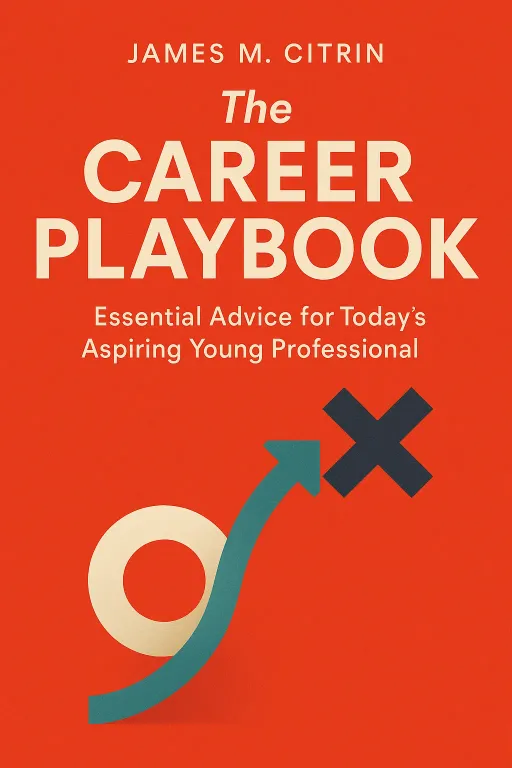
Nova: Well, we've got the perfect guide. We're using James Citrin's "The Career Playbook" as our map. Today we'll dive deep into this from three perspectives. First, we'll tackle the challenge of proving your worth when you're new to both the job and the country. Then, we'll discuss the art of building a powerful support network from scratch. And finally, we'll lay out a concrete game plan for your first 90 days to ensure you make an unforgettable first impression.
Deep Dive into Core Topic 1: Navigating the 'Permission Paradox' on a Global Stage
SECTION
Nova: So, Yingchi, let's start with that 'new kid on the block' feeling. The book talks about something called the 'Permission Paradox'—you can't get the job without experience, but you can't get experience without the job. Does that feel even more intense when you're in a new country, where maybe your university or past internships aren't as well-known?
Yingchi Xu: Absolutely. It’s like the paradox gets an upgrade. It’s not just about professional experience; it's about cultural experience. You feel this pressure to prove you understand the local market, the work style, everything, but you can only learn that by being there. It’s a classic catch-22.
Nova: Exactly. And it's easy to feel stuck. But the book offers a really creative way to think about this. It tells the story of Chad Dickerson, who eventually became the CEO of Etsy. com. Back in 1993, he was desperate to get into the tech industry but had no experience. So, what did he do? He took the lowest-paid clerical job at a newspaper in Raleigh, North Carolina.
Yingchi Xu: Just to get in the door?
Nova: Just to get in the door. And it just so happened that this newspaper was the very first daily paper in the U. S. to go online. Because he was physically, in the building, he was in the room where it happened. He was surrounded by the people building the first websites, and he learned by osmosis, by helping out, by just being present. He didn't have the experience, so he went to the where the experience was being created.
Yingchi Xu: That's a powerful reframe. In the tech world, we're so focused on credentials. We see job postings for entry-level roles that require '2 years of experience with X framework.' It feels impossible. But Chad's story suggests the answer isn't always to have the skill beforehand, but to get into the environment where the skill is being used.
Nova: Yes! How would you apply that to your situation, as a Business Analyst in a new country?
Yingchi Xu: Well, my core role is defined. But there might be a cross-functional project that's a bit messy, something outside my direct responsibilities. Maybe it involves a local partner or a different department. My instinct might be to say, 'That's not my job.' But Chad's story makes me think I should be raising my hand for that. It’s a low-risk way to gain new experience, demonstrate my value beyond my job title, and build those internal credentials right here, in this new context.
Nova: That's a brilliant application. It's not about the job you have, but the opportunities you create within it. It’s what the book calls a "knight's move" in chess—not a straight line, but a lateral one that repositions you for a much stronger attack.
Deep Dive into Core Topic 2: Building Your 'Social Capital' from Zero
SECTION
Nova: I love that idea of finding the right environment. And that environment is all about people, which brings us to our second, and maybe most crucial, point for you, Yingchi. The book argues that relationships are everything. That must feel daunting when you're starting from a network of zero.
Yingchi Xu: It's the biggest challenge, for sure. You can have the best technical skills in the world, but if you don't have allies, if you don't have people you can ask for help, you're isolated. As an ENFJ, I thrive on connection, so the idea of building that from scratch is... a lot.
Nova: It is! But the book offers a secret weapon, and it's completely counterintuitive. It comes from, of all people, Benjamin Franklin.
Yingchi Xu: The guy on the hundred-dollar bill?
Nova: The very same. So, Franklin was in the Pennsylvania legislature and had a political rival who just did not like him. Franklin needed his support. Now, what would most of us do? We'd probably try to do a favor for the guy, right? Buy him a coffee, compliment his work.
Yingchi Xu: Right, my instinct is to give, to offer help.
Nova: Franklin did the exact opposite. He heard his rival owned a very rare and curious book. So, Franklin wrote him a note and. The rival, flattered, sent it over immediately. Franklin returned it a week later with a thank-you note. And the book says, the next time they met, the rival spoke to him with great civility, and they went on to become great friends. This is called the 'Franklin Effect.'
Yingchi Xu: Wow. So, asking for a favor is more powerful than giving one? That feels... risky.
Nova: It is, but think about the psychology. When someone does you a favor, their brain has to justify it. 'Why did I help this person? Well, I must like them. They must be a decent person worth helping.' You've made them an investor in your success.
Yingchi Xu: That's a complete mind-shift. As an ENFJ, my default mode is 'How can I help you?' But the 'Franklin Effect' suggests that a more powerful opening move, especially in a new culture, might be to ask for a small, specific piece of advice. Something like, 'Hi, I'm Yingchi. I see you're an expert on our local payment gateway. Could you spare just five minutes to explain how it differs from the systems I'm used to?'
Nova: Exactly! It's not a needy request. It's a respectful one. It shows you value their expertise, and it gives them a very easy, low-effort way to invest in you.
Yingchi Xu: And it turns a simple transaction into the beginning of a relationship. They're no longer just a colleague; they're someone who's helped me. They have a small stake in me now. That's a game-changer for someone trying to navigate a new workplace, especially when you're trying to bridge cultural or language gaps. It's not about being the smartest person in the room; it's about being the most curious and humble.
Deep Dive into Core Topic 3: The First 90 Days: Decoding Culture and Delivering Value
SECTION
Nova: Precisely! It's about creating stakeholders in your success. And that is the perfect segue to our final point: making those first impressions count. The book has this brilliant, if slightly intimidating, metaphor from former Harvard President Larry Summers about how reputations are formed.
Yingchi Xu: I'm ready. Lay it on me.
Nova: Okay. Summers says to think of your reputation as a mathematical average. When you're new, people have maybe one or two impressions of you. If you make a third impression, it can swing your average by a huge amount. For example, if your first two impressions were neutral, a really positive third one makes you look great. But, he says, once people have ninety-six impressions of you, the ninety-seventh one barely moves the needle.
Yingchi Xu: So, the early data points have a disproportionately high weight. That makes perfect sense from an analytical perspective. Your first few weeks aren't just about learning the job; they're about setting the entire trajectory of how you're perceived.
Nova: You've got it. Your attitude, your responsiveness, how you handle a tiny, menial task—it's all magnified. The book stresses that high-quality work is your 'ticket to play,' even on the boring stuff. But more than that, it's about observation.
Yingchi Xu: That's so true. As a Business Analyst, my literal job is to observe and understand processes. But the book's advice to 'study and soak up your company's culture' is telling me to apply my professional skills to the social environment. I need to be an analyst of the.
Nova: What kind of things would you be looking for?
Yingchi Xu: The unwritten rules. How do meetings actually start and end? Is it okay to interrupt with a question, or is that seen as rude here? How do people communicate disagreement—directly, or more subtly? Who are the informal leaders, the 'super-connectors' the book mentions? Applying that Larry Summers metaphor, my initial 'analysis' of the culture and how I adapt to it will probably define my reputation far more than the first requirements document I deliver.
Nova: That is such an insightful way to put it. You're not just doing a job; you're conducting a cultural analysis project, and the subject is your own career.
Synthesis & Takeaways
SECTION
Nova: This has been so helpful, Yingchi. So, if we boil it down, the playbook for starting strong in a new country seems to be this: First, embrace the non-linear path. See your international move as a strategic 'knight's move' and look for opportunities to gain experience in unexpected places.
Yingchi Xu: Second, proactively build your social capital. Don't just wait for people to notice you. Use the 'Franklin Effect'—be brave and ask for small, specific bits of help to turn colleagues into allies.
Nova: And third, be a cultural analyst in your first 90 days. Remember that every small action is magnified, so observe the unwritten rules and adapt with intention. It's about showing you're not just smart, but also savvy.
Yingchi Xu: It's a lot to take in, but it's also incredibly empowering. The one thing I'm really taking away from this conversation and from the book is that I have more control than I think. It's not about having all the answers on day one. It's about being curious, being observant, and being brave enough to ask to borrow that book, so to speak.
Nova: I love that. So, as we wrap up, what's one final thought or question you'd want to leave our listeners with?
Yingchi Xu: I think it would be this: for anyone listening, especially if you're in a new situation—a new job, a new city, or a new country—my question to you is: What's one small, specific favor you could ask someone this week to start building a bridge? Not a big ask, just a simple, respectful request for their expertise. It might just be the most strategic move you make.