Architecting Your Self-Directed Career Path
Golden Hook & Introduction
SECTION
Nova: Forget the career gurus, the expensive coaches, and the endless job boards. Seriously, just for a moment, erase them from your mental whiteboard. What if the most powerful career architect you'll ever meet is staring back at you in the mirror?
Atlas: Whoa, that's a bold claim, Nova. Are you saying it's really that simple? Just me, myself, and I, charting a course through the professional jungle? Because for a lot of our listeners, navigating a career feels anything but simple. It often feels like you need a whole team of sherpas.
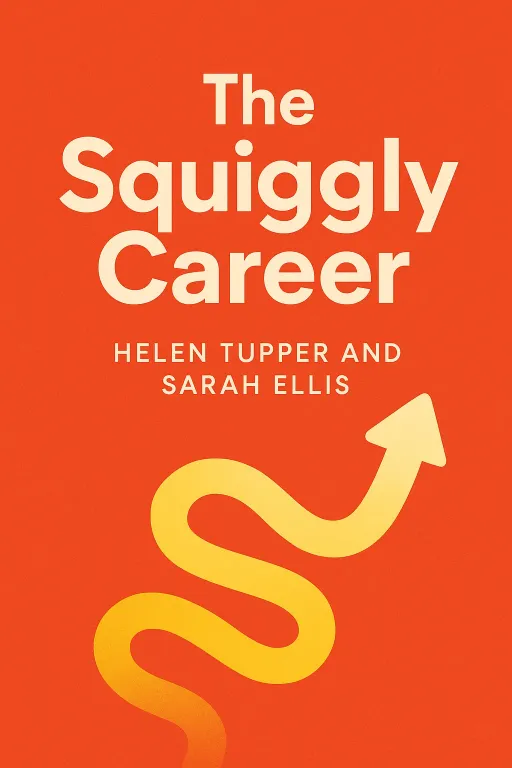
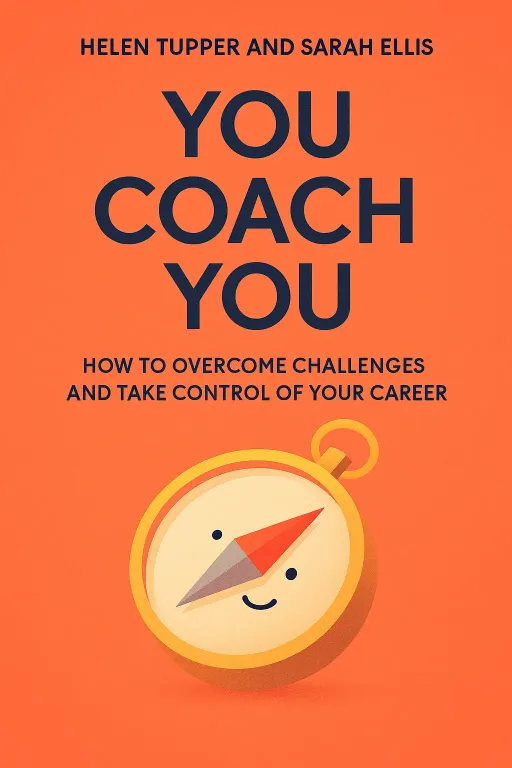
Nova: Absolutely, Atlas! And that's exactly what we're diving into today. We're exploring the profound idea that your career isn't just something that to you, but something you actively. We're drawing insights from two brilliant minds: Helen Tupper and Sarah Ellis, co-authors of the widely acclaimed, and the seasoned executive search expert James M. Citrin, with his highly regarded.
Atlas: I like that. "Architecting your professional destiny." It sounds empowering, especially for those of us who are driven by progress and seeking clarity amidst complexity. What's the core idea behind Tupper and Ellis's approach?
Nova: Well, Tupper and Ellis are celebrated for democratizing executive-level coaching. They've taken skills typically reserved for senior leaders and made them accessible to everyone. Their central argument in is that you don't need to wait for an external mentor or a corporate program. You can – and should – become your own career coach.
Atlas: That's a powerful thought. So, it's about internalizing that guidance. And then where does Citrin fit into this self-directed journey?
Nova: Citrin, a prominent figure in executive search, distills decades of experience advising top-tier professionals into practical, no-nonsense strategies. His is lauded for its directness, providing market-tested wisdom that cuts through the noise. If Tupper and Ellis give you the internal compass, Citrin provides the external map and the tools to navigate. It's the perfect synergy for someone who wants to not just dream about their next professional chapter, but actually build it.
The Philosophy of Self-Coaching & Continuous Growth
SECTION
Nova: So, let's start with this idea of self-coaching. Tupper and Ellis emphasize treating your career as a "continuous learning project." It's not a ladder you climb, but a landscape you explore and cultivate. They provide frameworks to help you identify your strengths, set ambitious goals, and overcome obstacles independently.
Atlas: Okay, but "self-coaching" can sound a bit... abstract. How does it differ from just 'thinking about your career' or 'setting goals'? For a pragmatic explorer, what's the actual mechanism here? How do you really identify your strengths objectively when you're the one doing the assessing? Don't we all have blind spots?
Nova: That's a crucial point, Atlas. It's more than just thinking; it's a structured, proactive process. Think of it like this: a great coach doesn't just tell you what to do. They ask the right questions, help you see patterns, and hold you accountable. Self-coaching is about applying that same rigor to yourself. They advocate for specific exercises, like conducting a "personal audit" – not just listing what you're good at, but observing you feel most energized and effective. What activities make time fly by? Where do you consistently exceed expectations without feeling drained?
Atlas: That makes sense. It's about data-driven introspection, not just wishful thinking. So, if I'm observing myself and identifying these "energy zones," how do I then translate that into ambitious goals without falling into the trap of unrealistic expectations or simply chasing what everyone else is chasing?
Nova: That's where the "continuous learning project" comes in. It's not about one grand, static goal. It's about setting smaller, iterative goals based on those strengths and then continuously refining them. For instance, imagine a marketing professional who realizes they excel at storytelling and connecting with diverse audiences, rather than purely analytical work. Their self-coaching might involve setting a goal to lead a cross-departmental communication initiative, even if their current role is more siloed. They then proactively seek out training in advanced presentation skills, volunteer for internal projects that require strong narrative abilities, and network with leaders in communications. They’re building their own path, skill by skill, rather than waiting for a job description to appear.
Atlas: I can definitely relate to that. The idea of being your own internal project manager for your career. But what about the inevitable obstacles? Whether it's internal resistance – that voice of self-doubt – or external blockers like a lack of resources or a challenging manager. How do you, as your own coach, overcome those when there's no one else to push you?
Nova: That's the acid test, isn't it? Tupper and Ellis suggest developing what they call "courageous conversations" with yourself. It's about anticipating those obstacles and scripting your responses. For the internal resistance, it’s recognizing that self-doubt is a common human experience, not a personal failing. You might "coach" yourself by recalling past successes, or by breaking down a daunting task into tiny, manageable steps. For external blockers, it’s about strategic problem-solving. If a manager isn't supportive, how can you reframe your request to align with their priorities? If resources are limited, can you find creative workarounds or leverage existing tools differently? It's about becoming incredibly resourceful and resilient, applying that coaching mindset to every challenge.
Strategic Blueprinting & Navigating the Professional Landscape
SECTION
Nova: This internal coaching, this continuous refinement of self, naturally leads us to the next critical layer: James Citrin’s strategic blueprinting. Once you've cultivated that internal clarity, you need a plan to execute it in the real world. Citrin offers market-tested strategies for navigating the professional landscape, from crafting compelling narratives to strategic networking and negotiating for advancement.
Atlas: Okay, so we've done the inner work. Now it's time for the external game plan. "Crafting compelling narratives" – that sounds a bit like corporate speak, or just... marketing yourself. How do you craft a narrative that feels authentic and impactful, especially for someone who values genuine connection and measurable results? It can't just be about buzzwords.
Nova: Precisely, Atlas. It's not about fabricating a persona. It's about articulating your unique value proposition with clarity and conviction. Citrin emphasizes that your narrative isn't just your resume; it's the story of your professional journey, your unique contributions, and your future aspirations. It needs to answer "Why you? Why now?" For example, consider a leader who wants to transition from project management to strategic operations. Their narrative isn't just "I manage projects." It becomes: "I excel at optimizing complex processes, turning operational challenges into scalable solutions, and I'm now seeking to apply that systems-thinking expertise to drive broader organizational strategy." It's about distilling your essence and future vision into a powerful, concise story.
Atlas: That's a great way to put it – distilling your essence. And then there's "strategic networking." For many, networking feels transactional, a chore. How does Citrin advise making it genuinely strategic and valuable, rather than just collecting business cards? As a focused strategist, I want it to be efficient and impactful.
Nova: Ah, the art of strategic networking! Citrin argues it's not about "what can this person do for me?" but "how can we create mutual value?" It starts with identifying who you to know to advance your narrative, not just anyone. Then, it's about genuine engagement. Imagine a young professional who identifies a skill gap in their desired role – say, a deep understanding of AI ethics. Strategic networking isn't just going to a tech conference and handing out cards. It's identifying thought leaders in AI ethics, following their work, engaging thoughtfully on platforms, and then, perhaps, requesting a brief informational interview to genuinely learn from them. The value exchange is your thoughtful engagement and their expertise. It builds authentic connections that can open doors far more effectively than a cold ask.
Atlas: That shifts the perspective entirely, from a transactional exchange to a value-driven relationship. Which leads me to the next big hurdle: negotiation for advancement. You've done the self-coaching, you've built your narrative, you've networked strategically. Now you're at the table. How do these principles prepare you for high-stakes negotiations, whether it's for a promotion, a new role, or even just more resources for your team? What are the common pitfalls to avoid?
Nova: Negotiation is where the internal and external truly converge. Your self-coaching gives you clarity on your worth and your non-negotiables. Your strategic blueprinting provides the market intelligence and the compelling narrative of your value. Citrin stresses preparation: understanding the other party's motivations, knowing your BATNA – your 'Best Alternative To a Negotiated Agreement' – and being ready to articulate your unique contributions with confidence. A common pitfall is going in without a clear understanding of your own value or what you truly want. Another is making it solely about you. A successful negotiation often frames your advancement as a win for the organization too. For instance, instead of just asking for a raise, you frame it as an investment in your ability to deliver even greater results for the company, linking it directly to their strategic goals.
Synthesis & Takeaways
SECTION
Nova: What truly emerges from these two perspectives is a holistic approach to career management. Tupper and Ellis give us the internal compass – the ability to continually assess, adapt, and grow from within. Citrin then provides the map and the navigation tools to effectively translate that internal wisdom into tangible professional advancement in the external world. It's not one or the other; it's the powerful synergy of both.
Atlas: I love that imagery – the compass and the map. For our listeners who are focused strategists and growth-minded leaders, constantly juggling demands and seeking impactful progress, the deep question from our initial content comes to mind: How can you integrate these self-coaching principles into your daily routine to continuously refine your professional goals and strategies, even with limited time? What's the smallest, most impactful first step?
Nova: That's the million-dollar question, Atlas. It comes down to intentionality. The tiny step we discussed earlier is dedicating just 15 minutes this week. Not an hour, not a whole day – just 15 minutes. Use that time to outline your ideal career move or promotion. And then, here's the kicker: identify you can develop or you can connect with, treating yourself as your own career coach. It’s about building momentum through micro-actions. It could be as simple as researching a new software tool for 15 minutes, or sending one thoughtful message to a contact on LinkedIn.
Atlas: That’s actually really inspiring. It takes the overwhelm out of it. It makes it feel like an ongoing conversation with yourself, rather than a massive annual project. The power of self-direction, refined by strategy, all starting with just 15 minutes. It reminds me that true growth isn't about grand gestures, but consistent, focused effort.
Nova: Exactly. Your career isn't a fixed destination, it's an evolving blueprint, and you are both the architect and the builder. Taking ownership of that process, even in small, consistent ways, is the most profound step you can take towards a career that truly fulfills you.
Atlas: And that's a journey worth embarking on.
Nova: This is Aibrary. Congratulations on your growth!