Escaping the Achievement Trap
Golden Hook & Introduction
SECTION
Nova: We are currently living through the most productive era in human history, yet we have never felt more exhausted. It is a paradox where the tools meant to liberate us have actually turned into the bars of our own cages.
Atlas: That is a harsh way to start, but I cannot argue with the feeling. Everyone I talk to, especially the high-performers, feels like they are running on a treadmill that keeps speeding up. They are chasing a version of success that seems to retreat the closer they get to it.
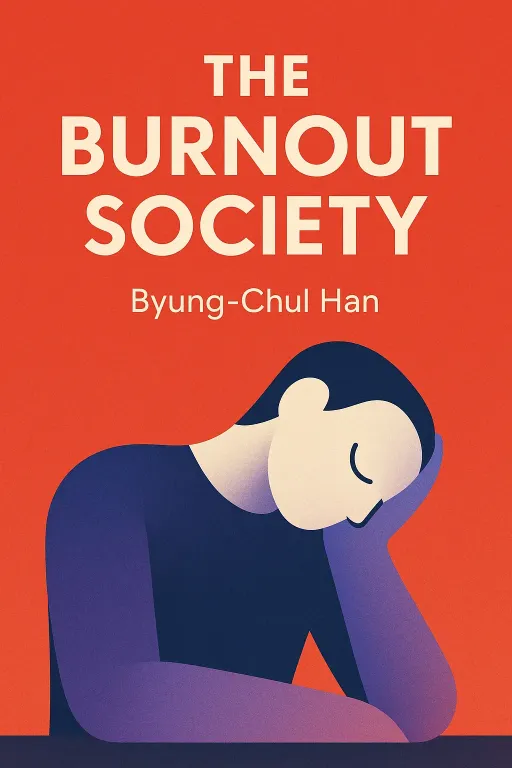
Nova: Exactly. And the reason for that is we have fundamentally misunderstood the nature of achievement. Today, we are going to deconstruct this "achievement trap" by looking at two very different, yet surprisingly compatible, thinkers. We are pulling from the philosophical rigor of Byung-Chul Han’s The Burnout Society and pairing it with the ancient, practical wisdom found in Don Miguel Ruiz’s The Four Agreements.
Atlas: I know those books. One is a dense, high-level critique of modern culture, and the other is often kept on bedside tables as a guide to living. Putting them together feels like an odd pairing. How do these two actually talk to each other?
Nova: Think of it this way. Byung-Chul Han provides the diagnosis for why we are burning out, and Don Miguel Ruiz provides the treatment. Han helps us see the invisible structure of our own self-exploitation, and Ruiz gives us the tools to dismantle that structure from the inside out. It is the difference between knowing why the car is broken and actually knowing how to fix the engine.
The Architecture of Self-Exploitation
SECTION
Atlas: Okay, let’s start with the diagnosis. I have read bits of The Burnout Society. It is intense. Han talks about how we have moved from a society of prohibition—where you were told what you cannot do—to a society of achievement, where we are told we can do anything. But he makes it sound like this "freedom" is actually worse. How is being told "you can do anything" a trap?
Nova: It is the ultimate trap because it turns the oppressor into the oppressed. In the past, you had a boss or a societal structure that told you to work harder. You could rebel against a boss. You could push back against an external force. But in our current performance society, the pressure to achieve comes from within. We have internalized the boss. We have become our own executioners.
Atlas: That hits home. I see this with ambitious people all the time. They are not waiting for someone to give them a quota; they create an impossible quota for themselves. They feel like if they are not optimizing every hour, they are failing.
Nova: Precisely. Han calls this voluntary self-exploitation. We believe we are free because we are choosing our own projects and setting our own goals. But the reality is that we are driving ourselves toward self-destruction under the banner of self-growth. It is a form of violence we commit against ourselves. We treat our own brains and bodies like machines that need to be overclocked.
Atlas: Wait, let me push back on that. Is that always a bad thing? If I am a high-achiever, I want to optimize. I want to be efficient. If I don't set high goals, I feel stagnant. Are you saying I should just lower my standards to avoid burnout?
Nova: Not at all. There is a distinction between high-impact growth and relentless self-exploitation. The problem Han identifies is not the ambition itself; it is the lack of a "no." When you live in a state of constant, undifferentiated productivity, you lose the ability to pause. You lose the ability to contemplate. You become a "worker-bee" even in your leisure time. Think about how many people try to "optimize" their hobbies. They can't just hike; they have to track their heart rate and elevation gain to make the hike "productive."
Atlas: I am guilty of that. I have definitely turned leisure into a data-tracking exercise. It is like I cannot enjoy anything unless it is contributing to a metric.
Nova: That is the symptoms of the achievement trap. You are treating your life as a resource to be mined rather than an experience to be lived. And here is the kicker: the more you do this, the more you feel like you are never doing enough. The goalposts keep moving. Because you are the one setting the goals, and you are the one judging yourself, there is no finish line. You are running a race where you are the track, the runner, and the judge.
Atlas: So the exhaustion isn't coming from the work itself; it is coming from the constant internal surveillance. It is the feeling of always being "on."
Nova: Exactly. It is the loss of the capacity for deep boredom, which is actually where creativity comes from. When you are constantly consuming or producing, you never leave room for your mind to wander. You are effectively killing your own capacity for original thought because you are too busy executing tasks.
The Framework for Internal Alignment
SECTION
Atlas: Okay, I see the trap. It is a cycle of constant, self-imposed pressure. But how do we get out? We can't just stop working. We have jobs, businesses, and responsibilities. This is where you want to bring in Don Miguel Ruiz, right?
Nova: Yes. We need a system to dismantle that conditioning. The Four Agreements is often read as a simple self-help book, but if you look at it through the lens of a Strategic Architect, it is actually a blueprint for mental autonomy. It is about reclaiming your mind from the societal conditioning that tells you your worth is tied to your output.
Atlas: Let’s break that down. The first agreement is "Be Impeccable with Your Word." How does that help with burnout?
Nova: It is not just about not lying to others. It is about not lying to yourself. When you say, "I have to do this, or I am a failure," you are using your word to create a self-imposed prison. Being impeccable with your word means speaking with integrity to yourself. It means recognizing that your value is inherent, not conditional. When you stop telling yourself that you are only worth what you produced today, the pressure shifts.
Atlas: That feels like a massive mental pivot. It is the difference between "I need to do this to be worthy" and "I am doing this because I choose to." But what about the agreement "Always Do Your Best"? That sounds like a recipe for burnout. If I am always doing my "best," I am always at 100% capacity, which leads right back to the exhaustion we were talking about.
Nova: That is the most common misunderstanding of that agreement. People read "Always do your best" as "Always do the maximum possible." But Ruiz is very clear: your "best" changes every single day. On a day when you are sick or tired, your "best" might be 20% of what you could do on a high-energy day. If you try to force 100% when your capacity is at 20%, you are violating the agreement. You are, again, exploiting yourself.
Atlas: So, doing your best is actually about self-awareness? It is about calibrating your output to your current capacity rather than to an abstract, idealized standard?
Nova: Precisely. It is about alignment. When you align your output with your actual capacity for that specific day, you avoid the self-judgment that leads to burnout. You stop punishing yourself for being human. You stop treating your energy levels as a failure of character and start treating them as data.
Atlas: I like that framing. It turns the "Always do your best" rule into a flexible system rather than a rigid command. It allows for rest as a strategic necessity rather than a sign of laziness.
Nova: And look at the other agreements through this lens. "Don't Take Anything Personally." In a high-pressure environment, this is your shield. When a project fails or a client is unhappy, the achievement trap tells you, "This is a reflection of your worth." The Four Agreements tells you, "This is about them, not you." It creates the emotional distance you need to stay sane.
Atlas: It is a way to compartmentalize. You can care deeply about the work without attaching your ego to the outcome. That is the holy grail for a high-performer.
Nova: It is the only way to sustain high performance over a long career. If you attach your identity to every win and loss, you will burn out within a few years. If you detach your identity from the outcome, you can play the long game. You can be ambitious, you can be strategic, but you remain the master of your own mind.
Synthesis & Takeaways
SECTION
Atlas: So, we have this tension. On one side, we have the modern world pushing us toward constant, high-speed, self-exploitative achievement. On the other side, we have this ancient, psychological framework that demands we detach our ego from our output and operate within our true capacity. As a Strategic Architect, how do I build a life that balances these two?
Nova: You build it by shifting from volume to alignment. The Strategic Architect doesn't ask, "How much can I do?" They ask, "What is the highest-leverage action I can take that aligns with my long-term intent?" Byung-Chul Han teaches you to spot the trap—to notice when you are working just to feel busy. Don Miguel Ruiz teaches you to set the boundaries—to keep your word to yourself and operate within your actual capacity.
Atlas: It sounds like the goal is to be a high-performer who is also a conscious observer of their own life. You are not just a machine; you are the engineer of the machine.
Nova: Exactly. And that is the shift that changes your trajectory. You stop asking, "Am I doing enough?" and start asking, "Am I doing what matters?" And more importantly, "Am I doing it from a place of peace, or a place of fear?" Because true productivity does not come from a place of panic. It comes from a place of internal alignment.
Atlas: That is a profound distinction. Productivity from fear is just survival. Productivity from alignment is legacy-building.
Nova: And that is the key for anyone listening who feels like they are caught in that achievement trap. You don't need to quit your ambitions. You don't need to stop aiming high. You just need to stop exploiting yourself in the process. You need to become your own ally instead of your own taskmaster.
Atlas: I think I have a new litmus test for my week. Instead of looking at my to-do list and asking, "Can I get this all done?" I’m going to ask, "Is this list coming from a place of alignment, or is it coming from a place of self-exploitation?"
Nova: That is the perfect application. And remember, your "best" today might just be finishing one critical task with total focus. And that is enough. That is how you win the long game.
Atlas: This has been a great conversation. We started with the fear of burnout and ended with a strategy for sustainable excellence.
Nova: It is a shift that every ambitious person eventually has to make. You either make it by choice, or you make it when you hit a wall. Choosing to make it now is the ultimate strategic move.
Atlas: I love that. For our listeners, take that into your next decision today. Don't just act; act with intention.
Nova: Exactly. We have covered a lot of ground—from the philosophical diagnosis of our culture to the practical agreements that can save your sanity. If you take anything away, let it be this: your capacity for growth is limitless, but your capacity for self-exploitation is not. Protect your internal peace as if your future success depends on it, because it does.
Atlas: Well said. This is Aibrary. Congratulations on your growth!