

The Resilience Protocol
Golden Hook & Introduction
SECTION
Nova: You know, Atlas, we often talk about the grind, the hustle, the sheer volume of. But what if the biggest mistake we’re making when we feel completely overwhelmed, burned out, and just plain fried, isn't that we're doing too much, but that we're actually about why we're doing it in the first place?
Atlas: Whoa, that's a provocative thought, Nova. My initial reaction is, "But I don't have time to! I have targets to hit, emails to answer, and a mountain of tasks!" So, you're suggesting we're caught in a cycle, and the way out isn't necessarily more action, but more... introspection?
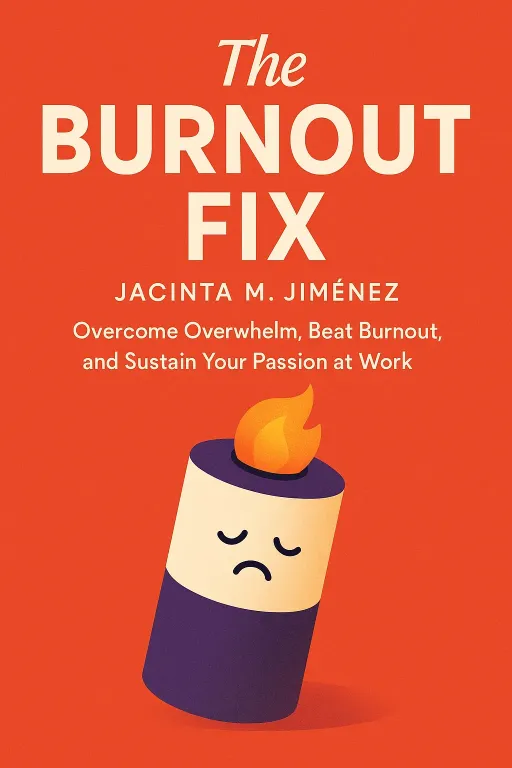
Nova: Exactly. It's a counter-intuitive truth that the most driven among us often miss. And it's at the heart of what we’re exploring today, drawing wisdom from two incredibly insightful authors. We’re diving into Jacinta M. Jiménez’s "The Burnout Fix," and Scott Eblin’s "Overworked and Overwhelmed."
Atlas: I’m curious. Jiménez, I know, is a Stanford-trained psychologist who’s also been a VP at BetterUp, bringing both clinical depth and corporate savvy to the table. And Eblin is a leadership coach for senior executives. Both speak directly to the kind of high-stakes, high-pressure environments many of our listeners navigate daily.
Nova: Absolutely. Jiménez’s background gives her a unique lens on burnout, not just as a personal failing, but as a systemic issue requiring a proactive, structured approach. Her book is highly regarded for its practical, science-backed strategies. And Eblin, with his work coaching top leaders, offers direct, no-nonsense tools that have proven effective when the stakes are highest. Today, we're pulling a powerful one-two punch from their work: understanding your 'Purpose' as an anchor, and using micro-habits as immediate circuit-breakers.
Atlas: Right, so we’re looking at both the long game and the immediate tactical moves. I’m ready. Where do we start?
The PULSE of Purpose
SECTION
Nova: We start with Jiménez and her brilliant 'PULSE' framework for sustainable performance. It stands for Purpose, Usefulness, Leadership, Sleep, and Exercise. But for our discussion today, we’re going to really zero in on that first letter: P for Purpose.
Atlas: Purpose. For many, that word conjures up grand existential quests. So, this isn't just about finding your passion, is it? For someone in a strategic, results-driven role, especially in something like a high-pressure sales cycle, how does 'purpose' actually translate into tangible output or, more importantly, output?
Nova: That's a great question. It's not about a grand, abstract life purpose in a philosophical sense, though that can be part of it. Jiménez defines purpose in this context as your 'why' – the deeper meaning behind your work, your contribution, your daily efforts. Think of it as your internal compass. When you're clear on your purpose, it acts as a powerful filter for decisions, a source of resilience when things get tough, and a guard against decision fatigue. It's the intrinsic motivation that keeps you going when external motivators like bonuses or promotions feel distant or insufficient.
Atlas: Okay, so it’s less about a lofty ideal and more about a practical, grounding force. Can you give me an example? How does someone actually this in, say, a brutal Q4 sales push?
Nova: Let’s imagine Sarah, a seasoned sales manager. She's constantly hitting her targets, her team performs well, but internally, she feels a growing sense of emptiness. Every win feels fleeting, every loss drains her. She’s on the verge of burnout, even with good numbers. Her 'purpose' has become simply "hit the number."
Atlas: I know that feeling. The treadmill effect. You achieve one goal, and immediately the next, bigger goal appears. It’s relentless.
Nova: Precisely. So, Sarah, using Jiménez's approach, starts a 'Purpose Check-in.' She asks herself, "Beyond the numbers, am I truly doing this? What's the meaningful impact I want to have?" She realizes her deeper purpose isn't just selling software; it's empowering her team to develop their skills, it's genuinely solving complex problems for her clients, and it’s building a legacy of ethical, high-value sales.
Atlas: So, it's about reframing the objective, giving it a deeper meaning.
Nova: Exactly. This shift doesn’t change her job description, but it radically transforms her internal experience. When she faces a tough negotiation, instead of just thinking "I need this deal for my quota," she thinks, "How can I genuinely partner with this client to solve their critical bottleneck, and how can I mentor my junior rep through this process?" This makes the work less transactional and more meaningful, which, ironically, often leads to better outcomes and and certainly better well-being. It’s like finding a deeper fuel source that doesn't deplete as quickly.
Atlas: That makes sense. It's about finding a deeper fuel source. But what about the immediate, crushing stress? Purpose helps long-term, providing that guiding light, but in the middle of a high-stakes client call where everything is going sideways, or after a string of rejections, I need something right now. Something fast and effective to pull me back from the brink.
Nova: You've hit on the perfect segue. While purpose is foundational, we absolutely need those immediate circuit-breakers. And that’s where Scott Eblin’s 'Life-Goes-On' toolkit comes in, specifically focusing on mindful presence and intentional breathing.
The Micro-Habit Lifeline
SECTION
Nova: Eblin’s work with senior executives showed him that big, sweeping changes are often impractical during periods of intense pressure. What's needed are 'micro-habits' – tiny, almost invisible actions that can reset your state in moments. His go-to recommendation is often a 2-minute breathing reset.
Atlas: Okay, a 2-minute breathing reset. Honestly, that sounds a bit... small... for someone dealing with massive sales targets, tight deadlines, and a constant barrage of information. How can two minutes of breathing really cut through that kind of pressure? Isn't that just delaying the inevitable?
Nova: Not at all, and this is where the science gets really interesting. It’s not about solving the external problem, but about resetting your to it. When we're stressed, our sympathetic nervous system kicks into fight-or-flight. Our heart rate goes up, our breath becomes shallow, our thoughts race. It's a primal response, but it’s detrimental to complex problem-solving and calm communication.
Atlas: Right, you get tunnel vision. Your brain isn't operating at its peak.
Nova: Exactly. Intentional breathing, especially deep, slow breaths, activates the vagal nerve, which in turn stimulates your parasympathetic nervous system. That’s your 'rest and digest' system. Even a couple of minutes can signal to your brain that you're not actually in immediate physical danger, reducing cortisol levels and bringing you back to a more rational, composed state. It’s a physiological circuit breaker.
Atlas: Wow. So it's not just a 'nice' thing to do, it's literally rewiring your immediate stress response. Can you paint a picture of someone actually using this in a high-pressure scenario?
Nova: Let’s think about Mark, another sales executive. Mark is brilliant, but he tends to get easily flustered when a client raises an unexpected objection, or when a deal seems to be slipping away. He’d often react impulsively, sometimes saying things he regretted, or getting visibly agitated, which rarely helps close a deal.
Atlas: That sounds like a recipe for self-sabotage in a client-facing role.
Nova: It can be. So, Mark started implementing Eblin’s 2-minute breathing reset. Before a crucial client meeting, he'd excuse himself for two minutes, find a quiet corner, and simply focus on deep, intentional breaths. After a particularly tough rejection call, instead of immediately diving into the next task fuming, he’d take those two minutes.
Atlas: And what happened? Did the deals magically close?
Nova: Not magically, no. But the was different. Before the meeting, he entered with a clearer head, more present and less reactive. After a rejection, those two minutes allowed him to process the emotion, detach from it slightly, and then strategically think about the next steps, rather than letting frustration cloud his judgment. It created a tiny space between stimulus and response, allowing him to regain composure and respond strategically, instead of reacting emotionally.
Atlas: I can see how creating that small pause could make a huge difference, especially in high-stakes conversations where emotions can run high. It's about regaining control over your internal state, right? It's not about ignoring the pressure, but about managing your personal bandwidth to navigate it more effectively.
Nova: Precisely. It's a testament to the power of micro-actions. It’s a profound shift in internal locus of control.
Synthesis & Takeaways
SECTION
Nova: So we have Jiménez giving us the strategic 'why' – the overarching purpose that sustains us – and Eblin offering the tactical 'how' – the immediate micro-habit to reset us in the moment. It’s not about choosing one over the other; it's about integrating them.
Atlas: That’s brilliant. It's not either/or. It's having that long-term 'why' to guide you, and then these immediate, tiny tools to keep you from derailing in the short-term. For our listeners who are driven achievers, who crave practical application, how do we make sure they actually this? What's the secret to sticking with it, especially when every fiber of their being is screaming "move faster!"?
Nova: The secret, ironically, is in their 'micro' nature. They’re not meant to be big, time-consuming rituals. The power comes from their consistency and their pairing. Imagine this: you take that 2-minute breathing reset from Eblin, and immediately after, you do a quick 'Purpose check-in' from Jiménez.
Atlas: So, breathing first, then asking: "Why am I doing this? What's the meaningful impact I want to have right now?"
Nova: Exactly. You've just created a powerful, personalized 'resilience ritual' that’s small enough to be sustainable, but potent enough to shift your mindset from overwhelmed reaction to intentional action. You're not just surviving the sales cycle; you're actively shaping your experience within it, aligning your immediate actions with your deeper motivations. This isn’t about escaping pressure; it’s about becoming more effective and more human pressure.
Atlas: That's a game-changer. It reframes resilience not as some innate trait you either have or don't, but as a muscle you build with consistent, intentional practice. And it proves that even in the most demanding environments, a few minutes of conscious effort can yield profound results, transforming not just your performance but your entire well-being.
Nova: Absolutely. It's about recognizing that true, sustainable achievement isn't about constant acceleration, but about strategic pauses and purposeful navigation. It's about bringing your whole, integrated self to the challenge. And that, my friend, is how you truly excel without burning out.
Atlas: Well said, Nova. I'm going to try that combination this week. The 2-minute reset followed by the purpose check-in. It feels genuinely actionable.
Nova: I encourage all our listeners to give it a try. Find your 2 minutes, find your 'why,' and watch how it transforms your high-pressure moments.
Atlas: Absolutely. Thank you, Nova, for shedding light on these crucial insights.
Nova: My pleasure, Atlas.
Nova: This is Aibrary. Congratulations on your growth!









